Description
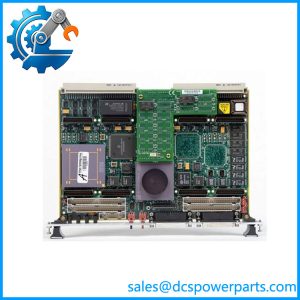
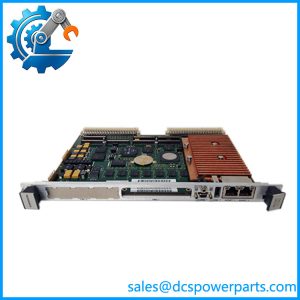
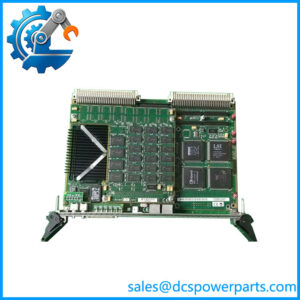
Motorola MVME162-223 | VME Embedded Controller | 68040 Ethernet & SCSI Control Board
Key Technical Specifications
| Parameter | Specification |
|---|---|
| Product Model | |
| Manufacturer | Motorola |
| Product Family | MVME162LX |
| Series | 200 Series |
| Processor | Motorola MC68040 |
| CPU Speed | 25 MHz |
| DRAM | 4 MB parity-protected |
| SRAM | 128 KB |
| Flash | 1 MB |
| Ethernet | Integrated Ethernet interface |
| SCSI | Integrated SCSI interface |
| IndustryPack | 2 IndustryPack positions |
| Bus | VMEbus |
| VME Addressing | A16 / A24 / A32 |
| VME Data Width | D8 / D16 / D32 |
| System Controller | VMEbus system controller capability |
| Serial I/O | Board-family serial interfaces; exact installed configuration should be checked |
| Operating Systems | VxWorks, OS-9, LynxOS, pSOS+, and other supported 68K environments |
| Board Architecture | VME single-board embedded controller |
The MVME162LX reference documentation explicitly identifies the configuration as an MC68040 board with 4 MB parity DRAM, 128 KB SRAM, Ethernet, and SCSI. The same model table distinguishes it from -222, which has Ethernet but no SCSI, and from -233, which uses the 68LC040 and ECC DRAM.
Product Introduction
The is a legacy VMEbus embedded controller from the MVME162LX 200-series family. It combines an MC68040 processor with local memory, Ethernet communication, SCSI storage/peripheral connectivity, VMEbus access, and two IndustryPack expansion positions. This combination made the board suitable for embedded control, data acquisition, industrial computing, and specialized real-time systems where VMEbus remained the system backplane.
The is not simply a generic VME CPU card. Its exact hardware configuration matters because the -223 variant specifically combines Ethernet and SCSI with the 4 MB parity-memory configuration. A replacement based only on the family name can easily result in missing interfaces or a different memory architecture.
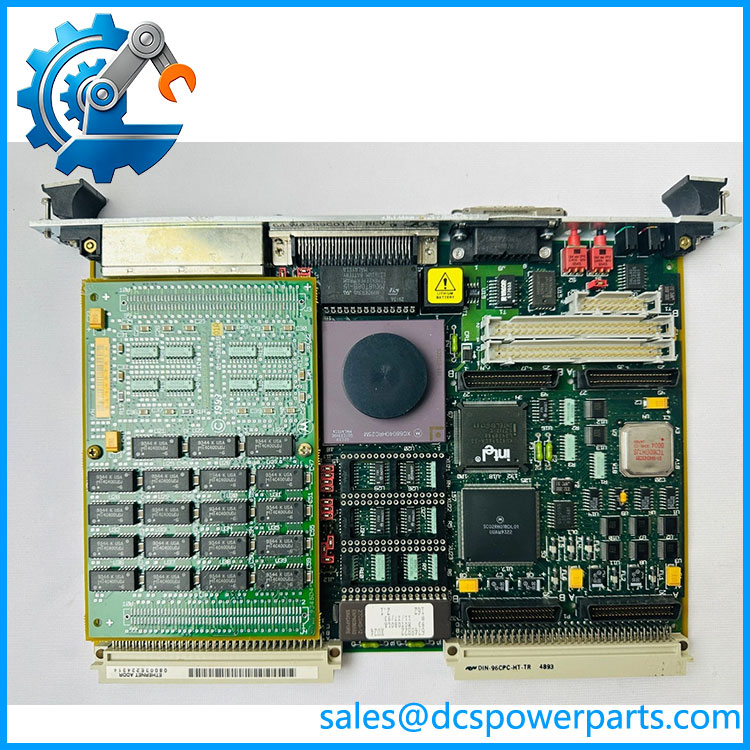
MVME162-223Model:MVME162-223
Brand: Motorola
Series: MVME162LX 200/300 Series
Core Function: VMEbus embedded controller with 68040 CPU, Ethernet, SCSI, and IndustryPack expansion.
Type: VMEbus single-board embedded controller
Key Specs: MC68040 CPU; 4 MB parity DRAM; 128 KB SRAM; Ethernet + SCSI
Status: Legacy VME controller; typically encountered today as a maintenance or surplus spare.
Application Scenarios & Field Pitfalls — The Engineer’s Perspective
Engineering Pain Point
With legacy VME systems, the biggest replacement problem is often not finding a board that physically fits the chassis. It is finding one with the same CPU generation, memory organization, I/O interfaces, IndustryPack configuration, and software environment.
The is particularly sensitive to this because nearby variants can look almost identical while having materially different configurations. For example, -222 has Ethernet without SCSI, while -233 changes both processor type and memory technology.
Typical Applications
- Industrial Control Computers: Embedded supervisory or control processors installed in VME chassis.
- Data Acquisition Systems: Systems requiring local processing together with SCSI storage and Ethernet connectivity.
- Transportation and Infrastructure: Legacy VME computing platforms requiring deterministic backplane communication.
- Test and Measurement Equipment: Specialized test systems using IndustryPack modules and VMEbus expansion.
- Legacy Automation Systems: Replacement of aging VME CPU boards without immediately redesigning the complete control platform.
Technical Pitfalls to Avoid
- Do nuse with newer PowerPC VME controllers.
The -223 is an MC68040-based MVME162LX controller. Several current reseller pages incorrectly describe it as a PowerPC board. The Motorola programming documentation is clear on the processor architecture. - Verify the SCSI requirement.
and are closely related, but -222 has Ethernet while -223 adds SCSI. If the application boots from or communicates with SCSI-connected equipment, replacing -223 with -222 can remove a required interface. - Check IndustryPack modules before replacement.
The -223 configuration supports two IndustryPack positions. Installed IP modules may contain application-specific I/O or communications functions, so record the module type and position before removing the controller. - Preserve the software environment.
systems were used with operating systems such as VxWorks, OS-9, LynxOS, pSOS+, and VRTX-32. A working replacement requires more than matching the processor; boot firmware, application image, driver support, and memory layout can all affect startup. - Do not assume all boards have the same memory technology.
The -223 uses 4 MB parity-protected DRAM, whereas several other models use ECC DRAM and different capacities. Memory architecture is part of the model identification. - Check VMEbus system-controller configuration.
The family supports VMEbus system-controller functionality and A16/A24/A32 addressing with D8/D16/D32 data widths. Whether the particular board is configured to act as system controller must be considered within the complete chassis architecture. - Inspect battery-backed components on long-stored boards.
The architecture includes battery-backed SRAM and a time-of-day clock. On a decades-old spare, battery condition deserves inspection before installation, especially if retained data or clock operation matters.
Related Products
- MC68040, 4 MB parity DRAM, 128 KB SRAM, Ethernet; lacks the SCSI interface found on the -223.
- , 4 MB parity DRAM, 128 KB SRAM, SCSI configuration.
- 68LC040 with 4 MB ECC DRAM, 128 KB SRAM, Ethernet and SCSI; not an electrically identical replacement for -223.
- 68040, 4 MB ECC DRAM, Ethernet and SCSI; memory architecture differs from -223.
- 68LC040, 16 MB ECC DRAM, Ethernet and SCSI; a higher-memory variant, not a direct model-number substitute.
- 68040, 16 MB ECC DRAM, Ethernet and SCSI; belongs to the same broader family but has a different memory configuration.
- 68040, 4 MB DRAM configuration with two IndustryPack positions and four serial ports; useful when the application needs IP expansion but has a different I/O requirement.
- Later family configuration commonly referenced as a replacement for older variants; migration requires software and hardware compatibility review.
- MVME712 Series Transition Modules: Related transition hardware used with applicable configurations to route board I/O through the VME system. The exact transition-module model must match the controller and installed I/O architecture.
Procurement Note
For , the four identifiers worth recording before procurement are , 4 MB parity DRAM, Ethernet, and SCSI. If the installed board also carries IndustryPack modules, record those separately because they are part of the system configuration rather than the base CPU board.
Do not accept a generic “” replacement without checking the complete suffix. The difference between -222, -223, -233, -243, and -263 includes processor type, memory technology/capacity, and available interfaces. For a legacy VME control system, those differences can determine whether the replacement actually boots and performs the original application functions.