Description
Product Introduction
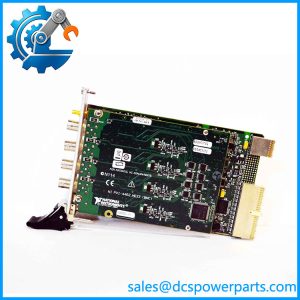
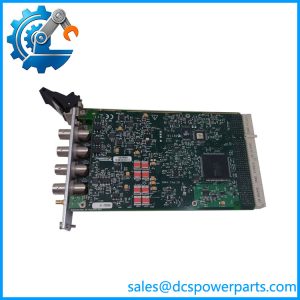
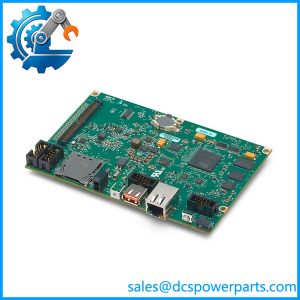
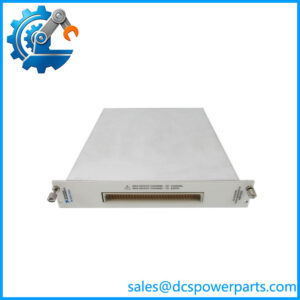
The National Instruments NI-9694 is a digital I/O breakout board designed for NI Single-Board RIO systems. Rather than functioning as an independent PLC-style I/O module, it exposes digital I/O lines from a compatible sbRIO controller through accessible screw terminals and 100-mil headers. This makes the board useful when an engineer needs practical field wiring access to the FPGA-connected digital lines of an sbRIO platform.
The NI 9694 provides 64 digital I/O channels on screw terminals and 32 channels on 100-mil spacing holes, with the digital signals operating at 3.3 V logic. NI specifies a maximum tested current of ±3 mA per channel and a maximum tested aggregate current of 288 mA. The board also provides 5 V and FPGA VIO power outputs for appropriate external circuitry.
This distinction matters in system integration: the NI-9694 is primarily a breakout/interface board, while the sbRIO controller supplies the processing, FPGA resources, and RIO functionality. It should therefore be evaluated together with the exact sbRIO controller model being used.
Key Technical Specifications
| Parameter | Specification |
|---|---|
| Manufacturer | National Instruments |
| Model | NI-9694 / NI 9694 |
| Product Type | Digital I/O Breakout RMC |
| Interface | RIO Mezzanine Card (RMC) |
| Digital I/O on Screw Terminals | 64 channels |
| Digital I/O on 100-mil Headers | 32 channels |
| Logic Supply | 3.3 V |
| Maximum Tested Current / Channel | ±3 mA |
| Maximum Tested Current, All Lines | 288 mA |
| Output High Voltage | 2.4 V min at 3 mA sourcing |
| Output Low Voltage | 0.4 V max at 3 mA sinking |
| 5 V Power Output | 1.5 A, ±5% |
| FPGA VIO Output | 3.3 V, 0.33 A, ±5% |
| 5 V Fuse | 2 A, 125 V, time-delay |
| FPGA VIO Fuse | 750 mA, 125 V, time-delay |
| Operating Temperature | −40 to +85 °C |
| Storage Temperature | −40 to +85 °C |
| Operating Humidity | 10–90% RH, noncondensing |
| Storage Humidity | 5–90% RH, noncondensing |
| Maximum Altitude | 5,000 m |
| Pollution Degree | 2 |
| Weight | 82 g |
The electrical specifications above come directly from NI’s operating instructions and specifications for the NI 9694.
Application Scenarios & Engineering Considerations
The NI-9694 is most useful when an sbRIO application requires a clean transition from the controller’s high-density RMC connector to practical external wiring.
- Embedded industrial control: Provides convenient access to FPGA-connected digital signals for machine-control hardware.
- Test and measurement equipment: The breakout arrangement is useful when an sbRIO is being used as a programmable test controller and numerous digital signals must be connected to a DUT.
- Custom machine interfaces: Engineers can route the exposed digital lines to external sensors, actuators, interface boards, or signal-conditioning circuitry.
- FPGA-based control: Because the RMC digital lines connect directly to the sbRIO FPGA architecture, the board can support applications requiring deterministic FPGA-side digital I/O. NI documentation describes the sbRIO RMC architecture as providing high-density digital I/O directly connected to the FPGA.
Field note: The NI-9694 does not magically convert the 3.3 V FPGA signals into industrial 24 V PLC I/O. If the connected field devices operate at 24 VDC, appropriate external interface or signal-conditioning hardware is required.
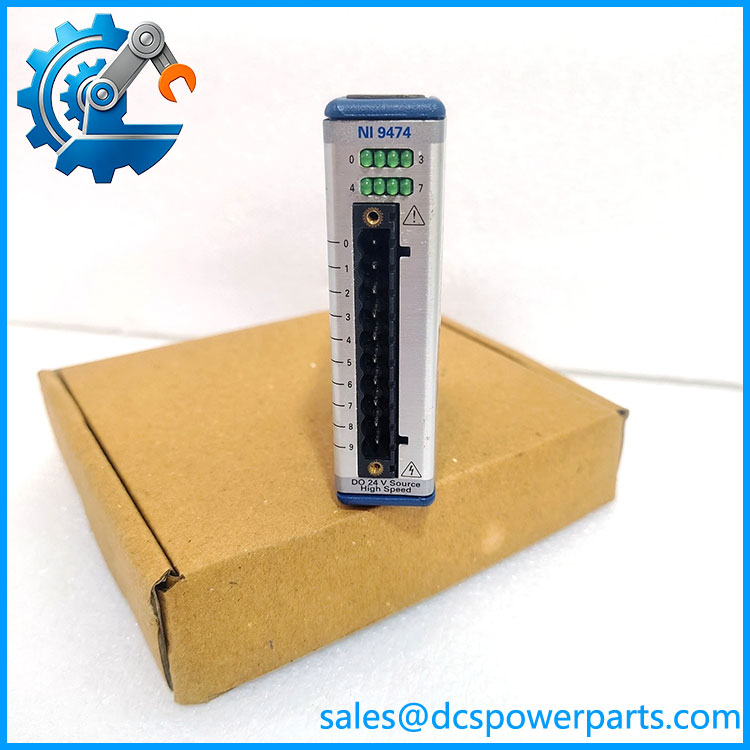
NI-9694
Related Products
- NI sbRIO-9607 — A compatible Single-Board RIO controller family member that has been supplied with the NI 9694 as part of its kit configuration.
- NI sbRIO-9627 — Another sbRIO platform associated with the high-density RMC architecture and compatible RMC expansion concept.
- NI 9683 — Analog and digital I/O RMC option for applications requiring a different I/O mix rather than the predominantly digital breakout function of the NI-9694.
- NI 9684 — Another analog/digital RMC option in the sbRIO ecosystem. It should not be treated as a direct functional replacement for the 9694 because the exposed I/O architecture differs.
- NI 153171-01 — Part number associated with the NI 9694 in distribution documentation. This identifier can be useful when searching legacy procurement records.
The Engineer’s Guide: Field Pitfalls to Avoid
⚠️ Do not treat NI-9694 as a standalone digital I/O controller.
The board depends on a compatible sbRIO RMC interface. NI describes it specifically as a Digital I/O Breakout RMC for connection through the RIO Mezzanine Card connector.
How to avoid it: Verify the exact sbRIO controller model and RMC connector before purchasing.
⚠️ Do not connect 24 V industrial signals directly to the 3.3 V DIO.
The NI 9694’s digital I/O uses 3.3 V logic, with NI specifying output levels around the 3.3 V supply range.
How to avoid it: Use appropriate level shifting, isolation, relay interfaces, or industrial signal-conditioning hardware.
⚠️ Do not confuse the number of physical terminals with independent controller channels.
The board exposes 64 channels on screw terminals and 32 channels on 100-mil headers. These are breakout access points for the RMC-connected digital I/O architecture, not 96 independent industrial I/O points added by a separate PLC module.
⚠️ Check the power-output limits.
The board provides a 5 V output rated at 1.5 A and FPGA VIO at 0.33 A. These outputs should not be treated as general-purpose plant power supplies.
Frequently Asked Questions
What is NI-9694?
The NI-9694 is a Digital I/O Breakout RIO Mezzanine Card for compatible NI sbRIO controllers. It provides accessible connections to the controller’s high-density digital I/O.
How many digital I/O channels does NI-9694 provide?
It provides 64 DIO channels through screw terminals and 32 channels through 100-mil spacing holes.
Is NI-9694 a PLC digital input module?
No. It is better classified as an RMC breakout/interface board. The actual processing and FPGA resources reside in the compatible sbRIO controller.
What logic voltage does NI-9694 use?
The digital I/O operates at 3.3 V logic. NI specifies a maximum tested current of ±3 mA per channel.
Can NI-9694 directly interface with 24 V sensors?
Not directly. A 24 V industrial signal should be converted or isolated before being connected to the 3.3 V digital I/O.
What is the operating temperature?
NI specifies −40 to +85 °C for the local ambient temperature range. Storage is also specified at −40 to +85 °C.
What should I verify before purchasing an NI-9694 replacement?
For a maintenance or system-integration purchase, verify:
- NI-9694 identification
- Compatible sbRIO controller model
- RMC connector compatibility
- Screw-terminal configuration
- 3.3 V digital I/O requirements
- External 24 V interface requirements
- 5 V and FPGA VIO loading
- Fuse condition
- Board connector condition
- Functional testing of the required DIO channels