Description
Product Overview
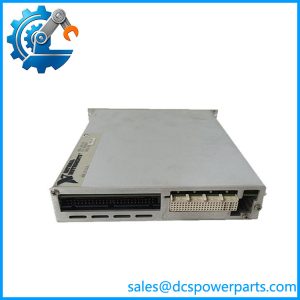
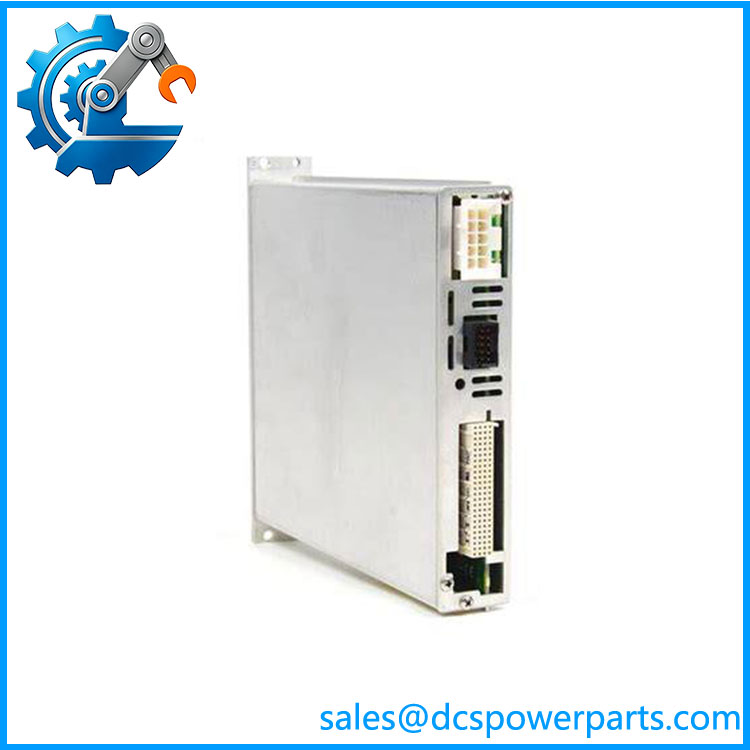
The National Instruments SCXI-1127 is a high-voltage, 32-channel electromechanical relay switching module for the NI SCXI platform. NI defines it as a matrix/multiplexer switch module, with each channel implemented using an armature relay. The module can be configured for different signal-routing arrangements depending on the terminal hardware and measurement requirements.
The NI SCXI-1127 is particularly useful when a test system needs to route multiple measurement signals to a common instrumentation path. In multiplexer configurations, NI documents support for 1-wire, 2-wire, 3-wire, and 4-wire measurements, including resistance measurements using RTDs and thermistors. With the appropriate SCXI front-mounting terminal blocks, the module can provide configurations including 64×1 1-wire, 32×1 2-wire, 16×1 4-wire, or 4×8 2-wire matrix operation.
The National Instruments SCXI-1127 is not an analog input module and does not digitize the signal itself. It performs physical signal routing through relays, typically working with a DAQ device, DMM, or another SCXI measurement configuration. NI documentation specifically identifies the SCXI-1127 as compatible with the SCXI switching ecosystem and documents its use with SCXI-1357 high-voltage backplane adapters.
Technical Specifications
| Parameter | Specification |
|---|---|
| Manufacturer | National Instruments |
| Model | SCXI-1127 |
| Part Number | 776572-27 |
| Product Family | SCXI |
| Product Type | Relay Matrix / Multiplexer Switch Module |
| Relay Technology | Electromechanical armature |
| Relay Configuration | Non-latching |
| Number of Relay Channels | 32 |
| Maximum Switching Voltage | 250 Vrms / 250 VDC |
| Maximum Switching Current | 1 A/channel |
| Maximum Carry Current | 2 A/channel |
| Maximum Switching Power | 30 W / 60 VA per channel |
| Minimum Switching Capacity | 10 µA at 10 mVDC |
| Maximum Scan Rate | 100 channels/s |
| Typical Relay Operate Time | 3 ms |
| Maximum Relay Operate Time | 5 ms |
| Typical Relay Release Time | 1.5 ms |
| Maximum Relay Release Time | 5 ms |
| Initial DC Path Resistance | <2 Ω |
| End-of-Life DC Path Resistance | >4 Ω |
| Thermal EMF | <3 µV |
| Typical Bandwidth | ≥11 MHz |
| Relay Contact Material | Gold-clad silver alloy |
| Dimensions | 3.0 × 17.3 × 19.8 cm |
| Weight | 680 g |
| Platform | NI SCXI chassis |
The electrical switching limits and dynamic characteristics above are from NI’s published SCXI-1127 specifications.
Main Features and Advantages
High-Voltage Relay Switching
The is designed for routing signals that may reach 250 Vrms or 250 VDC, with a maximum switching current of 1 A per channel. Its 2 A carry-current capability allows it to handle higher continuous current than its switching-current rating, but the two ratings should not be confused.
Flexible Multiplexer and Matrix Operation
The module’s topology depends partly on the front terminal hardware. NI documents configurations ranging from high-channel-count 1-wire multiplexing to differential 2-wire and 4-wire resistance measurements. This makes the module useful for automated test systems where different instruments need access to multiple DUT signals.
Electromechanical Relay Architecture
Unlike the SCXI-1128, which uses solid-state relays, the uses mechanical armature relays. This provides galvanic switching contacts and is useful when low leakage and conventional relay behavior are important. The tradeoff is finite mechanical life and slower switching compared with semiconductor switching.
Low Thermal EMF
NI specifies thermal EMF below 3 µV, an important characteristic for precision measurement systems where the switch itself can otherwise introduce an unwanted voltage offset.
Measurement-System Integration
The can be integrated with DMM and DAQ systems through appropriate SCXI adapters. NI specifically documents the SCXI-1357 as one method for connecting the module to a DMM-based switching system.
SCXI-1127
Application Scenarios
- Automated test equipment (ATE)
- Electronic component testing
- Production test systems
- High-voltage measurement switching
- Resistance/RTD measurements
- DMM signal routing
- DAQ signal multiplexing
- Multi-point instrumentation systems
- Research and laboratory test benches
A typical setup places the between multiple signal sources or DUT points and a measurement instrument, allowing software-controlled routing without manually reconnecting test wiring.
Engineer’s Guide: Field Pitfalls
WARNING 1 — Do not exceed the switching rating
The 1 A switching rating and 2 A carry rating are different specifications. A channel carrying 2 A continuously should not automatically be assumed capable of switching a 2 A load.
WARNING 2 — Switching power is limited
NI specifies a maximum switching power of 30 W or 60 VA per channel. Voltage, current, and load characteristics must all be considered. Inductive loads can create transient voltages that exceed the nominal switching rating.
WARNING 3 — Relay life depends heavily on load
The mechanical relay life is specified at 5 × 10⁷ cycles, but electrical life is substantially lower and depends on switching conditions. NI gives examples ranging from 2 × 10⁵ cycles at 30 V/1 A to 5 × 10⁴ cycles at 250 V/200 mA.
For a heavily used production tester, relay wear should therefore be considered a real maintenance issue.
WARNING 4 — is not the same as SCXI-1128
The two modules have similar switching roles, but the technologies differ:
- Electromechanical armature relays
- SCXI-1128: Solid-state relays
The choice affects leakage, switching behavior, lifetime, and signal characteristics.
WARNING 5 — Terminal hardware affects topology
The module does not provide every possible matrix arrangement from the front panel alone. NI specifies different configurations depending on the SCXI front-mounting terminal blocks.
Frequently Asked Questions
What is NI ?
The is a 32-channel electromechanical relay matrix/multiplexer module for the SCXI instrumentation platform.
What is the NI part number?
The is identified as 776572-27 in NI-related documentation and product listings.
What voltage can it switch?
The maximum switching voltage is 250 Vrms or 250 VDC.
What is the maximum current?
The maximum switching current is 1 A per channel, while the maximum carry current is 2 A per channel.
How fast can it switch?
NI specifies a maximum scan rate of 100 channels/s. Relay operation is approximately 3 ms typical, with a maximum of 5 ms; release time is approximately 1.5 ms typical and 5 ms maximum.
Can it perform 4-wire resistance measurements?
Yes. With appropriate SCXI terminal hardware, the can be configured as a 16×1 4-wire multiplexer, making it suitable for resistance measurements such as RTDs and thermistors.
Is still available from NI?
NI currently lists the as no longer available.
What should be checked when buying a used ?
For a replacement or spare, I would check:
- Exact identification.
- Module revision.
- Relay contact resistance.
- Channel-by-channel continuity.
- Relay actuation on every channel.
- Open-state isolation.
- Switching under the intended load.
- Front terminal-block compatibility.
- SCXI chassis recognition.
- NI-SWITCH/DAQ software compatibility.
- Relay operating count if available.
- Evidence of previous high-voltage or inductive-load use.
Bottom line: The is a specialized 32-channel high-voltage electromechanical relay matrix/multiplexer, not a conventional DAQ input card. Its key engineering considerations are relay condition, load rating, switching topology, terminal hardware, and compatibility with the existing SCXI/DMM/DAQ architecture. NI’s own documentation provides substantially more reliable specifications than generic reseller listings.