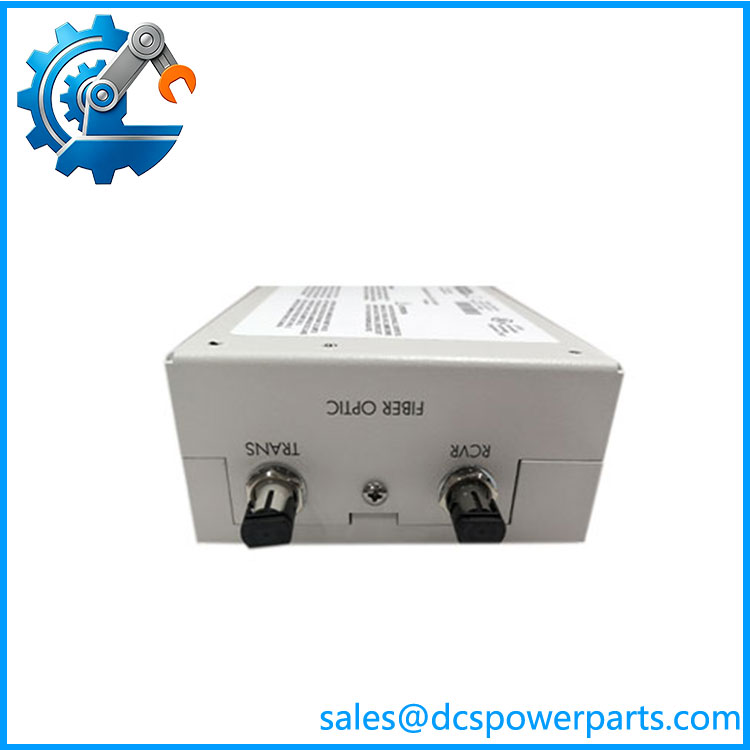
Description
Key Technical Specifications
| Parameter | Value |
|---|---|
| Manufacturer | National Instruments (NI) |
| Model | GPIB-140A |
| Assembly Number | 186135F-31 |
| Product Type | Fiber Optic GPIB Bus Extender |
| Interface Standard | IEEE-488 / GPIB |
| Transmission Method | Fiber optic point-to-point communication |
| Extension Distance | Up to 1 km |
| Transfer Rate | >1.1 MB/s buffered mode, up to 2.8 MB/s HS488 handshake |
| GPIB Compatibility | IEEE 488.1 and IEEE 488.2 |
| HS488 Support | Yes |
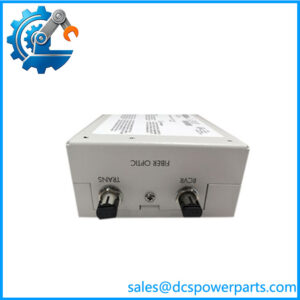
| Optical Interface | ST-style fiber connectors |
| Fiber Type | 62.5/125 μm multimode fiber |
| Optical Wavelength | 850nm |
| GPIB Device Capacity | Up to 28 devices including extenders |
| Operating Mode | Buffered or unbuffered interlocked mode |
| Power Input | 100-120VAC or 220-240VAC, 50/60Hz |
| Maximum Current | 135mA at 100-120VAC; 100mA at 220-240VAC |
| Operating Temperature | 0°C to 40°C |
| Storage Temperature | -20°C to 70°C |
| Humidity Range | 10% to 90%, non-condensing |
| Enclosure | Metal chassis |
| Dimensions | Approx. 88.9 × 143.5 × 41.1mm |
| Weight | Approx. 0.25kg |
Product Introduction
NI GPIB-140A 186135F-31 Overview
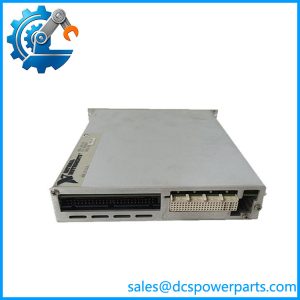
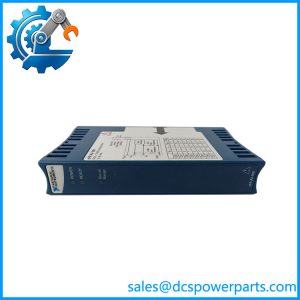
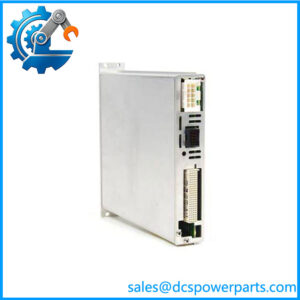
The NI GPIB-140A 186135F-31 is a fiber optic IEEE-488/GPIB bus extender designed to increase the physical distance between a controller and GPIB instruments. It converts standard GPIB signals into optical communication, allowing remote placement of test instruments while maintaining GPIB protocol compatibility.
The National Instruments GPIB-140A 186135F-31 is mainly used in automated test equipment, laboratory measurement systems, and industrial test platforms where electrical isolation, long cable distances, or different ground potentials create communication challenges.
Application Scenarios & Field Pitfalls (The Engineer’s Perspective)
Engineering Pain Point
A test system works correctly when instruments are installed close together, but communication becomes unstable after the equipment is moved into separate racks or shielded rooms.
This is a common issue in automated test environments. Standard GPIB cabling has distance limitations, and ground potential differences between instruments can introduce communication problems. The GPIB-140A addresses this by converting the GPIB signal path to fiber optics, separating the electrical connection between locations.
Typical Applications
- Aerospace Test Systems – Remote placement of avionics test instruments and measurement equipment.
- Semiconductor Testing – Extending GPIB connections between test racks and instrumentation areas.
- Electronic Manufacturing Test Lines – Connecting automated measurement instruments over longer distances.
- Research Laboratories – Isolating measurement equipment while maintaining IEEE-488 instrument control.
Technical Pitfalls to Avoid
- Verify Fiber Type and Connector Standard
The GPIB-140A uses multimode fiber with ST-style optical connectors. Incorrect fiber type or connector mismatch will prevent communication.
- Check GPIB System Topology
The extender operates as a point-to-point link. It is not a replacement for a GPIB multiplexer or general network switch.
- Confirm HS488 Requirements
If higher transfer speed is required, verify that connected controllers and instruments support HS488 operation. Standard IEEE-488 communication may operate at lower rates.
Related Products
- Extended-distance version of the family. Supports fiber optic communication distances up to approximately 2km using different optical components.
- NI GPIB-120A
Electrical GPIB isolator used for separating systems with different ground potentials. Different approach from the fiber-based . - NI GPIB-130
Earlier GPIB extender model using different transmission technology. Used in legacy IEEE-488 systems. - NI PCI-GPIB Interface Board
Computer-side GPIB controller interface used to connect PCs with measurement instruments. - NI GPIB-USB-HS
USB-based GPIB controller interface for modern computer connections to IEEE-488 instruments. - NI PXI-GPIB
PXI platform GPIB interface module used in automated test systems. - NI SCXI Data Acquisition Modules
Signal conditioning and measurement modules often used alongside GPIB-based instrumentation systems. - NI LabVIEW Instrument Control Systems
Software environment commonly used for controlling GPIB-connected measurement equipment.