Description
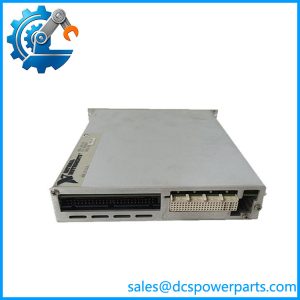
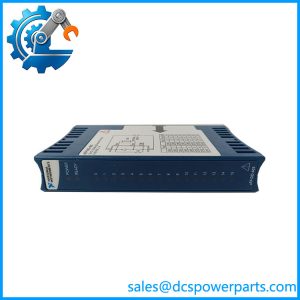
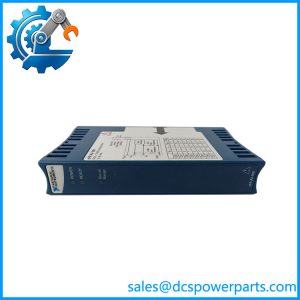
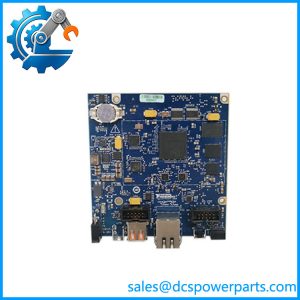
NI PXI-4461 Product Description
Key Technical Specifications
| Parameter | Specification |
|---|---|
| Manufacturer | National Instruments |
| Model | PXI-4461 |
| Product Family | NI 446x Dynamic Signal Acquisition |
| Module Type | PXI Sound and Vibration Module |
| Analog Inputs | 2, simultaneously sampled |
| Analog Outputs | 2, simultaneously updated |
| ADC Resolution | 24-bit |
| DAC Resolution | 24-bit |
| Sample/Update Rate | 1 kS/s to 204.8 kS/s |
| Input Configuration | Differential or pseudodifferential |
| Input Coupling | AC or DC, independently selectable |
| Input Ranges | Six ranges from ±0.316 V to ±42.4 V |
| IEPE Excitation | Programmable, 0–20 mA |
| Output Ranges | Three ranges from ±0.1 V to ±10 V |
| Operating Temperature | 0 to 55°C |
| Bus | PXI / CompactPCI |
| Dynamic Range | Up to 118 dB, depending on measurement configuration |
| Application Class | Audio, acoustics, vibration, NVH, machine condition monitoring |
The PXI-4461 uses delta-sigma conversion and digital filtering intended for dynamic measurement work. NI documentation specifies two simultaneously sampled 24-bit analog inputs and two simultaneously updated 24-bit analog outputs, with rates extending to 204.8 kS/s.
Product Introduction
The NI PXI-4461 is a two-input/two-output Dynamic Signal Acquisition module for PXI-based sound, vibration, and precision analog measurement systems. Its two 24-bit acquisition channels can operate with independently selectable AC or DC coupling, while integrated IEPE excitation supports compatible accelerometers and microphones. The module also provides two 24-bit analog outputs, making it suitable for test stimulus generation as well as signal acquisition.
For an existing test platform, the value of the NI PXI-4461 is less about generic analog I/O capacity and more about maintaining a known DSA measurement architecture. It is commonly associated with audio testing, vibration analysis, automotive NVH work, rotating-machinery evaluation, and machine condition monitoring. NI currently identifies the PXI-4461 as no longer available, so replacement planning should consider the PXI chassis, driver stack, application software, signal-conditioning configuration, and calibration history rather than treating it as an ordinary PXI analog card.
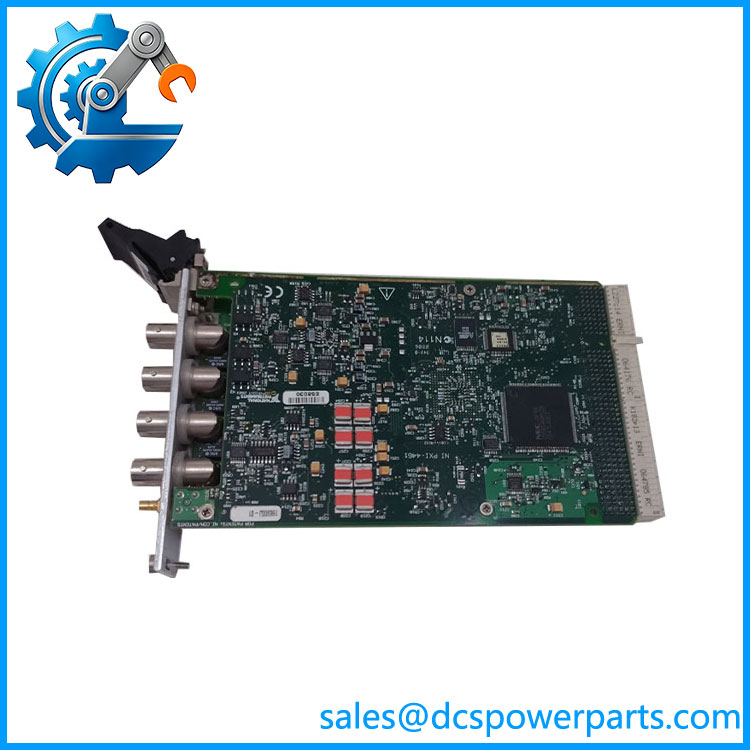
PXI-4461
Application Scenarios & Field Pitfalls — The Engineer’s Perspective
Engineering Pain Point
Replacing an older DSA module can create problems even when the replacement has similar headline specifications. The PXI-4461 is part of a measurement chain involving sensor excitation, analog filtering, sampling-rate configuration, synchronization, software drivers, and calibration. A newer PXI/PXIe module may have better specifications yet still require changes to the test application.
Typical Applications
- Machine vibration monitoring — accelerometer acquisition for rotating machinery and condition-analysis systems.
- Automotive NVH testing — synchronized acquisition of vibration and acoustic signals.
- Audio and acoustic measurement — microphone and line-level signal acquisition.
- Laboratory and production test systems — dynamic analog stimulus generation combined with precision measurement.
Technical Pitfalls
1. Do not confuse PXI-4461 with PXI-4462.
The PXI-4461 provides two inputs and two outputs, while the PXI-4462 is the four-input member of the same DSA family. Substituting the wrong model changes channel availability and may invalidate the existing test configuration.
2. IEPE current excitation is part of the measurement architecture.
The PXI-4461 provides software-configurable IEPE excitation from 0 to 20 mA. If the installed system uses powered accelerometers or microphones, verify sensor current requirements and the original channel configuration before changing hardware.
3. Sampling rate matters more than the 204.8 kS/s headline.
The DSA architecture uses delta-sigma converters and digital filtering. NI specifically documents enhanced low-frequency alias rejection behavior for the 4461/4462 family, particularly at lower sampling rates. Existing test software should therefore be checked for its configured sample rate and filtering assumptions.
4. PXI and PXIe are not interchangeable by appearance.
The PXI-4461 is a legacy PXI/CompactPCI module. NI now lists the PXIe-4463 as a suggested replacement, but a migration can involve chassis, software, cabling, channel count, sampling requirements, and application changes. Do not approve a replacement based only on the word “replacement.”
5. Calibration condition should be checked on used equipment.
The published accuracy specifications are tied to external calibration intervals. For a measurement system where amplitude accuracy is important, check the calibration date and stored calibration information rather than evaluating the card only by whether it enumerates in the PXI chassis.
6. Environmental EMI can affect measurements.
NI explicitly warns that the inputs are sensitive test-and-measurement inputs and are not protected against electromagnetic interference for functional reasons. Cable routing, grounding, sensor wiring, and nearby power electronics can therefore affect actual measurement performance.
7. Driver and application compatibility must be verified.
The PXI-4461 can be used with NI-DAQmx-based DSA applications, and NI continues to document the device in its DSA support information. For a legacy production tester, however, the installed operating system, DAQmx version, LabVIEW version, application executable, chassis controller, and calibration workflow should all be checked before hardware replacement.
Related Products
- NI PXI-4462 — same 446x DSA family with four simultaneously sampled analog inputs rather than the PXI-4461’s two.
- NI PCI-4461 — PCI form factor of the same 2-input/2-output DSA architecture.
- NI PXIe-4463 — newer PXIe sound and vibration module listed by NI as the suggested replacement for the PXI-4461; verify application compatibility before migration.
- NI PXIe-4464 — newer PXIe DSA hardware for applications requiring a different channel/output configuration.
- NI PXI-4472 — PXI DSA family member used for dynamic acquisition applications, but with a different hardware architecture and channel configuration.
- NI PXI-449x Series — higher-channel-count PXI/PXIe sound and vibration acquisition family for larger sensor systems.
- NI PXI-4351 — legacy precision temperature/voltage measurement module; it belongs to a different measurement category and is not a functional substitute for the PXI-4461.
Procurement note: For an existing PXI-4461 installation, record the complete module part number, hardware revision, serial number, chassis model, DAQmx version, LabVIEW/application version, sensor type, sampling rate, calibration status, and installed cabling before sourcing a replacement. NI has marked the PXI-4461 as no longer available, so preserving the exact legacy configuration may be more important than simply finding a module with similar resolution or sampling specifications.