Description
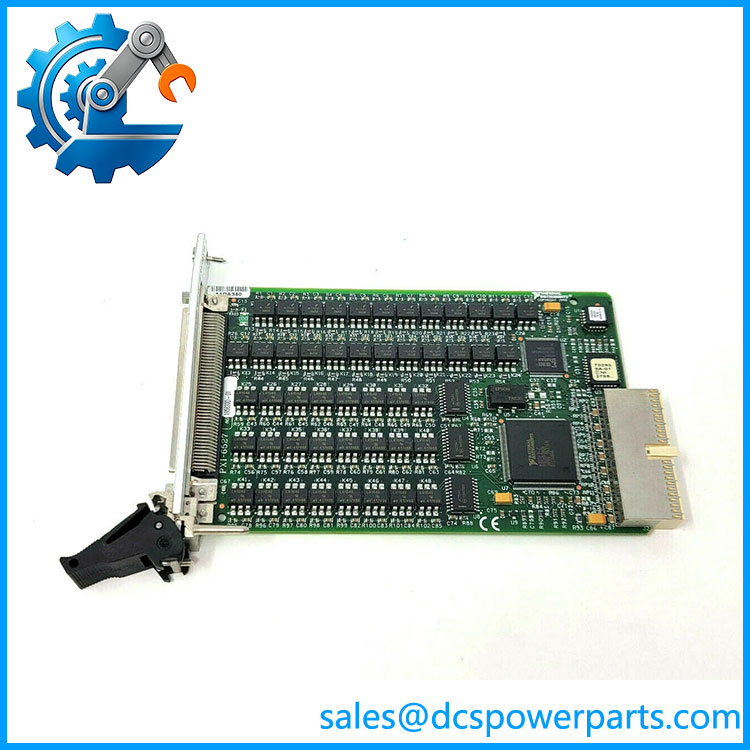
NI PXI-6527 Product Description
Key Technical Specifications
| Parameter | Specification |
|---|---|
| Manufacturer | National Instruments |
| Model | PXI-6527 |
| Product Type | Isolated Digital I/O Module |
| Bus Interface | PXI / CompactPCI |
| Digital Inputs | 24 |
| Input Type | Optically isolated |
| Input Voltage | 0–28 VDC |
| Input Low Level | 0–1 VDC |
| Input High Level | 2–28 VDC |
| Input Current | 1.5 mA/channel max at 5 V; 8 mA/channel max at 24 V |
| Input Isolation | 60 VDC channel-to-channel and from computer ground/VCC |
| Digital Outputs | 24 |
| Output Type | Normally open Form A solid-state relay |
| Maximum DC Switching Voltage | 60 VDC |
| Maximum AC Switching Voltage | 30 VRMS / 42 V peak |
| Maximum Switching Current | 120 mA |
| Output On Resistance | 35 Ω max; 25 Ω typical |
| Output Off Leakage | 200 nA max |
| Relay Set Time | 3.0 ms max |
| Relay Reset Time | 3.0 ms max |
| Output Isolation | 60 VDC / 30 VRMS / 42 V peak common-mode |
| Input Filtering | Programmable digital filtering |
| Change Notification | Rising/falling-edge change notification |
| Power Requirement | +5 VDC ±5%, 500 mA max |
| I/O Connector | 100-pin keyed female |
| Module Dimensions | 16 × 10 cm, excluding connectors |
| Operating Temperature | 0 to 50°C |
| Storage Temperature | -20 to 70°C |
| Relative Humidity | 10–90% noncondensing |
| Maximum Altitude | 2000 m |
| Pollution Degree | 2 |
| Overvoltage Category | CAT I |
The NI PXI-6527 provides 48 isolated digital channels in total. Twenty-four channels are optocoupler inputs, while the remaining 24 channels are solid-state relay outputs. Each input has its own isolated ground reference, and the relay outputs provide two isolated terminals per channel.
The module’s input circuitry accepts digital signals up to 28 VDC, while its solid-state relay outputs can switch up to 120 mA at specified voltage limits. NI also provides programmable digital filtering and change-notification functions, making the board useful where input transitions need to be monitored without treating every short electrical disturbance as a valid event.
Product Introduction
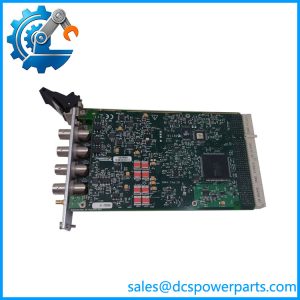
The NI PXI-6527 is a 48-channel isolated digital I/O module for PXI and CompactPCI-based data-acquisition systems. Its 24 optically isolated inputs are intended for monitoring external digital signals, while 24 solid-state relay outputs provide isolated switching for low-current loads and control signals. This architecture makes the module particularly useful in automated test equipment, production test fixtures, laboratory automation, and legacy industrial measurement systems.
The NI PXI-6527 is not a conventional PLC digital I/O card. It operates as a computer-controlled DAQ interface through the PXI/CompactPCI bus and is normally integrated with NI software and application hardware. The isolation between field signals and computer circuitry can be valuable in test systems where external equipment has different ground references or introduces electrical noise.
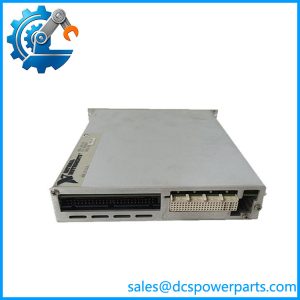
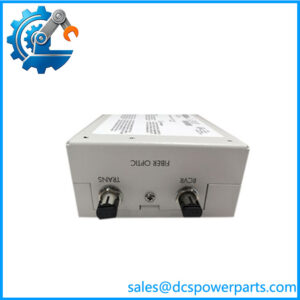
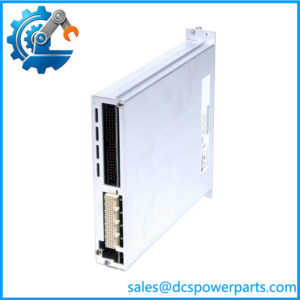
PXI-6527
Application Scenarios & Field Pitfalls — The Engineer’s Perspective
Engineering Pain Point
A frequent problem with older PXI test systems is assuming that any 24-channel digital output board can replace the PXI-6527. That is not the case. The 6527 combines 24 isolated inputs with 24 solid-state relay outputs, and the output behavior is fundamentally different from a conventional TTL or CMOS digital-output card.
Typical Applications
- Automated test equipment — monitoring test states and controlling low-current external devices.
- Production test fixtures — isolated digital status monitoring and low-current switching.
- Industrial measurement systems — separating computer-side grounds from external control signals.
- Laboratory automation — switching instruments, interlocks, indicators, and control inputs.
- Legacy PXI/CompactPCI systems — maintaining existing NI-based test platforms without redesigning the entire chassis.
Technical Pitfalls
1. The 6527 outputs are solid-state relays, not ordinary TTL outputs.
Each output is a normally open Form A solid-state relay. The output does not inherently generate a 5 V logic signal. An external source is required for switching applications; NI specifically notes that the module’s +5 V line can be used for TTL-level output applications when non-isolated power is acceptable.
2. Observe the 120 mA output-current limit.
The maximum specified switching capacity is 120 mA per channel. Loads such as solenoid valves, relays, lamps, and other inductive devices must be evaluated against both current and voltage limits. The module should not be treated as a general-purpose power output.
3. The relay outputs have measurable on resistance.
NI specifies 35 Ω maximum and 25 Ω typical on resistance. This matters when the switched load requires a tightly controlled voltage or when the load current approaches the module’s rating.
4. Input isolation is useful, but it does not eliminate wiring requirements.
The 24 inputs have individual isolated ground references, with 60 VDC isolation specified channel-to-channel and from computer ground/VCC. Correct field wiring and appropriate reference connections are still required for reliable digital sensing.
5. Digital filtering should be considered when inputs are noisy.
The 6527 provides programmable input filtering. NI’s documentation describes using filtering with change notification to prevent short glitches from generating excessive event notifications. This can be important in mechanical switches and electrically noisy test fixtures.
6. Do not confuse PXI-6527 with newer NI digital I/O families.
The PXI-6527 belongs to an older generation of NI PXI/CompactPCI hardware. Its software, driver, connector, and electrical characteristics should be checked against the existing test application before considering a modern PXI DIO module as a replacement.
7. Thermal loading becomes important at high output utilization.
NI notes that with all relay outputs carrying 120 mA and all inputs driven at 28 V, total module power dissipation can approach 20 W. The actual thermal condition therefore depends on the PXI chassis cooling capacity and the number of simultaneously energized outputs.
8. The PXI connector and field connector are separate considerations.
The module uses the PXI backplane for computer communication and a 100-pin keyed female connector for I/O. A replacement board without the appropriate cable or terminal accessory may not be immediately installable even when the board itself is correct.
9. Verify the application software before purchasing used inventory.
The 6527 family was designed for older NI software environments, including NI-DAQ and LabVIEW-based systems. Hardware recognition alone does not guarantee that the existing application will operate correctly after a board replacement. The installed driver and operating-system environment should be recorded before procurement.
10. Used-board testing should cover both input and output sections.
For surplus inventory, test all 24 inputs individually and verify the isolation behavior where practical. The 24 solid-state relay channels should also be tested for switching, leakage, and excessive on resistance rather than relying only on PXI enumeration.
Related Products
- NI PCI-6527 — PCI version of the 6527 48-channel isolated digital I/O architecture; different physical bus format.
- NI PXI-6521 — isolated digital I/O family member with different channel architecture and electrical characteristics.
- NI PXI-6528 — related PXI isolated digital I/O hardware; verify channel type and output characteristics before substitution.
- NI PXI-6508 — higher-density static digital I/O module, but not a direct electrical replacement for the 6527’s isolated inputs and solid-state relay outputs.
- NI PXI-6512 — isolated digital I/O family member with a different I/O architecture.
- NI SCXI-1163R — SCXI relay/digital switching hardware for a different NI signal-conditioning platform.
- NI SCXI-1160 — 16-channel electromechanical relay module; different relay technology and channel count.
- NI SCXI-1140 — eight-channel simultaneously sampling differential amplifier; useful in the same broader legacy NI test environment but serves an analog signal-conditioning role.
- NI PXI-6608 — PXI counter/timer module with timing and digital I/O capabilities; not a substitute for the 6527’s isolated 24-input/24-SSR architecture.
Procurement note: When sourcing an NI PXI-6527, record the complete module identification, PXI chassis model, operating system, NI-DAQ/DAQmx environment, 100-pin cable or terminal accessory, and the actual field-load requirements. For a used replacement, pay particular attention to the 24 solid-state relay channels: the 120 mA current rating, 60 VDC/30 VRMS switching limits, 35 Ω maximum on resistance, and approximately 3 ms switching time can materially affect the connected equipment.