Description
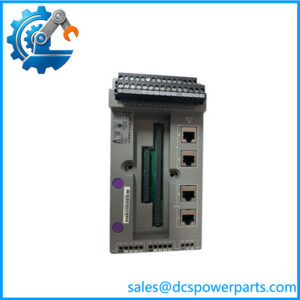
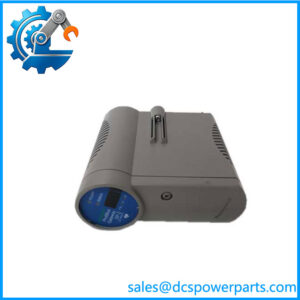
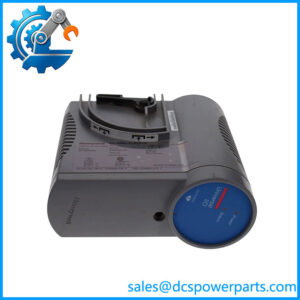
MSR04X1 | 4-Port Serial I/O Module | Industrial Control Room Display Interface
Key Technical Specifications
| Parameter | Specification |
|---|---|
| Model | MSR04X1 |
| Functional designation | 4-port SIO / Serial I/O |
| Interface type | Serial communications |
| Ports | 4 serial I/O ports |
| Associated device | TM117-DMX display driver |
| Display application | Control-room LED indication/display panels |
| Network architecture | Multidrop serial communication |
| Host role | Serial I/O interface |
| System generation | Legacy industrial control hardware |
The strongest available technical documentation states that the TM117-DMX is driven from the MSR04X1 serial communications (SIO) module. The MSR04X1 sends device addressing and output-condition data over the serial link, while downstream display modules accept messages matching their configured addresses.
Product Introduction
The MSR04X1 is a legacy four-port serial I/O interface used to communicate with external indication and display hardware in industrial control systems. Its clearest documented application is as the serial communications source for TM117-DMX 64-channel display-driver modules, which were used to operate LED indicators on control-room operator monitor panels.
This makes the MSR04X1 a communication/interface component rather than a conventional PLC analog or digital I/O card. In a legacy control system, its replacement must be evaluated together with the serial wiring, connected display drivers, addressing scheme and host controller rather than by matching only the number of ports.
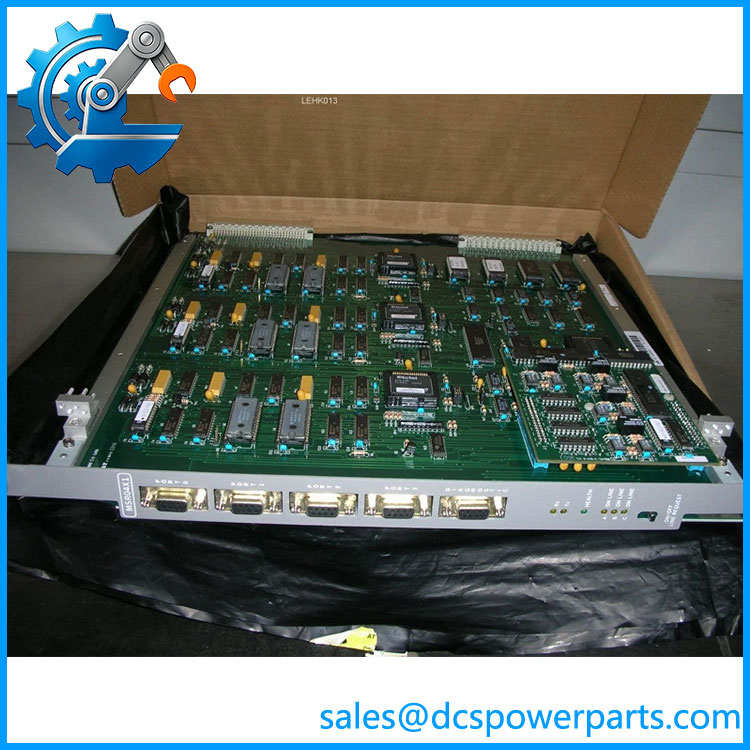
MSR04X1
Application Scenarios & Field Pitfalls — Engineer’s Perspective
Engineering Pain Point
The largest procurement risk with is incorrect database classification. Several current supplier pages describe it as a generic ABB PLC I/O card, analog-output board, or fiber-optic module. Those descriptions conflict with the technical documentation linking directly to the 4-port SIO function and TM117-DMX display architecture.
Typical Applications
- Control-room annunciator panels — serial communication to LED display modules.
- Legacy operator monitoring systems — transmission of device status and display commands.
- TM117-DMX installations — serving as the serial source for 64-channel display drivers.
- Multidrop display networks — addressing individual downstream display modules.
Technical Pitfalls to Avoid
- Do not replace it with a generic RS-485 card simply because both use serial communication. The documented system uses a specific SIO/display communication architecture.
- Check every downstream TM117-DMX address. The display-driver documentation states that messages contain a device address and data representing output conditions; each module accepts messages corresponding to its address.
- Do not assume Ethernet capability. The documented application is a serial communications interface. Listings claiming Ethernet, fiber-optic communication, or modern 800xA networking should be treated as unverified.
- Verify the manufacturer and host system from the nameplate. appears in multiple industrial spare-parts databases under ABB/BBC-related classifications, while the strongest functional documentation is found in the ICS Triplex/Rockwell display-system documentation. This is a legacy-part identification where the complete assembly and host system matter.
Related Products
- — 64-channel de-multiplexed display driver receiving serial data from .
- TM117 display system — legacy industrial display/annunciator hardware associated with the SIO architecture.
- — provides the field connections and power/interface arrangement for the display-driver assembly.
- Control-room LED monitor panels — typical downstream display application.
- Legacy SIO modules — related serial-interface hardware used in older control architectures.
The documentation specifies 64 open-collector display outputs, a dual serial communications link, 18–32 VDC power, and RS423/422 serial interfacing. These specifications belong to the , not to itself, and should not be transferred to the product record.
Procurement Note
For an replacement, verify:
- Complete part number and nameplate
- Manufacturer marking
- Host control-system family
- Four-port SIO configuration
- Serial cable type and pinout
- Number and type of connected units
- Display-module addressing
- Existing configuration/software
- Power and grounding arrangement
- Revision level
Database classification: = 4-port Serial I/O (SIO) module used in a legacy industrial display/annunciator communication architecture.
Do not publish unsupported specifications such as Ethernet, fiber-optic networking, AC500/AC31 PLC compatibility, analog channels, or generic 24 V I/O until the exact nameplate/host assembly is confirmed. The available technical evidence supports the 4-port SIO identification much more strongly.