Description
Product Overview
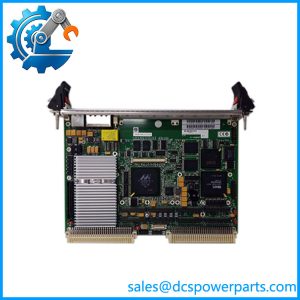
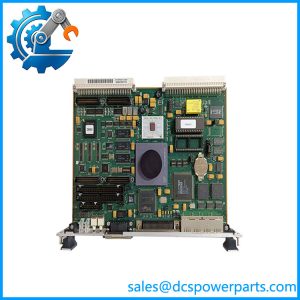
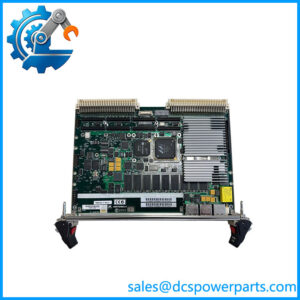
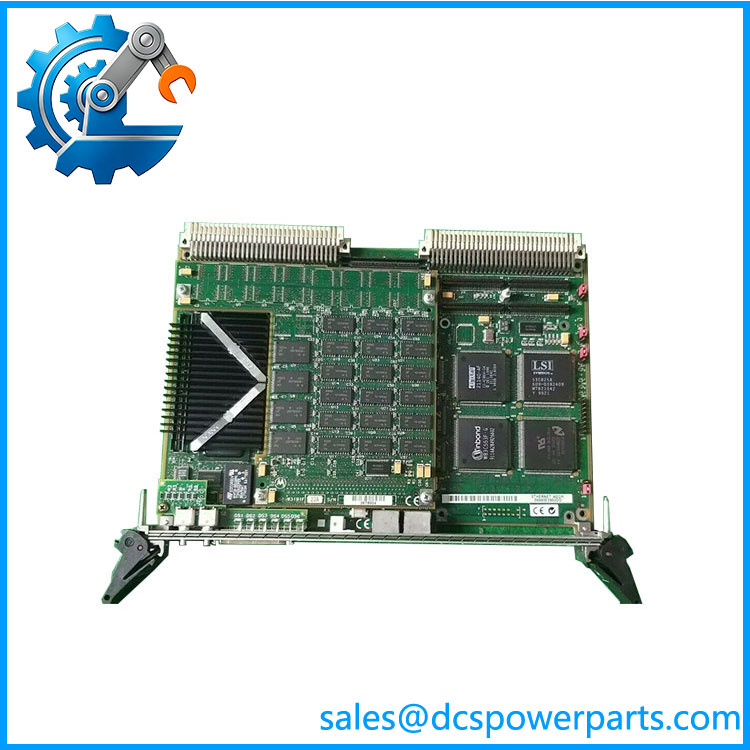
The Motorola MVME2604-761 combines an MVME2604 VME64 single-board computer with the MVME761 transition-module I/O architecture. At the processor level, the MVME2604 uses a PowerPC 604e processor and provides VMEbus, PCI/PMC expansion, memory, flash, and peripheral interfaces for embedded computing applications. The “-761” designation is important because it identifies the I/O configuration using the MVME761 transition module rather than the alternative MVME712 family. Motorola documentation specifically lists MVME2604-1xxx configurations as MVME761-compatible systems.
The Motorola MVME2604-761 is available in several processor and memory configurations, so the shortened ordering description should not be treated as a complete hardware specification. Documented MVME2604 configurations include 333 MHz MPC604e versions with 256 MB ECC DRAM and 400 MHz versions with 512 MB ECC DRAM; earlier configurations also exist. The accompanying MVME761 provides two EIA-574 asynchronous serial ports, two configurable synchronous/asynchronous serial ports, an IEEE 1284 parallel interface, and 10/100Base-TX Ethernet. It also includes the three-row DIN P2 adapter and cable required for the applicable system configuration.
For legacy VME maintenance, the Motorola MVME2604-761 is more than a processor board. It is a matched processor/I/O arrangement whose P2 signaling must agree with the installed transition hardware and backplane. Motorola explicitly warns that MVME2600-1xxx boards configured for MVME761 can be damaged if connected to the wrong MVME712 transition family.
That makes configuration verification essential before procurement. Check the complete board number, processor speed, DRAM size, flash configuration, PMC hardware, front-panel version, and transition-module assembly rather than purchasing solely against the generic “MVME2604-761” description.
Key Technical Specifications
| Parameter | Value |
|---|---|
| Product Model | -761 |
| Manufacturer | Motorola |
| Product Family | MVME2600 Series |
| Product Type | 6U VME64 Single-Board Computer |
| Processor | PowerPC MPC604e |
| Processor Speed | 200, 333, or 400 MHz depending on configuration |
| VME Architecture | VME64 |
| VME Interface | VMEbus |
| Main Memory | Configuration-dependent, up to 512 MB ECC DRAM |
| Flash Memory | Configuration-dependent; documented systems include 9 MB total flash |
| L1 Cache | 16 KB/16 KB or 32 KB/32 KB instruction/data |
| L2 Cache | 256 KB |
| PMC Interface | One PMC expansion slot |
| Ethernet | 10/100Base-TX via |
| Async Serial | 2 × EIA-574 |
| Sync/Async Serial | 2 × configurable ports |
| Parallel Interface | IEEE 1284-I |
| SCSI | 8-/16-bit Fast SCSI-2 depending on configuration |
| Transition Module | |
| P2 Adapter | 3-row DIN P2 for configuration |
| Typical Application | Embedded computing, industrial control, test systems, legacy VME platforms |
The exact CPU frequency and memory should be confirmed from the complete assembly/order number. Motorola’s documented ordering information lists, for example, -1361 as a 333 MHz/256 MB ECC configuration and -1471 as a 400 MHz/512 MB ECC configuration.
MVME2604-761
Related Products
- Motorola MVME2603-761 — Similar MVME2600 processor configuration using the PowerPC 603 processor. It is a lower-performance alternative within the same general VME architecture.
- — configuration intended for the MVME712 transition-module family. It is not a drop-in substitute for an -configured board.
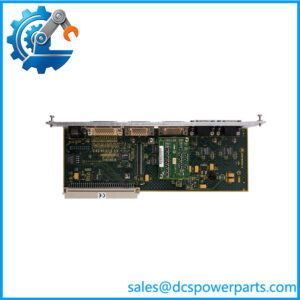
- Motorola -001 — Three-row P2 rear transition module used with the -compatible configuration. It exposes two asynchronous serial ports, two configurable serial ports, parallel I/O, and 10/100 Ethernet.
- Motorola -011 — Similar transition module using a five-row P2 adapter. It is intended for systems requiring the corresponding five-row backplane arrangement and wider SCSI configuration.
- Motorola MVME761P2-011 — Five-row P2 adapter associated with the -011 configuration. It should not be substituted for the three-row adapter without checking the chassis design.
- Motorola MVME2700 Series — Later VME processor family with a different processor architecture. Useful as a modernization reference, but not a direct hardware replacement.
- Motorola MVME5100 Series — Later-generation VME PowerPC platform with higher-performance processing architecture. Appropriate for migration studies rather than simple board replacement.
Frequently Asked Questions
1. What is tola used for?
The is a VME64 embedded computer configuration combining the processor board and transition I/O. It is suited to legacy embedded computing, industrial control, test equipment, and other applications built around VMEbus architectures.
2. Can I hthe ?
Do not treat it as a hot-swappable module.
Motorola’s installation procedure calls for an operating-system shutdown followed by removal of system power before installing the transition module.
For replacement:
- Shut down the application.
- Remove system power.
- Disconnect the rear I/O cabling.
- Verify P2 adapter orientation.
- Install the processor/transition hardware.
- Restore power and validate the boot process.
the support firmware v3.1?
A generic “firmware v3.1” cannot be assignery configuration.
The actual software environment depends on:
- hardware revision
- Boot ROM/firmware revision
- DRAM configuration
- Operating system
- Application software
- Installed PMC and I/O hardware
For replacement procurement, record the existing boot-ROM identification before selecting a spare.
4. Will rethe erase my application?
It can, depending on where the application and configuration are stored.
The processor board contains firmware and nonvolatile resources, but the operating system/application may also reside on external storage. Before replacement, back up:
- Boot parameters
- NVRAM configuration
- Flash contents where applicable
- Operating system image
- Application files
- Network configuration
A replacement with a different memory or firmware configuration should not be assumed to be operational immediately.
5. How can I verify a lus ?
Because is a configuration family rather than one single CPU/memory combination, request photographs or records showing:
- Complete Motorola part number
- CPU speed
- Installed DRAM
- Flash configuration
- PCB assembly number
- PMC configuration
- Front-panel type
- transition module
- P2 adapter and cable
This is particularly important because documented configurations range from earlier 200 MHz versions to 333 MHz and 400 MHz versions with different memory capacities.
Is compatible with MVME712M?
No—not as a general substitution.
Motorola specifically separates MVME2600-1xxx boards configured for from MVME2600-2xxx boards configured for MVME712-family I/O. The documentation warns that connecting the wrong transition family can damage the hardware.
7. What is the difference band ?
refers to the processor board itself. identifies a system configuration using the transition-module I/O arrangement.
The distinction matters during procurement because the transition module, P2 adapter, cabling, and processor-board P2 pin assignment must all match.