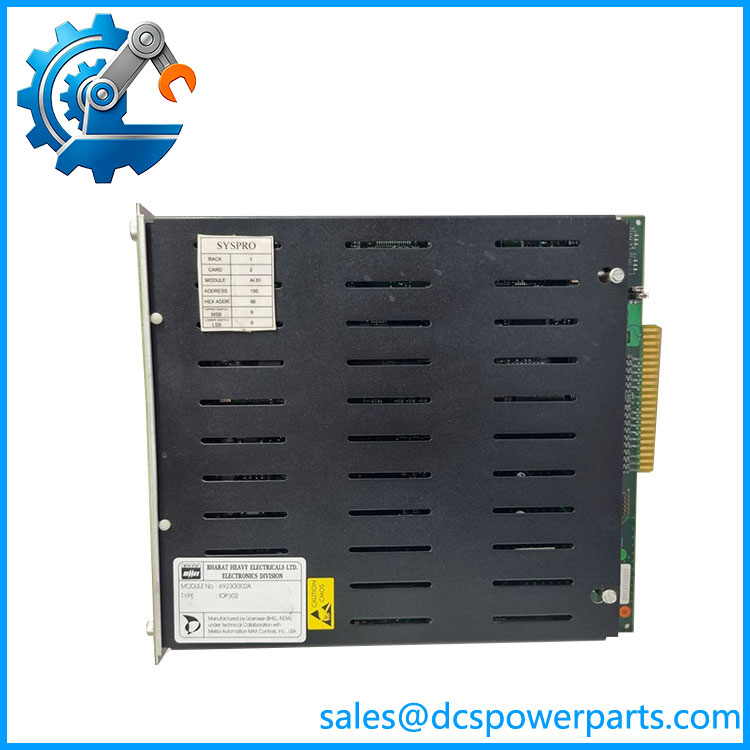
Description
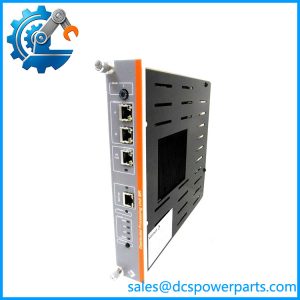
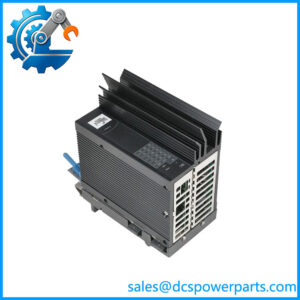
Metso IOP302 | 16-Channel 4-20 mA Analog Input Module | maxPAC Replacement
Key Technical Specifications
| Parameter | Specification |
|---|---|
| Manufacturer | Metso Automation |
| Model | |
| Product Type | 4–20 mA Analog Input Module |
| Number of Channels | 16 |
| Input Type | 4–20 mA common input |
| Transmitter Supply | 24 VDC via backplane |
| Channel Supply Protection | Individually fused |
| Field-to-Logic Isolation | Yes |
| ADC Architecture | ADC per channel |
| Scan Time | 20 ms |
| Self-Calibration | Yes |
| Periodic Online Recalibration | Yes |
| Open-Input Detection | Yes |
| Software Storage | FLASH |
| Mounting | maxPAC I/O system |
| System Bus | maxPAC / maxDNA I/O bus |
The original maxPAC documentation lists alongside IOP301, IOP303, and IOP304 as an analog-input family. It specifically distinguishes as the 4–20 mA common-input module, while IOP301 is the isolated analog-input version.
Electrical Function
The accepts 16 common 4–20 mA channels. Its backplane provides individually fused 24 V transmitter power for the connected channels, allowing the module to interface directly with typical powered process transmitters.
The module uses an ADC for each channel and provides field-to-logic isolation. The documented diagnostic functions include self-calibration at power-up, periodic recalibration while online, and open-input detection.
Product Introduction
The is a 16-channel analog input module for the Metso Automation maxPAC I/O subsystem. Its job is straightforward: acquire 4–20 mA process signals from field transmitters and make those measurements available to the system’s processing unit for monitoring and control. The maxPAC documentation explicitly identifies as the 4–20 mA common-input module.
For plant maintenance, the important distinction is between . Both belong to the same analog-input family, but is specifically intended for common 4–20 mA inputs, while IOP301 provides isolated analog input channels and can be configured for voltage or current signals.

- IOP302
Application Scenarios & Field Pitfalls — Engineer’s Perspective
Engineering Pain Point
The normally sits between process transmitters and the Metso control system, so an apparent transmitter failure can actually originate in the I/O module, field wiring, transmitter loop supply, or backplane connection. The module’s open-input detection is useful, but it does not eliminate the need to check the complete current loop.
Typical Applications
- Metso maxPAC / maxDNA process-control systems
- 4–20 mA pressure, flow, level, and temperature transmitters
- Pulp and paper process automation
- Power and process plant analog measurement
Technical Pitfalls to Avoid
- Do not confuse with IOP301.
is the 16-channel 4–20 mA common-input version. IOP301 is the 16-channel isolated analog-input module and has different wiring and application characteristics. - Check the transmitter power arrangement.
The can provide individually fused 24 V transmitter power through the backplane. Field wiring should therefore be checked against the actual transmitter type and loop-power arrangement before replacement. - Do not treat as a standalone PLC controller.
The module is an I/O device within the maxPAC architecture. It depends on the appropriate I/O base/backplane and processing hardware rather than operating as an independent CPU. - Verify redundancy wiring before swapping modules.
The maxPAC documentation describes wiring arrangements for redundant analog modules. If the plant uses redundant I/O, the field transmitter and signal-return wiring must be checked against the installed redundancy arrangement.
Related Products
- Metso IOP301 — 16-channel isolated analog-input module; supports voltage and current inputs and is the closest functional alternative, but not a direct assumption of interchangeability.
- Metso IOP303 — 8-channel 3-wire RTD input module for temperature measurement.
- Metso IOP304 — 16-channel thermocouple/EMF analog-input module.
- Metso IOP305 — 16-channel voltage-input module; intended for voltage rather than 4–20 mA signals.
- Metso IOP306 — Shunt/thermistor kit used in certain redundant analog-input arrangements.
- Metso IOT300A — I/O terminal base/interface assembly compatible with IOP-series modules including .
- Metso DPU404 / DPU4E — Distributed Processing Unit family associated with the maxPAC I/O architecture.
- Metso PSM303 — Power supply module used within the maxPAC I/O subsystem.
- Metso CIO312 — Communication interface module associated with the maxPAC/maxDNA architecture.
Procurement Check
Before approving a , verify:
- Exact module marking:
- Installed part/order number
- Metso maxPAC/maxDNA system compatibility
- 16-channel configuration
- 4–20 mA transmitter requirement
- Common-input versus isolated-input architecture
- 24 V transmitter loop-power arrangement
- IOT300-series base/terminal assembly
- Existing redundancy configuration
- Field terminal wiring
- Module firmware/configuration where applicable
- Condition of the mating backplane connector
Recommended procurement description:
Metso Automation 16-Channel 4–20 mA Common Analog Input Module, maxPAC/maxDNA I/O, Individually Fused 24 VDC Transmitter Supply, Field-to-Logic Isolation.
The key point is clear: is a 16-channel 4–20 mA analog input module for the Metso maxPAC/maxDNA architecture, not a general-purpose controller. The original Metso documentation is also preferable to generic supplier listings here because it gives the actual signal type and wiring architecture rather than assigning unrelated PLC specifications to the part.