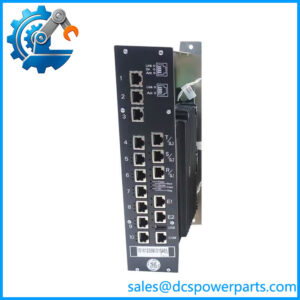
Description
Key Technical Specifications
| Parameter | Value |
|---|---|
| Product Model | IS200TVIBH2BBB |
| Manufacturer | General Electric (GE) |
| Series | Mark VI Speedtronic |
| Functional Acronym | TVIB |
| Product Type | Vibration Terminal Board |
| Main Function | Vibration signal termination and interface |
| Compatible Module | VVIB Vibration Monitor Board |
| Supported Sensors | Proximity probes, seismic sensors, velocity sensors, accelerometers |
| System Configuration | Simplex and TMR Mark VI architectures |
| Terminal Interface | Field vibration signal terminal blocks |
| Jumper Configuration | User-selectable probe routing settings |
| Calibration | No potentiometer-based calibration required |
| Mounting | Mark VI turbine control cabinet |
| Typical Applications | Gas turbine, steam turbine, rotating equipment protection |
Application Scenarios & Pain Points
A vibration monitoring failure can become a protection problem quickly. When operators see unstable vibration readings, false alarms, or missing channels, the root cause may be somewhere between the sensor and the monitoring processor rather than the probe itself.
Typical applications:
- Gas Turbine Protection: Used to connect shaft vibration and bearing monitoring sensors into GE Mark VI turbine protection systems.
- Steam Turbine Monitoring: Supports vibration measurement paths where mechanical condition feedback is required for safe operation.
- Generator Systems: Handles vibration-related field signals associated with rotating equipment monitoring.
- Turbine Maintenance Projects: Used as a replacement interface board when keeping existing Mark VI cabinets operational.
Field note: A power station experienced intermittent vibration channel dropouts during turbine startup. Probe resistance checks were normal, but signal continuity through the termination path was inconsistent. Replacing the TVIB board and verifying jumper settings restored stable vibration monitoring.
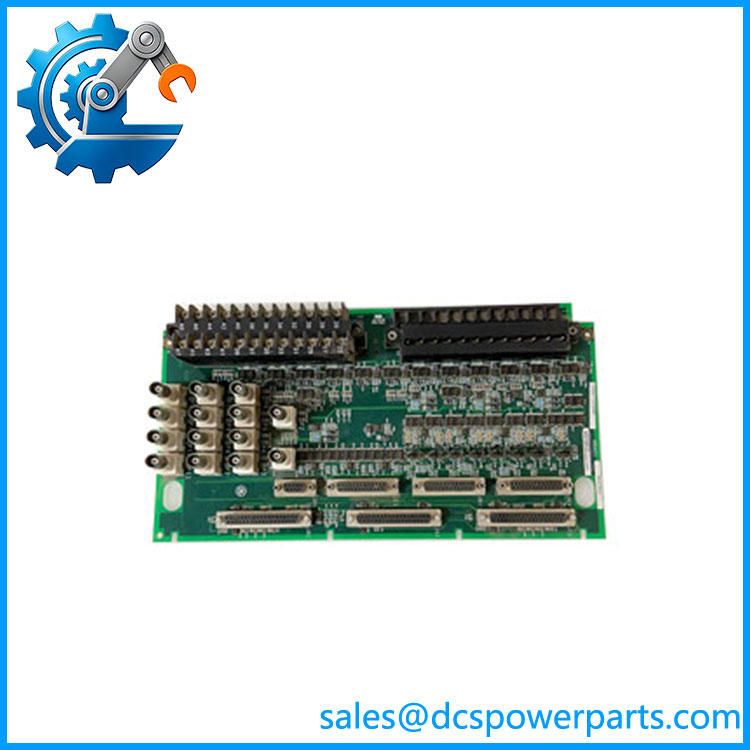
IS200TVIBH2BBB
Related Products
- GE IS200VVIBH1B — VVIB vibration monitor board used with the TVIB terminal interface. It performs vibration signal acquisition and processing after receiving inputs from the termination board.
- GE IS200TVIBH2BAA — Earlier TVIB vibration termination board revision. Similar function, but hardware revision matching is required before replacement.
- GE IS200TVIBH2BCC — Another TVIB revision variant. Used in similar vibration input applications with different board revision details.
- GE IS200TBAIH1CCC — Analog terminal board used for general Mark VI analog field signals rather than dedicated vibration inputs.
- GE IS200TBCIH1B — Contact input terminal board used for discrete field signals, not vibration measurement.
- GE IS200TREGH1B — Trip relay terminal board used for turbine protection relay interfaces.
- GE IS200TPROH1BBB — Protective termination board used for emergency protection signal routing within Mark VI systems.
- Bently Nevada 3500/42M 140482-01 — External vibration monitoring module commonly found in machinery protection applications where Bently Nevada architecture is used instead of GE VVIB.
The Engineer’s Guide: Field Pitfalls to Avoid
⚠️ Incorrect Probe Type Jumper Settings
The TVIB board can interface with different vibration sensor types, but jumper selections must match the installed probe configuration.
How to avoid: Record jumper positions before removal and verify the sensor type from turbine documentation.
⚠️ Confusing TVIB With VVIB Hardware
The TVIB board provides termination and routing; it does not replace the VVIB processing module.
How to avoid: Check cabinet layout and identify whether the failed component is the terminal interface or monitoring processor.
⚠️ Damaged Terminal Connections
Vibration signals are low-level measurement signals and can be affected by poor connections.
How to avoid: Inspect terminal screws, cable shields, and connector pins for oxidation, loose hardware, or physical damage.
Frequently Asked Questions (FAQ)
What is the GE IS200TVIBH2BBB used for?
The IS200TVIBH2BBB is a vibration terminal board used in GE Mark VI turbine control systems. It provides the connection point between field vibration sensors and VVIB vibration monitoring hardware.
Is the IS200TVIBH2BBB a vibration processor?
No. The board mainly handles termination and signal routing. The VVIB module performs the vibration monitoring and processing functions.
Which sensors can connect to the TVIB board?
Typical supported inputs include:
- Proximity probes
- Seismic sensors
- Velocity sensors
- Accelerometers
The exact configuration depends on the installed turbine design and jumper settings.
Can the IS200TVIBH2BBB replace any TVIB board?
Not automatically. Verify:
- Complete part number
- Revision level
- VVIB compatibility
- Probe configuration
- Terminal wiring
before installation.
Does the TVIB board require software configuration?
The board itself does not contain turbine application logic. However, correct hardware selection, jumper settings, and system configuration are required for proper vibration measurement.
What symptoms indicate a failing IS200TVIBH2BBB?
Common symptoms include:
- Missing vibration channels
- Unstable vibration readings
- False vibration alarms
- Communication faults between TVIB and VVIB
- Incorrect sensor signal levels
Is a refurbished GE suitable for turbine operation?
A tested refurbished unit can be suitable when terminal integrity, jumper configuration, signal paths, connector condition, and compatibility with the existing Mark VI vibration system are verified before installation.