Description
Product Introduction (Non-Templated)
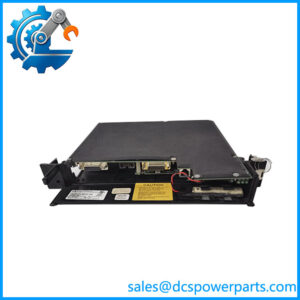
Power plant engineers facing unexpected excitation bridge faults inside high-voltage turbine cabinets face severe grid reliability risks and strict operational deadlines. When an aging gate pulse amplifier board throws fatal firing errors or fails to synchronize with the power bridge, securing an exact hardware drop-in is mandatory to prevent extended unit outages.
The IS200EGPAG1BCA provides precision high-speed gate pulse amplification and bridge monitoring within GE’s EX2100 excitation architecture. Deploying this direct replacement card restores closed-loop exciter control and system stability without forcing complex cabinet wiring redesigns.
Key Technical Specifications
- Board Type: Gate Pulse Amplifier Board (EGPA Designation)
- System Compatibility: GE EX2100 Excitation and Mark VI IS200 Control Platforms
- Input Power Requirement: 125 VDC nominal rail
- Bridge Interface: Controls and triggers up to 6 individual SCR gates
- Diagnostic Monitoring: Onboard status LEDs, temperature tracking, and airflow feedback loops
- Operating Temperature Range: -30°C to 65°C (-22°F to 149°F)
- Enclosure Protection: Industrial conformal-coated circuit board layout
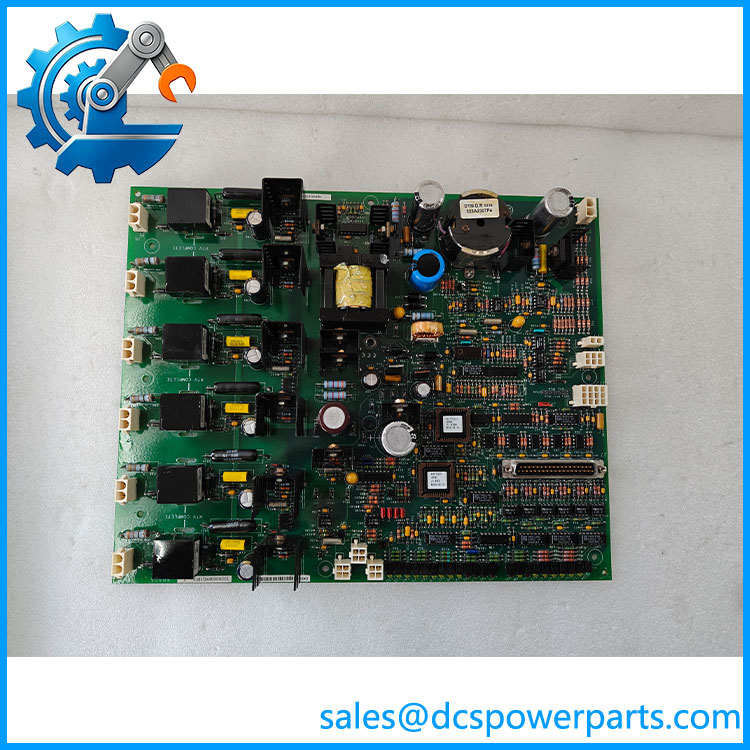
IS200EGPAG1BCA
Application Scenarios & Pain Points
Excitation system trips on large utility generators drop reactive power support instantly, creating severe voltage instability and exposing plant operators to heavy financial penalties.
- Power Generation: Managing generator field current regulation and thyristor bridge firing loops on heavy steam and gas turbine skids.
- Heavy Industrial Drives: Regulating high-current DC motor drives where execution lag causes speed control jitter.
- Utility Substations: Controlling excitation feedback loops exposed to aggressive electromagnetic interference and harsh thermal swings.
A combined-cycle power facility in the Midwest faced recurrent excitation bridge faults during peak summer ambient temperature shifts. Swapping out the erratic amplifier board for a verified surplus IS200EGPAG1BCA cleared the internal fault registers and restored stable excitation control immediately.
Related Products
- IS200DSPXH1DBC: EX2100 digital signal processor board; coordinates high-level generator regulation logic alongside EGPA interface modules.
- DS200DCFBG1BLC: Mark V excitation control and power distribution board; handles similar high-voltage gating duties on legacy systems.
- IS220PPRFH1B: PROFIBUS master gateway module; handles industrial network bus communications outside of exciter cabinets.
- IC086SLM082: Genius bus controller module; manages serial node networks within older GE automation architectures.
- RXE2N0F7G132A: GE RXi-XP industrial PC; manages high-level SCADA visualization separate from low-level exciter hardware cores.
The Engineer’s Guide: Field Pitfalls to Avoid
- Failing to Match Revision Suffixes: Dropping a replacement board with an unverified or mismatched suffix code (-BCA variants) into an active rack can trigger configuration locks in the software suite. How to avoid: Cross-reference the exact catalog string and hardware revision suffix on your original unit against the replacement label before landing connections.
- Electrostatic Discharge (ESD) Vulnerability: Handling static-sensitive circuit traces without an active grounded wrist strap can instantly destroy onboard microchips. How to avoid: Discharge your static potential against the metal enclosure backplane before touching any component pins (watch your torque on those terminal screws—overtightening strips the block threads easily).
- Ignoring Bridge Feedback Calibration: Replacing the board without verifying current conduction feedback and temperature signals can result in execution mismatches. How to avoid: Utilize the dedicated diagnostic software tools outlined in the GE manual to ensure proper parameter configuration prior to commissioning.
Frequently Asked Questions (FAQ)
- Can the IS200EGPAG1BCA be hot-swapped in a live excitation cabinet? No, standard industrial safety protocols require cutting all excitation and control power to the rack before pulling or seating processor cards to prevent electrical arcing.
- What causes internal component degradation on older EGPA boards? Over extended operational lifespans, electrolytic capacitor drying, thermal stress cycling, and dust accumulation are the primary drivers of hardware failure.
- Are factory-sealed surplus units tested prior to shipment? Yes, verified surplus components undergo comprehensive bench simulation testing to validate pulse timing, voltage thresholds, and SCR triggering response speeds.
- Does this board require software configuration updates upon installation? Because it functions as a critical bridge interface unit, you must verify that parameter settings align with your facility’s specific excitation profile using the system software tools.
- What is the significance of the onboard LED indicator lights? They provide immediate visual verification of active power rails and operational status across primary pulse channels.