Description
Honeywell Notifier MRP200XV31 Fire Alarm Control Board
Product Overview
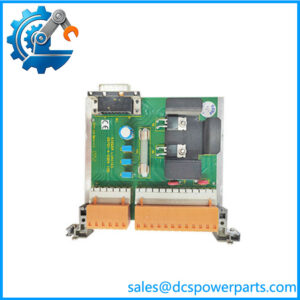
The Honeywell MRP200XV31 is identified in field and replacement-part records as the control-board assembly used with the Fire-Lite/Notifier RP-2002 agent-release fire alarm panel. The board is not a generic PLC CPU or conventional DCS controller. It is the central electronic assembly responsible for monitoring the panel’s initiating circuits, executing programmed fire/releasing logic, controlling notification or releasing outputs, and managing the panel operator interface. Current secondary identification records specifically associate MRP200XV31 with the RP-2002 and identify board markings such as 03667 Rev. A on examples in circulation.
Within the RP-2002 architecture, the control board works with six programmable Style B initiating circuits, four programmable Style Y output circuits, three Form-C relays, supervised power functions, battery backup, and the panel’s LCD/keypad interface. The documented panel provides an 80-character backlit LCD, real-time clock/calendar, a 256-event history buffer, and dedicated controls for acknowledgment, alarm silence, system reset/lamp test, and drill. These functions make the board considerably more than a simple I/O PCB; it is the logic and operator-control center of the releasing panel.
A critical procurement point is the MRP200XV31 identification itself. Public commercial records are not completely consistent: several sources identify the part as RP-2002, while others label it RP-2001. One source even lists MRP200XV31 under both Honeywell RP-2001 and RP-2002 references. That conflict is enough reason not to approve a blind substitution from the part number alone. Match the board revision, connector layout, keypad/display arrangement, host-panel model, and existing system documentation before commissioning.
Product Introduction
When an RP-series releasing panel develops a processor or control-board fault, replacing only the affected board can be preferable to rebuilding the complete enclosure assembly—but only when the replacement matches the installed hardware revision and system configuration.
For MRP200XV31 legacy replacement, the important checks are not generic CPU specifications. The field engineer needs to verify the six-zone architecture, output assignments, releasing logic, panel revision, and stored system configuration before returning a life-safety system to service.
Key Technical Specifications
| Parameter | Specification |
|---|---|
| Model | |
| Brand | Honeywell / Notifier / Fire-Lite |
| Associated Panel | RP-2002 agent-release control panel |
| Product Type | Fire alarm control board / control assembly |
| Initiating Circuits | 6 programmable Style B / Class B |
| Output Circuits | 4 programmable Style Y / Class B |
| Output Function | NAC or releasing circuit, programmable |
| Relay Outputs | 3 programmable Form-C relays |
| DC Output Capacity | 7.0 A maximum total in documented RP-2002 architecture |
| Display | 80-character backlit LCD |
| Event History | 256 events |
| Annunciator Support | Up to 8 annunciators in documented RP-2002 architecture |
| Operator Controls | ACK, Alarm Silence, System Reset/Lamp Test, Drill |
| Clock | Real-time clock/calendar |
| Host Power Architecture | Supervised 24 VDC system supply with standby battery |
| Board Revision | Examples identified as Rev. A; verify installed/replacement revision |
| Firmware | Exact firmware version not reliably established |
| Installation | Internal fire alarm panel control assembly |
| Hot Replacement | Not assumed |
| Environmental Rating | Exact standalone board rating not reliably established; use host-panel specification |
Major Features / Practical Advantages
Central Control for the RP-Series Architecture
The functions at the center of the fire alarm panel architecture. Six initiating circuits provide conventional field-device monitoring, while four programmable output circuits can be assigned to notification or releasing functions. Three Form-C relays provide additional alarm, trouble, supervisory, or other programmed interface functions depending on the host configuration.
That arrangement is important when troubleshooting. A failed board can affect several apparently unrelated symptoms at once: initiating-circuit supervision, LCD operation, output control, relay behavior, and panel-level fault reporting. Replacing an individual field device will not correct a failure originating in the central control assembly.
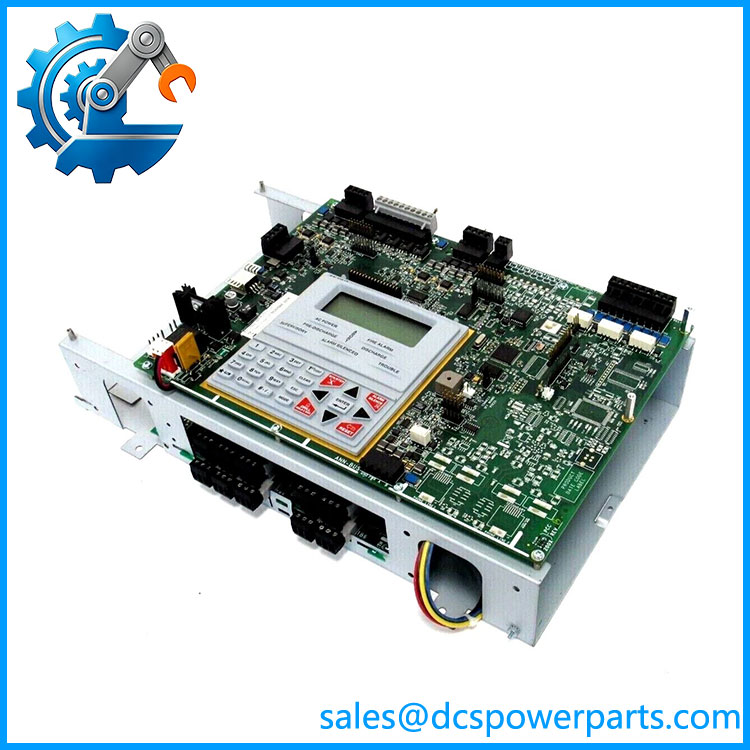
MRP200XV31
Six-Zone Conventional Input Architecture
The RP-2002 documentation describes six programmable Style B/Class B initiating device circuits. This is a conventional zone architecture, not an addressable intelligent detector loop. That distinction matters when engineers compare replacement panels or attempt to migrate an old installation to another platform.
The board should therefore be evaluated together with the existing field wiring and end-of-line supervision scheme. A replacement that changes circuit architecture is not automatically a drop-in solution.
Programmable Releasing and Notification Outputs
Four Style Y/Class B output circuits can be programmed for notification appliance or releasing functions in the documented RP-2002 architecture. The releasing application introduces a much higher verification requirement than an ordinary alarm-only control panel because output timing, cross-zone logic, abort functions, pre-discharge behavior, and discharge behavior can form part of the site’s approved fire-protection sequence.
Do not assume that installing a replacement board automatically restores the original cause-and-effect configuration. The site configuration and commissioning records remain the controlling references.
Integrated Operator Interface
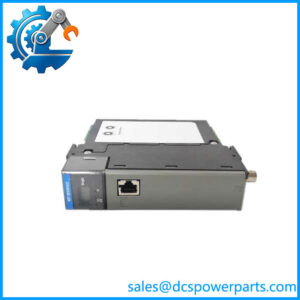
Examples of the assembly show the associated RP-2002 control board with keypad and display interface. The documented panel provides an 80-character backlit LCD and dedicated front-panel controls for acknowledgment, silence, reset/lamp test, and drill functions.
For maintenance personnel, this interface is important because it exposes panel-level trouble and event information without requiring a separate engineering workstation.
256-Event History
The RP-2002 architecture provides a 256-event history. This can be useful during failure analysis because the technician can review recent alarm, supervisory, trouble, and operator events rather than relying entirely on external maintenance records.
Legacy Replacement Considerations
is now encountered primarily as a replacement/maintenance component rather than as a new-generation control platform. Public listings show used and surplus examples, and board-level markings vary between available units.
For procurement, board revision and physical condition deserve attention. Look for damaged connectors, corrosion, repaired traces, altered components, missing hardware, and evidence of previous field modification. A board that powers up is not necessarily a board that has been correctly configured for a releasing application.
Related Products
- RP-2002 — Six-zone conventional agent-release control panel associated with ; uses four programmable output circuits and three Form-C relays.
- RP-2002E — 220/240 VAC version of the RP-2002 family; verify the complete panel assembly before assuming a board interchange.
- RP-2001 — Related conventional releasing panel family; public listings inconsistently associate with this model, so verify the actual installed panel.
- MRP-2002E — Related agent-release control-system designation documented within the Honeywell/Notifier MRP-2002 family.
- FLPS-7 — 7.0 A power-supply assembly used in compatible Fire-Lite/Notifier panel architectures.
- N-ANN-80 — Remote LCD annunciator compatible with applicable ANN-BUS panel configurations.
- N-ANN-I/O — ANN-BUS input/output interface used with compatible panel families.
- N-ANN-RLY — Remote relay interface for compatible ANN-BUS systems.
- N-CAC-5X — Class A converter associated with compatible Notifier releasing-panel architectures.
FAQ
What is ?
is a fire alarm control-board assembly identified with the Fire-Lite/Notifier RP-2002 agent-release control-panel family. It is the central electronic control assembly rather than a standalone power supply or conventional detector module.
Is the same as an RP-2002?
The available identification records strongly associate with the RP-2002 control panel. Some secondary sources, however, also label the same part number as RP-2001. Because of that documentation conflict, procurement should use the installed panel model and board revision as the final compatibility check rather than relying only on a catalog search.
How many initiating zones does the associated panel have?
The documented RP-2002 architecture has six programmable Style B/Class B initiating circuits. These are conventional initiating circuits, not addressable loops.
How many releasing outputs are available?
The panel architecture provides four programmable Style Y/Class B output circuits that can be assigned to notification or releasing functions. Exact programming must follow the approved fire-protection design.
Can I hot-swap ?
No hot-swap procedure should be assumed. This board belongs to a life-safety releasing system containing AC power, standby batteries, supervised initiating circuits, notification circuits, and potentially agent-discharge outputs. Follow the host panel’s approved service and isolation procedure.
Does support firmware v3.1?
A reliable public source was not found establishing a specific v3.1 firmware version for this board. Do not use an unverified firmware number as a procurement or compatibility criterion. Match the hardware revision and host-panel documentation instead.
Will replacing the board preserve my releasing logic?
Do not assume that it will. The replacement board must be checked against the existing system configuration and commissioning documentation. After replacement, the initiating circuits, releasing outputs, timers, interlocks, abort functions, notification circuits, relays, batteries, and supervisory functions should be functionally tested according to the approved procedure.
Does New Surplus condition mean the board is equivalent to a new factory assembly?
No. New Surplus describes commercial condition, not necessarily configuration history. For , inspect the board revision, connectors, keypad/display assembly, component condition, and any identification markings before approving it for a safety-critical installation.
Procurement Note
should be treated as a host-panel-specific fire alarm control assembly. The most important procurement data are the complete installed panel model, board revision, identification markings, connector arrangement, keypad/display configuration, and available commissioning records.
The public record is unusually inconsistent for this part number: RP-2002 is the stronger association, while some catalogs identify it as RP-2001. That is precisely the kind of discrepancy that can create an expensive field failure if a replacement is ordered solely from a marketplace description.
For a replacement project, photograph the existing board label and revision markings, compare connector positions, preserve the existing fire-system configuration records, and perform a complete acceptance test after installation. For a releasing system, successful power-up is not proof of functional equivalence.