Description
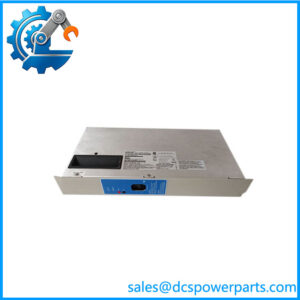
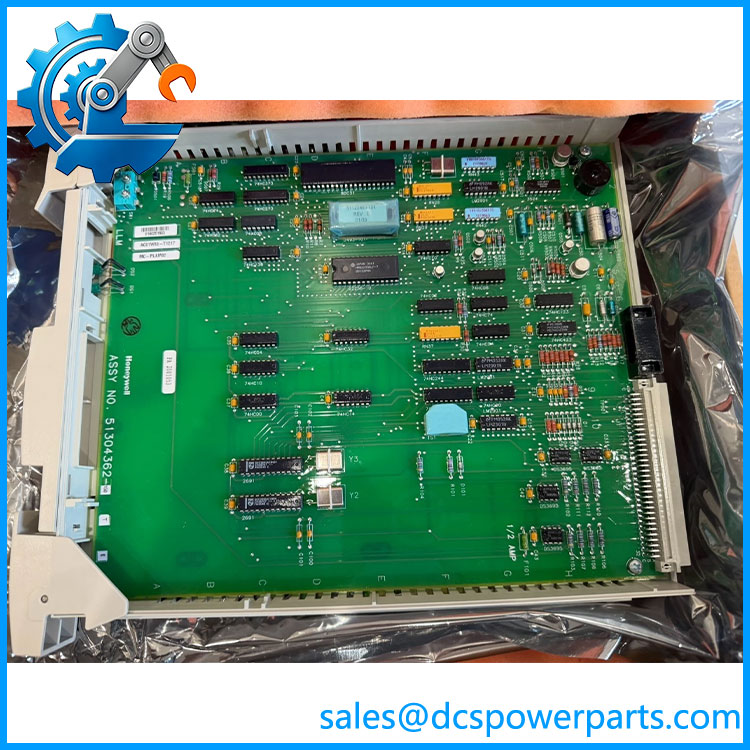
Honeywell MC-PLAM02 51304362-150 Low-Level Analog Input Multiplexer Processor
Key Technical Specifications
| Parameter | Specification |
|---|---|
| Manufacturer | Honeywell |
| Model | MC-PLAM02 |
| Part number | 51304362-150 |
| Module type | Low-Level Analog Multiplexer IOP |
| Maximum input capacity | 32 channels |
| Supported signals | Thermocouple, RTD, low-level mV |
| A/D resolution | 14-bit, according to published technical listings |
| Input scan rate | 32 samples per second across the scan |
| Input impedance | At least 2 MΩ at 100 mV |
| Crosstalk | 120 dB, DC to 60 Hz |
| Line-frequency synchronization | Configurable for 50 or 60 Hz |
| Input termination | Compatible LLMux FTAs; confirm exact model |
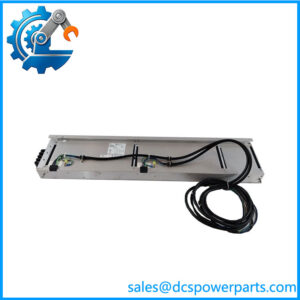
| FTA connection | Power adapter MU-TLPA02 and compatible IOP-to-FTA cabling, as applicable |
| System interface | Honeywell HPM I/O architecture |
| Redundancy | Not supported at the IOP level |
| Conformal coating | Listed for the CE-compliant part |
| Operating temperature | Published listings commonly specify 0 to +60°C; confirm against the applicable manual |
| Power requirements | Verify from the official hardware specification and installed assembly |
| Mounting | Dedicated controller/I/O rack slot |
The technical values above are drawn from published product listings and planning information; a current OEM specification should be used for engineering acceptance. Do not substitute generic analog-input assumptions for the LLMux-specific electrical limits.
MC-PLAM02 51304362-150
Product Introduction
The Honeywell MC-PLAM02, part number 51304362-150, is a low-level analog input multiplexer processor used in Honeywell legacy process-control installations. It acquires weak signals from temperature sensors and other low-level analog sources through compatible field termination assemblies. The processor multiplexes these inputs, performs analog-to-digital conversion, and supplies the resulting measurements to the control system for display, alarming, trending, and process-control functions.
This is not a conventional 4–20 mA analog input card. Its application depends on the matching LLMux termination hardware, sensor type, wiring arrangement, and HPM configuration. During replacement, confirm the full part number, FTA model, channel allocation, and control-system compatibility. A processor that physically fits the rack may still be unsuitable if the termination assembly or configuration differs.
Application Scenarios & Field Pitfalls — The Engineer’s Perspective
Engineering Pain Point
Temperature channels can report implausible values even when the sensor itself is serviceable. Common causes include incorrect thermocouple type, mismatched RTD wiring, poor terminal connections, a faulty cold-junction reference, or a problem in the FTA-to-processor path. Replacing the MC-PLAM02 without checking the complete signal chain can leave the original fault unresolved.
Typical Applications
- Multipoint thermocouple monitoring in process plants.
- RTD temperature acquisition through compatible LLMux termination assemblies.
- Temperature monitoring for boilers, furnaces, turbines, and process equipment.
- Maintenance of legacy Honeywell TDC 3000 / TPS HPM installations.
Technical Pitfalls to Avoid
- Match the termination assembly. Confirm the exact FTA model and whether the installation uses one or two 16-channel assemblies. Published documentation describes support for up to 32 inputs through two compatible FTAs.
- Verify sensor configuration. Thermocouple type, RTD resistance standard, polarity, and wiring method must agree with the FTA and control-system configuration.
- Check cold-junction compensation. For thermocouple installations, establish whether the selected FTA uses a local or remote cold-junction reference and verify its wiring and placement.
- Do not assume redundancy. The LLMux IOP is not documented as a redundant module. Confirm the process impact and approved maintenance procedure before removal.
- Inspect cables and grounding. Shielding, routing, grounding, and terminal condition are important when acquiring low-level signals. For CE-compliant installations, follow the specified shielded cable and termination requirements.
- Validate measurements after replacement. Compare representative channel readings with a calibrated source or independent instrument, then check alarm limits, engineering units, and channel assignments.
Related Products
These related models are associated with the Honeywell LLMux / HPM ecosystem. They are not automatic substitutes for MC-PLAM02.
- MC-PLAM01 — Related low-level analog multiplexer processor; verify hardware revision and system compatibility.
- MU-TLPA02 — Power adapter used in documented MC-PLAM02 LLMux configurations.
- MC-TAMT02 — Thermocouple field termination assembly; confirm input type and cold-junction reference arrangement.
- MC-TAMT03 — Thermocouple termination option; verify the exact channel and reference configuration.
- MC-TAMT12 — Thermocouple termination assembly variant documented for remote cold-junction reference arrangements.
- MC-TAMT13 — Related thermocouple termination variant; verify compatibility with the installed processor and cabling.
- MC-TAMR04 — LLMux field termination assembly referenced in product listings; confirm the specific sensor and wiring requirements.
- MU-KFTSxx — Shielded IOP-to-FTA cable family referenced for CE-compliant installations; select the exact cable length and part number from the system documentation.
Procurement Note
Before ordering Honeywell MC- 51304362-150, verify the installed processor label, FTA model numbers, power adapter, IOP-to-FTA cabling, controller family, and software configuration. Confirm that the replacement is the correct CE-compliant version where required. Ask for photographs of the module label and connectors, and include post-installation channel validation in the maintenance plan. Do not approve a substitute based solely on the MC- model name or the stated 32-channel capacity.