Description
Key Technical Specifications
| Parameter | Specification |
|---|---|
| Product Model | K4LCN-16 |
| Part Number | 51403519-160 |
| Manufacturer | Honeywell |
| System | TDC 3000 / LCN |
| Product Type | LCN Processor Board |
| Processor | Motorola 68040 |
| Memory | 16 MW, non-expandable |
| LCN Interface | Integrated |
| Software Compatibility | R500 software |
| LCN Transmission Rate | 5 MHz |
| Clock Synchronization | Digital clock synchronization data frames, transmit/receive |
| Installation | LCN node chassis / system rack |
| Function | Node processing, memory management, LCN communication |
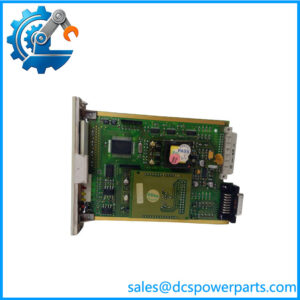
The strongest technical descriptions identify K4LCN-16 / 51403519-160 as an LCN processor board using a Motorola 68040 processor with 16 MW of non-expandable memory. The board incorporates the LCN interface rather than requiring a separate LCNI board, and published documentation identifies digital clock synchronization frame generation and reception at the standard 5 MHz LCN rate.
Some reseller pages incorrectly describe K4LCN-16 as a generic I/O module, frequency controller, or 24 VDC field module. Those descriptions conflict with the more specific LCN processor-board identification. For procurement purposes, I would treat 51403519-160 and the actual board marking as the primary identification criteria.
Product Introduction
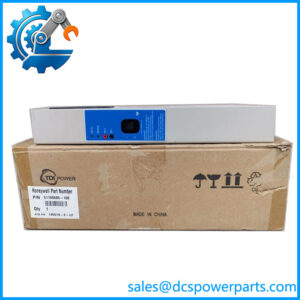
The Honeywell K4LCN-16 is an LCN processor board used in legacy Honeywell TDC 3000 control-system architecture. Part number 51403519-160 identifies the board as a Motorola 68040-based processor with 16 MW of non-expandable memory and an integrated Local Control Network interface. It is intended for LCN node processing rather than field signal acquisition, so it should not be treated as a conventional PLC I/O module.
From a maintenance perspective, the important feature is the consolidation of processor and LCN interface functions on one board. That makes the K4LCN-16 a significant component when maintaining older LCN nodes where controller availability and software compatibility can determine whether a replacement can be installed without broader system changes. The board is also identified as supporting R500 software.
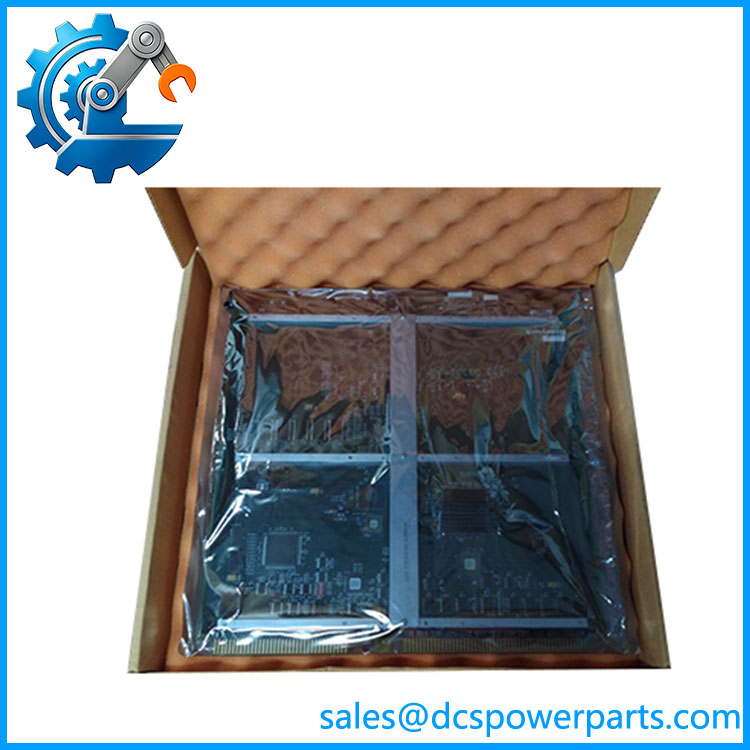
K4LCN-16
Application Scenarios & Field Pitfalls
Engineering Pain Point
The main difficulty with the K4LCN-16 is not field wiring. It is legacy LCN compatibility.
A failed processor board can stop an otherwise healthy legacy DCS node, while newer replacement hardware may require system migration rather than a simple board swap. The therefore remains relevant as a maintenance spare for plants that continue operating TDC 3000/LCN infrastructure.
Typical Applications
- Oil and gas processing: Legacy TDC 3000 nodes supporting refinery and hydrocarbon-process control.
- Chemical processing: LCN-based operator and control nodes in long-running process installations.
- Power generation: Maintenance of older Honeywell DCS installations where LCN infrastructure remains operational.
- Continuous-process manufacturing: Replacement of failed processor boards in established TDC 3000 control cabinets.
The K4LCN family is specifically associated with LCN node applications. Published technical information notes that different LCN node types use different portions of the available 16 MW memory; for example, an NIM may use less memory than a Universal Station.
Technical Pitfalls to Avoid
1. Do not buy it as a generic 16 MB processor.
The important specification is the LCN architecture, not simply processor speed or memory size. A generic Motorola 68040 board is not a functional substitute.
2. Verify the node application and software level.
is associated with R500 software, so the existing node configuration should be checked before replacement. The same 16 MW capacity does not automatically mean every LCN node configuration is interchangeable.
3. Match the complete part identification.
For purchasing, specify / 51403519-160 and compare the board revision, installed memory configuration, and physical markings. Some aftermarket listings attach unrelated specifications such as Modbus, EtherCAT, PROFINET, DIN-rail mounting, or 16-channel I/O to this model; these should not be accepted without Honeywell documentation supporting the claim.
Related Products
- K2LCN-2 — Earlier Honeywell LCN processor architecture; useful when evaluating an existing legacy LCN node, but not automatically interchangeabth .
- LCNP4 — Honeywell LCN processor/interface family used in later LCN architectures; relevant when planning migration or replacement strategies.
- NIM — Network Interface Module within the LCN architecture; its role differs from the processor board and should not be substituor .
- Universal Station — LCN node application that can use a processor but has different memory and system requirements.
- TDC 3000 LCN Processor Boards — Broader processor family for legacy Honeywell LCN nodes; exact revision and software compatibility must be checked.
- Honeywell LCN Interface Hardware — Related communication hardware supporting the Local Control Network, but not necessarily equivalent to the integrated interon .
Procurement Check
For a , I would put more weight on part number 51403519-160, board revision, processor identification, memory configuration, and the target LCN node type than on generic marketplace specifications. The available technical descriptions consistently identify it as a 16 MW Motorola 68040 LCN processor board, while several secondary listings incorrectly classify it as an I/O or frequency-control module.
For a legacy TDC 3000 system, verify the installed software generation and node configuration before treating another LCN processor as a replacement.