Description
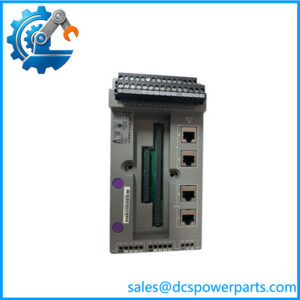
Honeywell CC-TUIO41 51306873-176 | Universal I/O IOTA | Experion PKS Redundant UIO-2
Key Technical Specifications
| Parameter | Specification |
|---|---|
| Manufacturer | Honeywell |
| Model | CC-TUIO41 |
| Part Number | 51306873-176 |
| Product Type | Universal I/O Termination Assembly (IOTA) |
| I/O Family | UIO-2 |
| Configuration | Redundant |
| Associated IOM | CC-PUIO31 |
| System | Experion PKS Series C / Universal Process Cabinet |
| Documented Point Capacity | 32 points per assembly |
| Enclosure/Application | Universal Process Cabinet |
| Environmental Compliance | System installation dependent; refer to applicable Honeywell installation documentation |
Honeywell’s Universal Process Cabinet documentation explicitly lists CC- + CC-PUIO31 as the redundant UIO-2 IOTA and IOM combination, with 32 points each. The same documentation distinguishes it from the non-redundant CC-TUIO31 + CC-PUIO31 configuration.
Honeywell’s current Universal Marshalling Solution documentation also lists as a supported IOTA for the CC-PUIO31 Universal Input/Output Module, identifying the combination as hardware.
Product Introduction
The Honeywell CC- is a redundant Universal I/O Termination Assembly (IOTA) used with the CC- Universal I/O Module in Honeywell Experion PKS Series C and Universal Process Cabinet architectures. It is important to classify the CC- correctly: it is an IOTA/termination assembly, not the electronic Universal I/O module itself. The CC- provides the I/O electronics, while the CC- provides the field termination and system interface arrangement required by the architecture.
For plant maintenance, this distinction matters when preparing a spare-parts list. A technician replacing a damaged termination assembly needs the correct IOTA variant, while a failed I/O processing assembly requires the corresponding CC-. The redundant designation is also significant because Honeywell documents CC- specifically for redundant configurations, while CC-TUIO31 is used for non-redundant configurations.
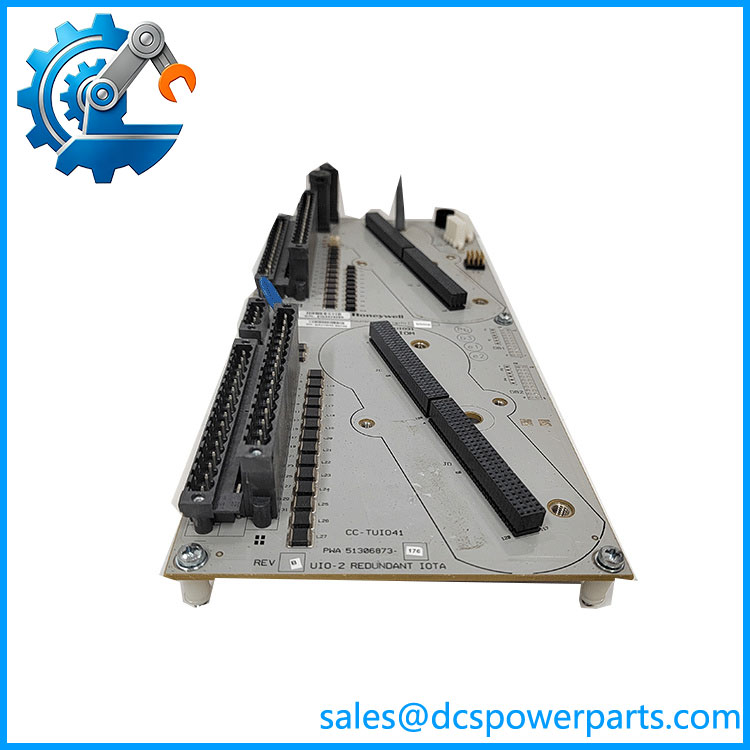
CC-TUI041 CC-TUIO41
Application Scenarios & Field Pitfalls — The Engineer’s Perspective
Engineering Pain Point
A frequent procurement mistake with Honeywell Series C hardware is treating the IOTA and IOM as the same component. They are not. The CC- is the termination assembly, whereas CC- is the Universal I/O Module installed with it. Ordering only one side of the assembly can leave the plant with a physically correct-looking spare that cannot replace the failed component.
Typical Applications
- Experion PKS Series C I/O systems requiring universal field signal termination.
- Universal Process Cabinet installations using CC- Universal I/O modules.
- Redundant architectures where Honeywell specifies CC-.
- Legacy plant maintenance and spare inventory for existing Series C installations.
- Mixed I/O cabinet configurations where assemblies are combined with other Honeywell I/O architectures. Honeywell documents configurations combining redundant assemblies with LLAI assemblies.
Technical Pitfalls
1. Do not confuse CC- with CC-.
The CC- is the IOTA; the CC- is the Universal I/O Module. Honeywell’s documentation lists them as a paired hardware configuration.
2. Confirm redundancy before substitution.
Honeywell documents for redundant configurations and CC-TUIO31 for non-redundant configurations. These should not be treated as interchangeable merely because their model numbers are similar.
3. Verify the part-number spelling carefully.
The correct documented designation is , with the letter “O” in TUIO. Listings and purchasing systems sometimes show CC-TUI041, where “O” and zero are confused. For a legacy spare, compare the complete label and Honeywell part number rather than relying on a text-only description.
4. Do not use generic analog-I/O specifications for the IOTA.
Some third-party listings incorrectly describe the CC- itself as a multi-channel analog input module. Honeywell’s documentation identifies it as the IOTA associated with CC-. Signal-processing specifications should therefore be attributed to the complete IOM/IOTA assembly or, where appropriate, the CC-—not automatically to the CC-.
5. Check the exact cabinet architecture.
Honeywell’s UPC documentation allows multiple assemblies depending on the configuration. The documented redundant configuration permits up to two redundant IOTAs/IOMs, with each assembly specified at 32 points.
6. Hazardous-area installations require the complete wiring configuration to be checked.
Honeywell’s UPC hazardous-location documentation provides specific field-wiring parameters for CC- with CC-/CC-TUIO31 and optional field-I/O marshaling hardware. Do not assume that the IOTA alone establishes the hazardous-area approval of the complete installation.
Related Products
- Honeywell CC- — Universal I/O Module paired with the CC- IOTA; this is the electronic I/O processing component.
- Honeywell CC-TUIO31 — non-redundant IOTA; primary comparison point when checking redundancy.
- Honeywell CC- 51306873-176 — Redundant IOTA covered here.
- Honeywell CC-PAIH01 — Series C analog input module with HART functionality; different I/O architecture.
- Honeywell CC-PAIH02 — Related Series C analog input option.
- Honeywell CC-TAIX01 — Series C analog input IOTA/module family; not a substitute for the architecture without engineering verification.
- Honeywell CC-TAIL51 — LLAI IOTA used with CC-PAIL51 in documented UPC configurations.
- Honeywell CC-PAIL51 — LLAI module used with the CC-TAIL51 IOTA.
- Honeywell CC-TION13 / CC-IION01 / CC-INAM01 — CN100-related hardware used in the Universal Process Cabinet architecture.
Procurement Note
For a replacement order, specify Honeywell CC-, P/N 51306873-176 and state that the requirement is for the redundant IOTA. If the existing hardware label reads CC-TUI041, verify whether the “0” is actually the letter O before purchasing. Also confirm that the installed electronic module is and that the cabinet is configured for redundant operation. Honeywell’s own documentation is the better reference for this identification than generic distributor descriptions.