Description
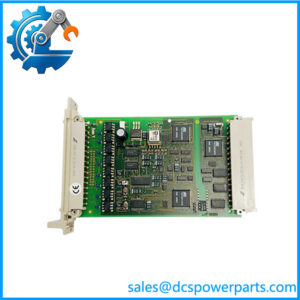
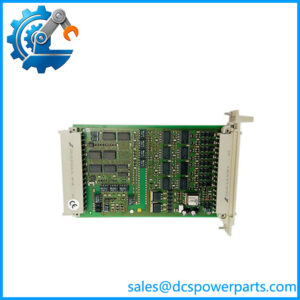
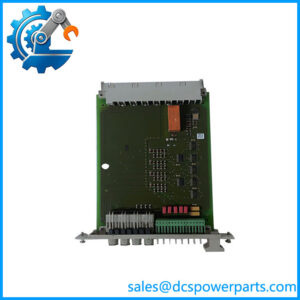
HIMA F8651X | H51q Central Module | Safety Controller CPU
Key Technical Specifications
| Parameter | Specification |
|---|---|
| Manufacturer | HIMA |
| Model | F8651X |
| Part Number | 984865165 |
| Product Type | Central Module |
| System Family | H51q |
| Compatible Systems | H51q-M, H51q-H, H51q-HR |
| Processor | Intel 386EX, 32-bit |
| Processor Clock | 25 MHz |
| Operating-System Memory | 1 MB Flash-EPROM |
| User-Program Memory | 1 MB Flash-EPROM |
| Data Memory | 1 MB SRAM |
| Serial Interfaces | 2 × RS-485 |
| RS-485 Isolation | Electrically isolated |
| RS-485 Maximum Rate | 57.6 kbit/s |
| Diagnostic Display | 4-digit matrix/alphanumeric display |
| Watchdog | Safety-related watchdog |
| Watchdog Output | 24 V, up to 500 mA, short-circuit protected |
| Construction | Two European-standard PCBs plus diagnostic-display PCB |
| Rack Space | 8 SU |
| Operating Supply | 5 VDC / 2 A |
| Battery Backup | Buffered SRAM / central-module battery |
| Related Communication Modules | F8627X / F8628X |
The HIMA F8651X data sheet identifies the module as the central module for H51q-M, H51q-H, and H51q-HR systems. HIMA’s system documentation also distinguishes the F8651X from the F8650X: F8651X is used in the H51q-M/H/H R configurations, while F8650X is used in the corresponding safety variants designated MS/HS/HRS.
Product Introduction
The HIMA F8651X is a central processing module for the legacy H51q safety controller family. It executes the central safety-control functions and provides the processor-side interface to the system’s I/O and communication architecture. HIMA documentation specifies an Intel 386EX 32-bit processor operating at 25 MHz, 1 MB Flash-EPROM for the operating system, 1 MB Flash-EPROM for the user program, and 1 MB SRAM for data.
The module also provides two galvanically isolated RS-485 interfaces, a four-digit diagnostic display, power-supply monitoring, and a safety-related watchdog. Ethernet communication is not provided by the itself in the configuration documented by HIMA; Ethernet functions are handled through communication modules such as the F8627X connected through the H51q backplane architecture.
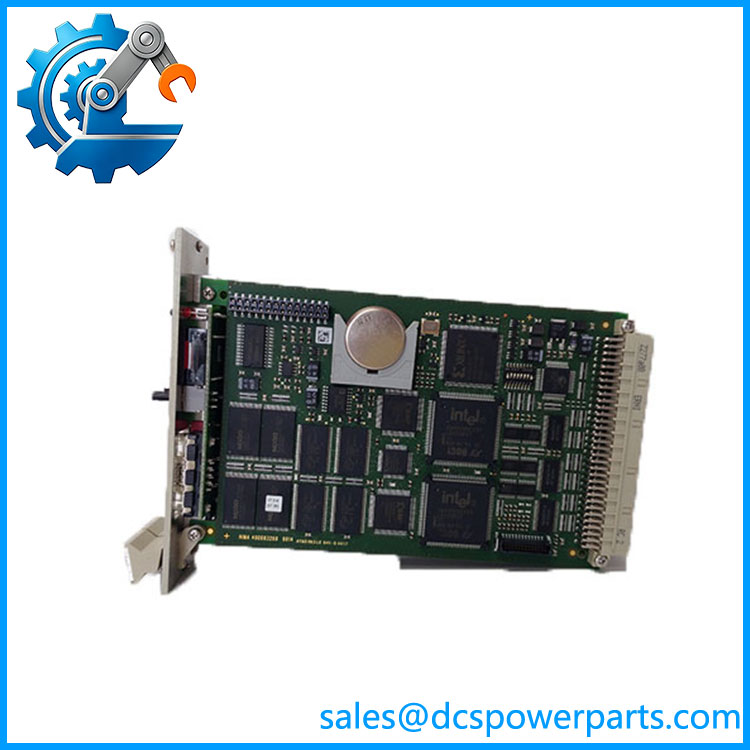
F8651X
Application Scenarios & Field Pitfalls — Engineer’s Perspective
Engineering Pain Point
When an fails, replacing it is not equivalent to replacing a conventional PLC CPU. The module is part of a safety controller architecture, and the operating-system version, application program, system configuration, battery condition, communication settings, and redundant-controller arrangement all matter.
A replacement should therefore be matched against the installed H51q system rather than selected solely by the model number.
Typical Applications
- HIMA H51q-M safety controller systems
- H51q-H redundant safety controller configurations
- H51q-HR systems using two central processing units and two I/O buses
- Safety-instrumented control and shutdown applications using legacy HIMA PES hardware
- Industrial process systems requiring deterministic safety logic and diagnostic supervision
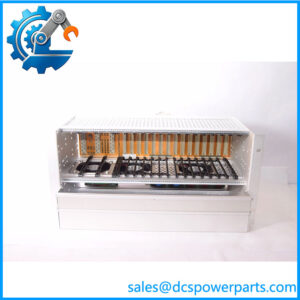
HIMA’s system overview specifies one for H51q-M and two central modules for H51q-H and H51q-HR. The H51q-HR architecture also uses two I/O buses, while the documented H51q systems can support up to 256 I/O modules depending on configuration.
Technical Pitfalls to Avoid
- Do not confuse with F8650X.
These are different central-module variants assigned to different H51q system configurations. The system designation on the cabinet documentation should be checked before procurement. - Do not assume Ethernet is built into the .
The documented interfaces are two isolated RS-485 ports. HIMA’s architecture uses modules such as F8627X for Ethernet communication, including ELOP II TCP, safeethernet, and Modbus TCP functions. - Check the operating-system and application compatibility.
HIMA documentation states that later operating-system versions introduced functions such as ELOP II TCP and expanded station-number configuration. The installed OS/resource version therefore matters when replacing an older CPU. - Inspect the battery condition before commissioning.
The uses battery-backed SRAM. HIMA documentation recommends battery replacement at defined service intervals and identifies the CR2477N as an applicable battery type. A replacement CPU should be checked for battery status rather than assumed ready for immediate long-term service.
Related Products
- HIMA F8650X — H51q central module for the MS/HS/HRS system variants; not a direct substitute simply because it occupies a similar central-module role.
- HIMA F8652X — Related central module for H41q-MS/HS/HRS systems.
- HIMA F8653X — Central module associated with H41q-M/H/HR systems.
- HIMA F8627X — Ethernet communication module used with H41q/H51q systems; handles network communication separately from the CPU.
- HIMA F8628X — PROFIBUS-DP communication module for H41q/H51q architectures.
- HIMA F8621A — Optional coprocessor module used in H41q/H51q central racks.
- HIMA F7131 — H51q power-supply monitoring and battery-buffering module.
- HIMA F7126A — 24 VDC / 5 VDC power-supply module used in H51q systems.
- HIMA F7553 — Coupling module used for I/O-bus connections in applicable H51q configurations.
Procurement Check
For a HIMA / 984865165 replacement, verify:
- Exact model:
- Part number: 984865165
- H51q system designation: M, H, or HR
- Existing CPU quantity and redundancy arrangement
- Operating-system version
- ELOP II resource type
- User application compatibility
- RS-485 station-number settings
- RS-485 transmission-rate settings
- Battery condition
- Diagnostic display status
- F7131 power/battery monitoring arrangement
- F8627X/F8628X communication modules in the rack
- Existing I/O-bus architecture
Recommended procurement description:
HIMA 984865165 Central Processing Module, H51q Safety Controller CPU, Intel 386EX 32-bit / 25 MHz, 1 MB OS Flash, 1 MB User Flash, 1 MB SRAM, Dual Isolated RS-485 Interfaces, 5 VDC / 2 A.
One important correction for procurement teams: is a legacy H51q central CPU, not a generic digital-input module and not a HIMax CPU. HIMA’s documentation places it in the H51q central-module architecture, with used for H51q-M/H/HR systems.