Description
HIMA F3238 8-Channel Ex(i) Safety-Related Input Module
Product Overview
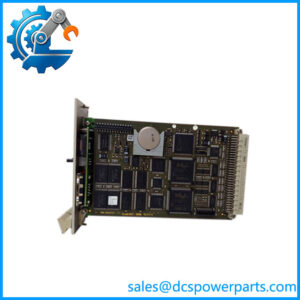
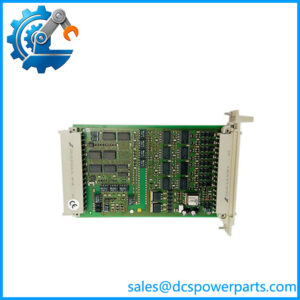
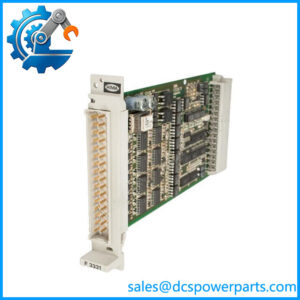
The HIMA F3238 is an 8-channel safety-related digital input module designed for HIMA HiQuad safety systems, particularly the H41q and H51q architectures. Its purpose is not simply to read ordinary PLC contacts. The module evaluates safety-related proximity switches, NAMUR-type initiators, and contacts using resistor networks while providing line monitoring for both wire-break and short-circuit conditions. HIMA’s certification documentation explicitly identifies the F3238 as an 8-channel (Ex)i input module for initiators and contacts with line monitoring.
In practical terms, the HIMA F3238 sits at the boundary between field instrumentation and the safety controller. The field circuits are intrinsically safe, while the module itself is installed in the protected control-system enclosure rather than in the hazardous area. HIMA’s technical documentation specifies an approximately 8.2 V sensor supply and current thresholds that distinguish a valid zero, valid one, wire break, and short circuit. The module also performs automatic diagnostic tests covering switching behavior, input filtering, crosstalk, module operation, and sensor-line faults.
For legacy HIMA safety installations, the HIMA F3238 should therefore be treated as a safety-system component, not a drop-in replacement for a conventional 24 VDC digital input card. The associated HIMA function block is HB-RTE-3, and the engineering application must account for the safety-related input evaluation and line-monitoring behavior. HIMA documentation also specifies particular termination arrangements for unused channels and special cable plugs for NAMUR and redundant safety applications.
Product Introduction
A conventional digital input only answers whether a signal is present. The F3238 also evaluates the condition of the field circuit, distinguishing valid signal states from wire breaks and short circuits. That distinction is critical when the input participates in a safety function.
For a H41q/H51q legacy safety-system replacement, the module revision, cable plug, field-device type, resistor arrangement, and HB-RTE-3 application logic all need to match. A physically compatible card is not automatically functionally equivalent.
Key Technical Specifications
| Parameter | Specification |
|---|---|
| Product Model | |
| Manufacturer | HIMA |
| Product Family | HiQuad / H41q / H51q |
| Product Type | 8-channel safety-related input module |
| Input Channels | 8 |
| Field Devices | Safety-related proximity switches, NAMUR initiators, resistor-network contacts |
| Input Technology | Intrinsically safe (Ex)i |
| Nominal Sensor Supply | Approx. 8.2 V |
| Logic 0 Current | 0.35–1.2 mA |
| Logic 1 Current | 2.1–6.0 mA |
| Wire-Break Detection | ≤0.28 mA |
| Short-Circuit Detection | ≥6.5 mA |
| Maximum Line Impedance | ≤50 Ω |
| Maximum Documented Line Length | Up to 1000 m with 0.5 mm² cable |
| Typical Switching Time | Approx. 10 ms |
| Module Supply | 5 VDC and 24 VDC system supplies |
| Typical 5 V Current | Approx. 150 mA in original documentation |
| Typical 24 V Current | Approx. 100 mA in original documentation |
| Safety Application | Up to SIL 3 |
| Installation | 19-inch subrack, vertical |
| Associated Function Block | HB-RTE-3 |
| Field-Circuit Monitoring | Wire break and short circuit |
| Hazardous-Area Interface | Intrinsically safe field circuits |
The exact electrical figures can vary slightly between documentation revisions. HIMA’s older data sheet gives approximately 5 VDC / 150 mA and 24 VDC / 100 mA, while later commercial reproductions quote different current figures. The original HIMA technical document is therefore the appropriate reference for a specific installed revision.
Major Features / Practical Advantages
1. Eight safety-related input channels
The provides eight discrete field inputs within the HIMA safety architecture. Unlike ordinary PLC input cards, these channels are intended to participate in safety-related signal evaluation.
2. Intrinsically safe field interface
The module is specifically designed for Ex(i) circuits. HIMA’s current IECEx certificate identifies the HiQuad with intrinsically safe protection markings including [Ex ia] IIC, [Ex ia Ga] IIC, and [Ex ia Da] IIIC.
The practical implication is important: the is part of the intrinsic-safety interface design. Field wiring, cable plugs, separation distances, and installation practices must remain within the certified arrangement.
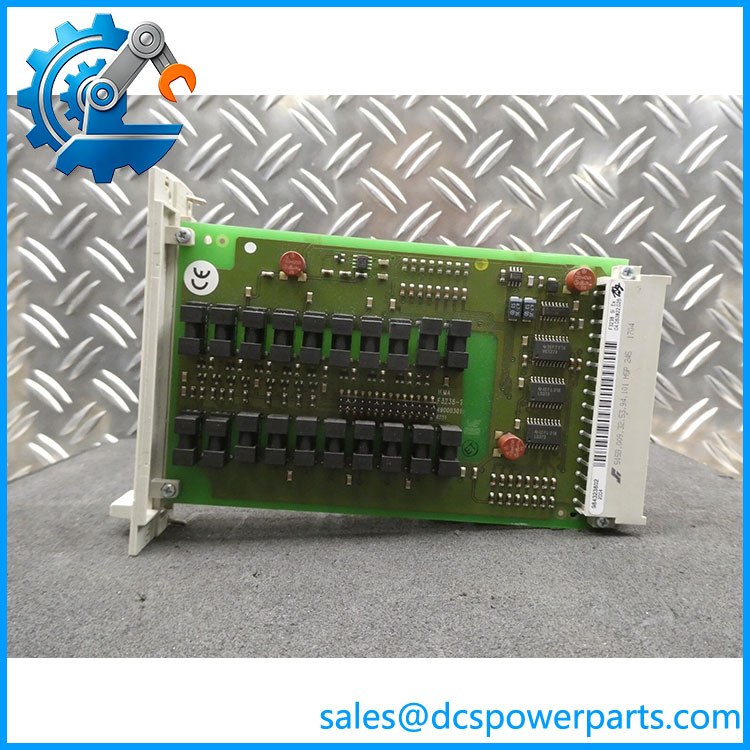
F3238
3. NAMUR proximity-switch compatibility
The module can evaluate NAMUR proximity switches according to EN 60947-5-6. The documented switching thresholds distinguish normal signal states from abnormal line conditions.
That makes the suitable for safety-related position, speed, limit, and presence detection where conventional dry-contact inputs would not provide the same diagnostic coverage.
4. Wire-break and short-circuit monitoring
The input circuit does more than detect an ON/OFF state. HIMA documentation specifies:
- 0 signal: 0.35–1.2 mA
- 1 signal: 2.1–6.0 mA
- Wire break: ≤0.28 mA
- Short circuit: ≥6.5 mA
This current-window approach allows the safety system to distinguish a legitimate process state from certain field-wiring failures.
5. Automatic diagnostic testing
During operation, the module performs internal tests covering switching capability, input-filter behavior, crosstalk, module functionality, and sensor-line short/open detection. HIMA’s safety documentation also requires the corresponding input channels to be evaluated through the appropriate HB-RTE-3 function block.
6. SIL 3 safety application
The is documented as a safety-related module suitable for applications up to SIL 3 under IEC 61508. HIMA’s current certification records continue to list the revisions as valid safety-related assemblies.
That does not mean an installed automatically makes an entire safety function SIL 3. The complete safety loop, sensor, logic solver, application program, wiring, proof testing, and operating procedures determine the achieved safety integrity.
7. Dedicated HIMA cable interface
The module uses HIMA-specific cable plugs rather than generic PLC terminal blocks. The technical documentation identifies the Z7008 / 3238 cable-plug family and special configurations for NAMUR and redundant applications.
For procurement, the connector arrangement deserves as much attention as the module itself. A replacement card without the correct field termination arrangement can leave an otherwise compatible installation unusable.
8. Long field-circuit capability
The documentation specifies a maximum line impedance of 50 Ω and a line length of up to 1000 m with 0.5 mm² cable under the stated conditions.
This is useful for distributed process equipment, but actual hazardous-area loop design must still satisfy the applicable intrinsic-safety capacitance, inductance, resistance, and installation requirements.
Related Products
- HIMA F3237 — 8-channel safety-related input module for initiators and contacts with line monitoring, but without the same
(Ex)iapplication designation as . - HIMA F3236 — 16-channel safety-related input module for general safety input applications.
- HIMA F3240 — 16-channel 120 VAC/DC input module used in the H41q/H51q family.
- HIMA F3248 — 16-channel 48 VAC/DC input module for the same broader H41q/H51q hardware family.
- HIMA F7131 — Safety-related interface hardware used in HIMA systems; application and architecture differ from the .
- HIMA HB-RTE-3 — Associated function block used to evaluate safety input channels and their diagnostic states.
- HIMA Z7008 / 3238 — Dedicated cable-plug family for connecting field circuits.
- HIMA Z7204 — Assembly cable plug associated with the wiring arrangement.
- H41q / H51q — HIMA safety-controller platforms in which the is documented.
- HiQuad — HIMA safety-system platform associated with the module.
FAQ
What is the HIMA used for?
It is an 8-channel safety-related input module used to evaluate safety-related proximity switches, NAMUR sensors, and resistor-network contacts, including applications requiring intrinsically safe field circuits.
Is the a standard 24 VDC digital input card?
No. That description is too broad. The is designed around intrinsically safe input circuits with a defined sensor supply and current-window evaluation. It belongs to a HIMA safety architecture and should not be treated as a generic PLC DI module.
Can the connect to NAMUR proximity switches?
Yes. HIMA’s technical documentation specifically describes connection of NAMUR proximity switches according to EN 60947-5-6. Special cable-plug configurations are specified for NAMUR applications and redundant connections.
Can I hot-swap the ?
Do not assume hot replacement. This is safety-system and intrinsically safe interface hardware installed in a 19-inch subrack. Follow the approved HIMA/system shutdown and maintenance procedure, including the site’s hazardous-area and safety-instrumented-system requirements.
Does support firmware v3.1?
The is an I/O module rather than a general-purpose CPU. HIMA’s documentation identifies hardware revisions and associated system/software requirements, including use with the HB-RTE-3 function block. A generic firmware-v3.1 claim should not be attached to the module without identifying the exact H41q/H51q system software and module revision.
What happens if an input wire breaks?
The module is designed to detect line faults. Its documented thresholds identify a wire-break condition at approximately 0.28 mA or below, while a valid zero and one occupy defined current ranges. A short circuit is identified at approximately 6.5 mA or above.
Can I use a used that previously operated on ordinary electrical circuits?
HIMA’s documentation explicitly warns against this. Modules operated in general electrical systems must not subsequently be used in Ex(i) applications. This is a significant procurement and refurbishment issue.
Does an by itself provide SIL 3?
No. The module is certified for safety-related applications up to SIL 3, but SIL capability applies to the complete safety function and its architecture. Sensor selection, logic, application programming, diagnostics, proof testing, wiring, and other elements must satisfy the relevant safety requirements. HIMA’s safety checklist specifically requires appropriate evaluation through HB- and consideration of redundant modules where applicable.
Procurement Note
The should be sourced by exact module revision and system architecture. HIMA’s version list identifies revisions 05 and 06 as valid for the , so the revision marking should be recorded before approving a replacement.
For New Surplus or refurbished stock, inspect the PCB and connector, verify the revision, confirm the module has not previously been operated outside the required Ex(i) application, and check the associated cable plug. A generic “8-channel HIMA input module” is not an acceptable substitute description.
The field termination is particularly important. HIMA specifies dedicated cable-plug arrangements for standard contacts, NAMUR proximity switches, and redundant safety connections. Unused inputs also require the documented termination arrangement; the technical data sheet specifies 10 kΩ termination for unused inputs when used with the HB- configuration.
Finally, do not confuse with F3237. Both are eight-channel HIMA input modules with line monitoring, but is specifically the (Ex)i intrinsically safe version. That distinction affects the field circuit, certification, wiring, and permitted application. HIMA’s certification and version records support this distinction directly.