Description
Product Overview
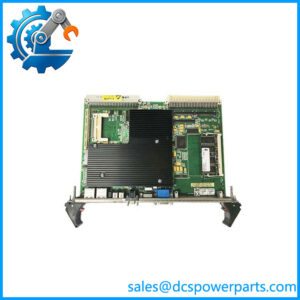
In legacy industrial equipment, a CPU board failure can stop an entire machine or test system even when the surrounding I/O hardware and backplane remain serviceable. Replacing the processor board therefore requires more than matching its physical dimensions: the processor architecture, memory configuration, bus interface, firmware, and peripheral connections must also align with the original design. The GESPAC GESSBS-6AH256 is associated with the GESSBS-6A family of single-board computers built around the Motorola 68000 processor architecture.
The GESPAC GESSBS-6AH256 is best approached as a legacy embedded-computing component rather than a modern PLC or a standalone industrial SSD. The GESSBS-6A family is documented in supplier records as a single-board CPU module with 16/32-bit architecture and 8 MHz or 16 MHz operating variants. Publicly available information does not establish the complete H256 suffix configuration, including its precise memory population, firmware, or installed options. For maintenance and procurement, the original board markings, connector layout, memory devices, and host-system documentation should be used to confirm the required variant before a replacement is approved.
Key Technical Specifications
| Parameter | Specification |
|---|---|
| Product Model | GESSBS-6AH256 |
| Manufacturer | GESPAC |
| Product Family | GESSBS-6A |
| Product Type | Single-board computer / CPU module |
| Processor Architecture | Motorola 68000 family, as listed for GESSBS-6A |
| Processor Width | 16/32-bit architecture, family-level description |
| Clock Frequency | 8 MHz or 16 MHz family variants; exact configuration unverified |
| Memory Capacity | Exact capacity for H256 not independently verified |
| Communication Protocol | Not confirmed for this exact model |
| Interface Type | Board-level interfaces; exact connectors require inspection |
| Working Voltage | Not verified; check the board label and original technical documentation |
| Working Temperature | Not verified for this exact variant |
| Installation Method | Compatible original equipment or board carrier |
| Protection Rating | No enclosure protection rating verified |
| Operating Accuracy | Not applicable as a standalone measurement instrument |
| Lifecycle Status | GESSBS-6A family listed as discontinued by suppliers |
Specification caution: Do not assume that the H256 suffix means a specific memory capacity without the original GESPAC ordering documentation. Some online descriptions conflict or provide unsupported specifications.
Major Features and Advantages
Motorola 68000-based computing architecture
The GESSBS-6A family is associated with Motorola 68000-class processing. This architecture is relevant to older embedded systems whose application code and hardware interfaces were developed around a specific processor family. Replacement planning must account for processor-level dependencies rather than treating the board as a generic CPU card.
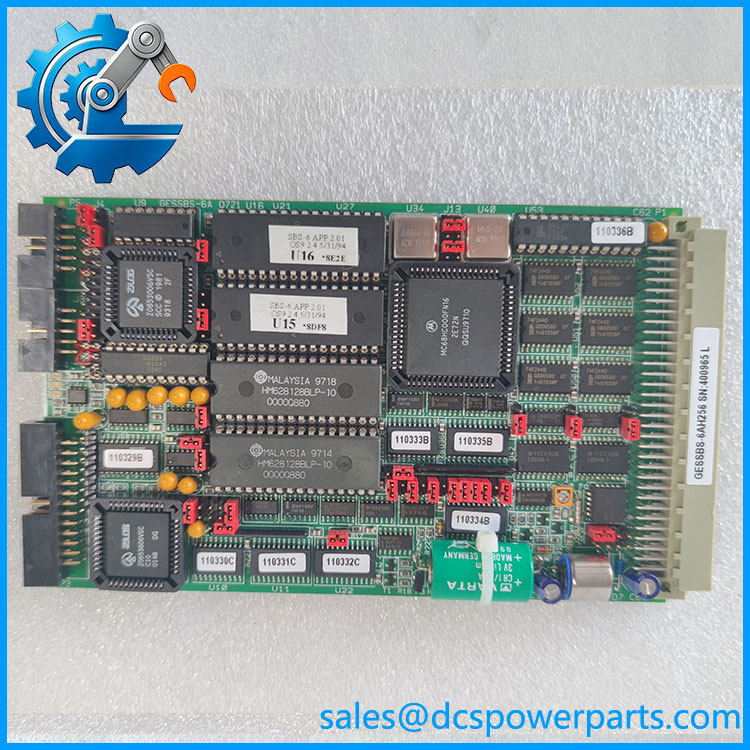
GESSBS-6AH256
Designed for legacy equipment maintenance
A board in this category may remain essential to older industrial machinery, specialized test equipment, or embedded control installations. Retaining the original hardware can avoid a larger redesign involving software migration, interface conversion, and requalification of the complete machine.
Board-level integration
Single-board computers combine processing and supporting circuitry on one assembly. The precise memory, peripheral, and bus configuration of the GESSBS-6AH256 should be established from the physical board and system documentation before a repair or replacement decision.
Support for existing system architecture
Where the original equipment was designed for the family, retaining the same board variant can reduce the number of hardware and software changes required. This does not establish automatic compatibility: firmware revisions, populated options, connectors, and external peripherals still need to match.
Procurement based on traceable identification
Because this is a legacy component, the full model number and board revision are important. Clear label photographs, visible component markings, and a documented functional test provide stronger evidence of suitability than a generic listing that identifies the unit only as a GESPAC CPU board.
Application Scenarios and Common Pain Points
- Legacy industrial computers: Maintenance of equipment built around a GESPAC single-board computer.
- Embedded control systems: Replacement of a CPU assembly where the original software and hardware interfaces must be retained.
- Industrial test equipment: Repair of older computing platforms used for measurement coordination or automated test sequences.
- Machine refurbishment: Preservation of an existing controller architecture when a complete modernization would require extensive engineering work.
- Spare-parts management: Procurement of a documented replacement for equipment where the original processor board is no longer readily available.
Common risks include ordering the wrong board revision, assuming the suffix identifies a particular memory size, overlooking firmware dependencies, and receiving a visually similar card with a different configuration. These risks are especially important for discontinued hardware, where replacement stock may vary in condition and completeness.
Related Products and Components
The following GESPAC products are related by manufacturer or embedded-computing function. They are not confirmed direct replacements for GESSBS-6AH256.
| Model | General product role | Relationship |
|---|---|---|
| Single-board CPU module | Parent family associated with the requested model | |
| GESSBS-5 | Single-board computer | Related legacy computing product |
| GESSBS-41T16D | 68040 single-board computer assembly | Different processor architecture and configuration |
| GESSMC-2 | GESPAC computer board | Related legacy board; function and system compatibility must be checked |
| GESMPU-30H8 | 68030 CPU module | Different processor family |
| GESMEM-12D | RAM/memory board | Memory-related accessory, not a CPU replacement |
| GESBUS-6A | Six-slot bus/backplane board | Potentially relevant to the wider system architecture; verify the actual backplane standard |
| GESMFI-1 | Multifunction interface board | Related peripheral/interface hardware |
The model families above appear in GESPAC product listings. Confirm electrical, mechanical, and software compatibility independently before selecting any item as a substitute.
Engineer’s Guide: Three Checks Before Replacement
1. Match the board identity. Compare the complete GESSBS-6AH256 marking, PCB revision, serial label, and populated options against the installed board. Do not rely on the family name alone.
2. Verify the system interface and firmware. Identify the host backplane, connector pinout, memory configuration, firmware or boot-ROM requirements, and any attached peripheral boards. Confirm these details against the original equipment documentation before powering up a replacement.
3. Request functional test evidence. For used or surplus stock, ask for inspection photographs and test results appropriate to the board. Confirm that the processor starts, memory is recognized, and required interfaces work in a compatible test setup. A visual inspection alone cannot establish operational condition.
Important: The should not be purchased as a generic 256 GB SSD or as a standard PLC CPU. Available family-level evidence identifies it with GESPAC single-board computer hardware; the exact suffix configuration still requires verification.
Frequently Asked Questions
1. What is the GESPAC ?
It is a model associated with the GESPAC single-board computer family. Supplier documentation describes the family as a CPU module using Motorola 68000-class processing. The precise configuration of the H256 variant should be checked against the physical board and original documentation.
2. Is a solid-state drive?
The available family-level records identify as a single-board CPU module, not a conventional SSD. Some online descriptions label the exact model as a solid-state drive, but that claim conflicts with the broader GESPAC family identification. Verify the manufacturer’s board documentation before treating it as a storage device.
3. What processor does the use?
The family is listed with Motorola 68000-based, 16/32-bit architecture. The exact processor and clock configuration of the H256 variant should be confirmed from its board markings or technical manual.
4. What is the working voltage of this board?
A verified voltage specification for the exact variant was not found. Check the board label, power connector pinout, and original system manual. Do not apply power based on an assumed voltage from another GESPAC board.
5. Can replace another board?
Not without checking the full part number, revision, memory configuration, firmware, and external interfaces. Two boards from the same family may have different populated options or system requirements.
6. Is still manufactured?
The family is listed as discontinued by suppliers. Current availability is therefore likely to depend on remaining inventory, used stock, or refurbished units. Confirm the actual condition and test scope before placing a critical maintenance order.
7. What information should I request before buying a replacement?
Request clear photographs of the model label and both sides of the PCB, confirmation of the board revision, available firmware or memory details, and a written description of the functional test performed. If the board is intended for a running machine, provide the original equipment model and installed-board photographs so the configuration can be compared before shipment.
Procurement recommendation: For , prioritize exact board identification and a documented functional test. The available evidence supports identifying it with the GESPAC CPU-board family, but not assigning unverified memory, voltage, or interface specifications to the exact suffix.