Description
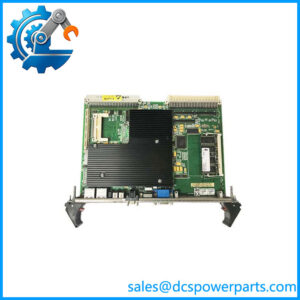
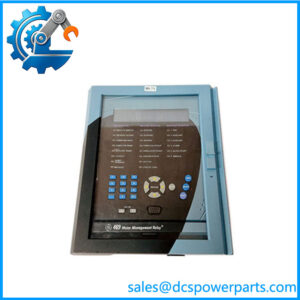
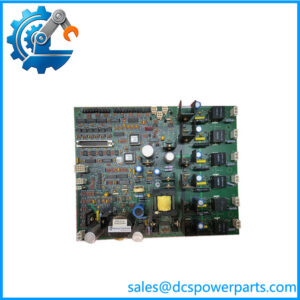
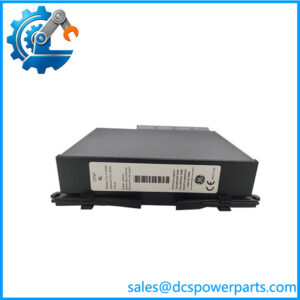
GE WES5302-111 WESDAC D20/D200 Substation Controller Module
Key Technical Specifications
| Parameter | Specification |
|---|---|
| Manufacturer | GE / WESDAC |
| Model | WES5302-111 |
| Product Family | WES5302 |
| System Platform | D20 / D200 |
| Product Type | Substation RTU system module |
| Architecture | Modular rack-based |
| Primary Application | Electrical substation automation |
| SCADA Role | Data acquisition, control and communications |
| Field Device Integration | Configuration-dependent |
| Protocol Support | Configuration-dependent |
| Communication Interfaces | Dependent on installed D20/D200 architecture |
| Rack Installation | D20/D200 system rack |
| Power Requirements | Verify from exact hardware documentation |
| I/O Capacity | Not confirmed for this exact variant |
| Operating Temperature | Verify from OEM documentation |
| Firmware | Verify installed revision |
| Hardware Revision | Verify from nameplate/PCB |
| Lifecycle | Legacy hardware |
The D20/D200 family is a modular substation RTU platform, while the exact function of the WES5302-111 is inconsistently described in current secondary records. One source calls it a field-controller main unit, another explicitly identifies it as a power-supply module.
Product Introduction
The GE WES5302-111 is a legacy component associated with the WESDAC D20/D200 substation automation platform. D20/ systems were designed for utility substations, combining field data acquisition, local control logic, communications, protocol handling, and SCADA integration within a modular controller architecture. The WES5302 family is repeatedly cataloged within this D20/ ecosystem.
The GE WES5302-111 should be treated as a system-specific replacement part rather than a generic PLC module. Current commercial records disagree on its precise board-level role, so voltage, current capacity, I/O count, communication interfaces, and environmental ratings should be verified against the installed unit, cabinet drawings, and original GE documentation. This is particularly important if WES5302-111 is being considered as a replacement for , since the two variants should not be assumed to have identical functions.
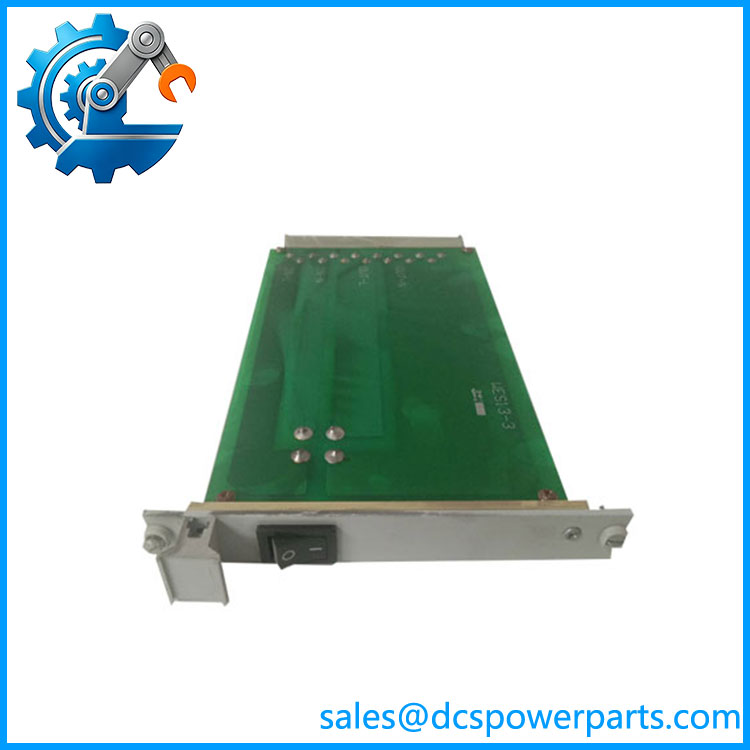
WES5302-111
Application Scenarios & Field Pitfalls — Engineer’s Perspective
The is relevant to legacy electrical-substation automation and SCADA systems, where D20/ equipment interfaces with protection relays, meters, breakers, transformers, feeder equipment, and supervisory control systems. The broader D20 platform can provide data concentration, local control, protocol conversion, and programmable automation functions.
Typical applications
- Distribution substations — RTU-based monitoring and breaker/control status acquisition.
- Transmission substations — Concentrating information from multiple intelligent field devices.
- Power generation facilities — Legacy SCADA and electrical balance-of-plant monitoring.
- Utility automation — Local logic and communication between field devices and supervisory systems.
- D20/ maintenance projects — Replacement of aging WESDAC hardware while retaining the existing RTU architecture.
Engineering considerations
- Confirm the exact function before replacement. Online descriptions conflict between “field controller main unit” and “power supply module.”
- Do ume equals -150. They are separate variants and should be matched against the rack documentation.
- Check the rack position. The installed slot, adjacent modules, wiring, and backplane connections can help establish the actual role of the module.
- Verify the complete hardware revision. Legacy WESDAC systems may contain multiple hardware generations.
- Preserve the RTU configuration. Point databases, logic, IED mappings, communication parameters, and SCADA mappings should be backed up before hardware replacement.
- Check communications after installation. A replacement that powers up correctly may still fail to communicate with connected IEDs or the SCADA master.
- Verify power requirements. Do not rely on commercial listings for supply voltage or output ratings because the published descriptions conflict.
- Perform point-to-point validation. After replacement, check digital status, analog measurements, control outputs, communications, alarms, and time/event functions before returning the substation equipment to normal operation.
Related Products
- — Closely related variant used in the same D20/ ecosystem; do not assume direct interchangeability.
- GE WES5120 5120-1106 — Legacy WES/D20 field-controller hardware used in substation automation applications.
- GE WES5120 5120-1506 — Another WES-series D20/ hardware variant; function and configuration must be verified independently.
- GE WES5123-1200 — WES-series field-controller hardware associated with D20/ systems.
- GE WES5162-9101 — Legacy WES/D20 controller hardware used in substation automation.
- GE WESDAC D20 C — D20 communication/controller hardware within the WESDAC architecture.
- GE WESDAC D20 PS — Dedicated D20 power-supply hardware; useful when determiningr a installation is performing a power-related function.
- GE WESCOM VME — VME-based substation controller platform used in larger WESDAC installations.
Procurement Note
For , use the complete designation when sourcing. I would also request the nameplate photograph, rack position, and parent D20/ system model before confirming a replacement. The family identification is well supported, but the precise function of the -111 variant is not sufficiently documented in public sources to safely invent detailed electrical specifications.