Description
Product Overview
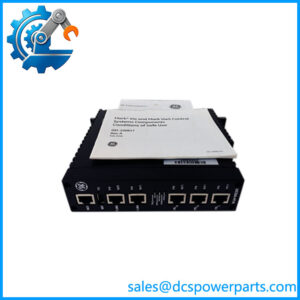
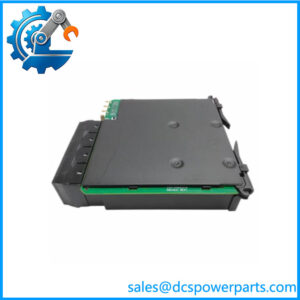
GE WES5123-1200 is an embedded computing and controller platform associated with GE’s utility automation equipment and WES/WESDAC product family. Available technical documentation identifies it as an industrial embedded computer built around an Intel 945GM chipset, rather than a conventional analog or digital I/O module. This distinction is important when sourcing a replacement: GE WES5123-1200 provides the processing, storage, communications, and embedded-computing resources required by the host control application, while field I/O is handled by associated system hardware.
The GE WES5123-1200 provides dual Gigabit Ethernet, front and rear serial interfaces, USB connectivity, SATA interfaces, NVRAM, CompactFlash support, a PMC expansion position, and an optional 2.5-inch SATA hard drive. The available documentation also identifies support for VxWorks 6.x alongside conventional operating systems such as Windows XP/Vista and Linux 2.6.x.
For procurement, GE WES5123-1200 should be treated as an exact hardware/software platform rather than a generic “RTU.” Current secondary listings sometimes describe this part as a servo drive, analog input module, or modern RTU, but those descriptions conflict with the detailed embedded-computer specifications.
Technical Specifications
| Parameter | Specification |
|---|---|
| Manufacturer | GE |
| Model | WES5123-1200 |
| Product Family | WES / WESDAC |
| Product Type | Embedded Industrial Controller / Computer |
| Chipset | Intel 945GM |
| Memory | Up to 2 GB DDR2 SDRAM |
| Ethernet | 2 × Gigabit Ethernet |
| Serial Interfaces | RS-232/422 |
| USB | USB 2.0 |
| Storage Interfaces | 2 × SATA |
| Optional Storage | 2.5-inch SATA hard drive |
| CompactFlash | Up to 8 GB bootable CF, optional |
| Video | SVGA |
| Keyboard/Mouse | PS/2 |
| NVRAM | 32 KB |
| PMC | PCI-X capable PMC expansion site |
| Watchdog | Software-selectable watchdog with reset |
| Operating Systems | Windows XP/Vista, Linux 2.6.x, VxWorks 6.x |
| RTC | Real-time clock/calendar |
| Reset | Front-panel reset switch |
| Parallel Interface | Onboard parallel connector |
| Application | Utility automation / embedded control |
| Configuration | Application-specific |
The available manual-derived specifications identify up to 2 GB DDR2 SDRAM, dual Gigabit Ethernet, RS-232/422 serial interfaces, USB 2.0, two SATA connections, optional SATA storage, NVRAM, watchdog functionality, and a PMC expansion site.
Main Features and Advantages
Embedded Computing Architecture
The WES5123-1200 is fundamentally different from a simple PLC I/O card. Its Intel 945GM platform provides the processing environment for embedded control applications, with memory, storage, networking, serial communications, and expansion resources integrated into one industrial computer platform.
Dual Gigabit Ethernet
Two Gigabit Ethernet interfaces provide network connectivity for applications requiring multiple network paths or physical network separation. The exact network architecture remains application-dependent; the presence of two Ethernet ports does not by itself establish a particular redundancy protocol.
Multiple Serial Interfaces
RS-232/422 interfaces allow the controller to communicate with legacy serial equipment. This is particularly relevant when replacing older utility-control computing hardware where serial communications remain part of the installed architecture.
Expandable Storage
The platform supports two SATA connections and an optional 2.5-inch SATA hard drive. Bootable CompactFlash support is also identified in the embedded-function documentation.
Embedded / Real-Time Operating Systems
Support for VxWorks 6.x is particularly significant. A replacement board running the wrong operating environment may power up correctly but still fail to execute the original application. This is one reason software image, boot media, and hardware revision should be treated as part of the replacement specification.
Field Replacement Considerations
A replacement should not be evaluated solely by processor or connector compatibility. Check the installed memory, storage device, operating-system image, application software, BIOS configuration, network settings, and any PMC hardware before commissioning.
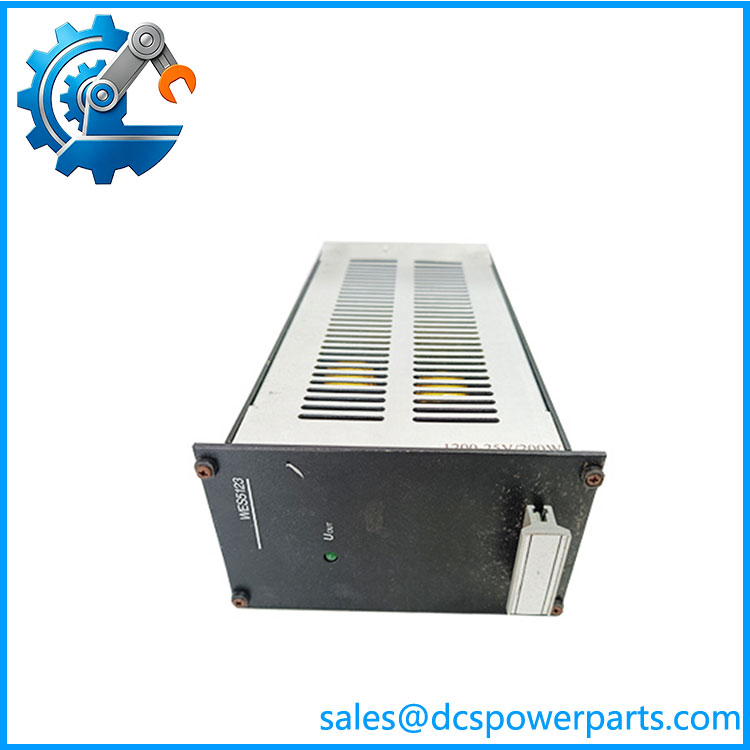
WES5123-1200
Application Scenarios
- Utility automation: Embedded computing for substation and remote-control equipment.
- RTU systems: Processing and communications platform within a larger RTU architecture.
- SCADA infrastructure: Network and serial communications between supervisory systems and field equipment.
- Legacy control-system maintenance: Replacement of aging embedded computers where the original application still depends on the WES platform.
- Industrial data acquisition: Processing and storing field data before transmission to higher-level systems.
The is listed alongside WES5123-2600, WES5162, WES5302, WESDAC D20ME, and WESCOM D200 hardware within the same GE utility-automation product ecosystem.
Engineer’s Guide: Field Pitfalls
WARNING 1 — Do not classify it as an analog input module.
Some secondary listings call an analog input module, but the detailed specification describes an embedded computer/controller with Ethernet, serial, USB, SATA, memory, and operating-system support.
WARNING 2 — Hardware replacement does not guarantee software compatibility.
The original operating-system image and application software can be just as important as the board itself. If the existing unit uses VxWorks or a customized embedded image, a blank replacement board may require software restoration before it can return to service.
WARNING 3 — Preserve the original storage media.
If the installed system uses SATA or CompactFlash boot media, retain the original drive/card whenever possible. The storage device may contain application software, configuration files, licenses, and customized startup parameters.
WARNING 4 — Verify the exact WES variant.
GE’s WES family includes , WES5123-2600, WES5162, WES5302 and other related hardware. Similar-looking boards are not automatically interchangeable.
Frequently Asked Questions
What is GE ?
It is an embedded industrial computing/controller platform used in GE utility automation and related control architectures. It includes Ethernet, serial, USB, storage, memory, and embedded operating-system capabilities.
Is an RTU?
It can serve as a computing platform within an RTU/utility automation system, and secondary industrial catalogs commonly identify it as a GE field-controller or RTU-related unit.
However, calling it a complete standalone modern RTU with a predefined I/O and protocol set would be too broad. The actual function depends on the installed software and surrounding GE system hardware.
How much memory does support?
The available specification identifies up to 2 GB DDR2 SDRAM using one SODIMM.
What operating systems can it run?
The documented platform supports Windows XP, Windows Vista, Linux 2.6.x, and VxWorks 6.x.
For a field replacement, the operating system actually installed in the customer’s equipment is more important than the theoretical list.
Does it have Ethernet?
Yes. The documented hardware provides two Gigabit Ethernet ports on the front I/O.
Does it have serial communication?
Yes. The specification identifies RS-232/422 serial interfaces, including front and rear I/O connections.
What should be checked before purchasing a replacement?
For a critical spare, request:
- Exact nameplate.
- Hardware revision.
- Installed RAM capacity.
- SATA/CompactFlash configuration.
- PMC expansion configuration.
- BIOS revision/configuration.
- Operating-system image.
- Application software availability.
- Ethernet-port test.
- Serial-port test.
- Storage/boot test.
- Watchdog and restart test.
For this model, a power-on test is not enough. The strongest acceptance test is successful booting into the required operating environment followed by verification of the actual application and communication interfaces used by the installed GE system.