Description
Product Overview
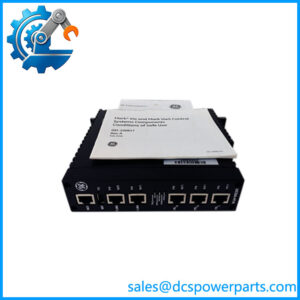
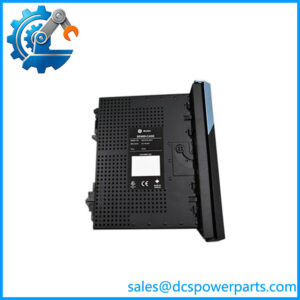
GE WES5120 5120-1106 is a WES-series field controller master unit associated with GE utility automation equipment. The WES5120 family belongs to the broader WES/WESDAC ecosystem used for field control, remote-terminal applications, and utility automation. The specific GE WES5120 5120-1106 designation is repeatedly cataloged as a field-controller master unit, making it a more useful technical classification than the conflicting descriptions found on some reseller pages.
The GE WES5120 5120-1106 should be considered a system-level controller component rather than a simple PLC I/O card. It operates within a larger WES architecture where controller, communication, I/O, and supervisory functions are distributed among related hardware. This distinction matters during replacement because a visually similar GE module may have a completely different role. The WES product family also includes WES5120 5120-1506, WES5123-1200, WES5123-2600, WES5162-9101, and WES5302 controllers.
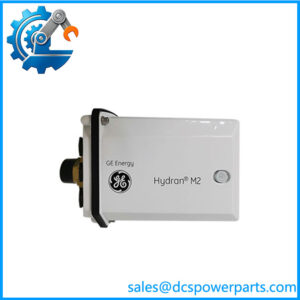
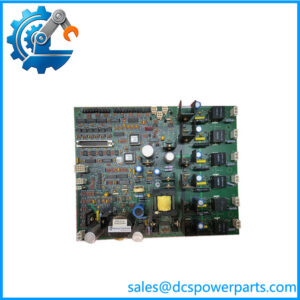
There is significant specification noise surrounding this part number. Some secondary listings call it a serial communication module, while others describe it as a power supply, wireless Ethernet module, or modern ARM-based RTU. These descriptions conflict with the more consistent identification of WES5120 5120-1106 as a GE WES field-controller master unit.
Technical Specifications
| Parameter | Specification |
|---|---|
| Manufacturer | GE |
| Model | |
| Part Number | 5120-1106 |
| Product Type | Field Controller Master Unit |
| Product Family | WES / WESDAC |
| Primary Application | Utility automation |
| System Role | Field-control processing/master unit |
| Typical System Environment | RTU / SCADA / substation automation |
| Associated WES Hardware | , WES5123, WES5162, WES5302 |
| Communication | System/application dependent |
| I/O | System/application dependent |
| Power Supply | Verify from exact hardware documentation |
| Firmware | Hardware/application revision dependent |
| Mounting | System/rack dependent |
| Operating Temperature | Verify exact revision |
| Hardware Revision | Must be checked from nameplate |
Important specification note: I would not publish the commonly repeated claims of 24 VDC, Ethernet/Modbus/DNP3, ARM Cortex processor, IP65, or 2.4 GHz wireless communication as confirmed specifications for this exact part. Those values appear on secondary pages but are inconsistent with the field-controller identification and appear to be generic or misassigned data.
Likewise, one source labels the part as a serial communication module, while another calls it a power module. Those classifications are not sufficiently supported.
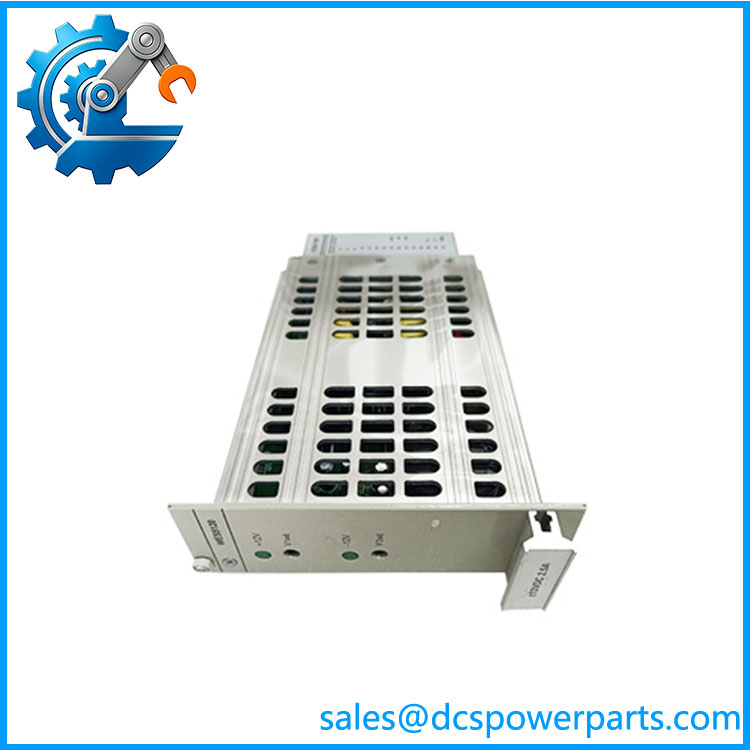
WES5120 5120-1106
Main Features and Advantages
WES Field Controller Architecture
The strongest identification for is its role as a field controller master unit. This places the module within GE’s utility automation architecture rather than treating it as an independent generic communications device.
Utility Automation Application
WES hardware is associated with field-control and utility automation applications where remote equipment must be monitored and controlled from a central supervisory environment. The therefore has practical relevance in legacy substation and RTU maintenance.
Legacy-System Replacement
For an operating WES installation, an exact 5120-1106 replacement can be preferable to changing the controller architecture. This is especially relevant when existing application software, configuration, field wiring, and SCADA interfaces have already been commissioned.
System-Level Compatibility
The presence of similar WES model numbers does not mean that the units are interchangeable. , , WES5123-1200, WES5123-2600, and WES5162-9101 are separately cataloged products.
Procurement Advantage
For an obsolete or difficult-to-source controller, the most useful replacement specification is the complete model + part number + hardware revision, rather than relying on a generic description such as “GE WES module.”
Application Scenarios
- Substation automation: Field-control processing in legacy utility installations.
- RTU systems: Central controller function within a larger remote-terminal architecture.
- SCADA: Processing and forwarding field information to supervisory systems.
- Utility control: Monitoring and controlling remote electrical equipment.
- Legacy WES maintenance: Replacement of failed WES controller hardware without immediately redesigning the complete control system.
The -1106 appears in product catalogs alongside -1506, WES5123-1200, WES5123-2600, WES5162-9101, WES5302-111, WES5302-150, WESCOM D200, and WESDAC D20ME, which helps establish the broader GE WES/WESDAC product context.
Engineer’s Guide: Field Pitfalls
WARNING 1 — Do not confuse the part with a power supply
A reseller page describes as a power module with 110–380 VAC input and other power-supply specifications. That description conflicts with multiple sources identifying the unit as a WES field-controller master.
Procurement rule: Do not use 110–380 VAC as an approved specification without the original GE drawing.
WARNING 2 — Do not assume it is a wireless Ethernet module
Another listing describes 2.4 GHz wireless Ethernet, 54 Mbps communication, and a 100 m transmission range. Those specifications are not sufficiently supported for this exact -1106.
Procurement rule: Treat those claims as unverified.
WARNING 3 — Do not substitute -1506 automatically
The family contains both 5120-1106 and 5120-1506 variants. Their similar numbering does not establish electrical or software interchangeability.
WARNING 4 — Verify the system software
A field-controller replacement that powers up but lacks the correct application image, configuration, or firmware may still be unusable.
Before removing the original unit, record:
- Hardware revision
- Firmware revision
- Application image
- Configuration files
- Communication parameters
- Network settings
- Associated WES rack/controller hardware
Frequently Asked Questions
What is GE 5120-1106?
It is a GE WES field controller master unit used in utility/industrial field-control architectures.
Is 5120-1106 a power module?
The available evidence does not support classifying it as a power module. One secondary listing makes that claim, but other catalogs consistently identify the part as a field-controller master unit.
Is it a communication module?
Communication is part of the broader WES system, and one secondary source labels this specific part a serial communication module. However, the stronger product-family identification is Field Controller Master Unit.
Is 5120-1106 the same as 5120-1506?
No assumption of interchangeability should be made. They are separately identified variants.
Is 5120-1106 still useful?
Yes, primarily as a legacy-system maintenance spare. Its value is highest where an installed WES/WESDAC architecture remains operational and replacement must preserve the existing control configuration.
What should be checked before purchasing?
Request:
- Exact nameplate.
- Hardware revision.
- PCB/assembly number.
- Firmware revision.
- Memory configuration, if applicable.
- Front/rear photographs.
- Connector configuration.
- Power-up test.
- Controller diagnostic test.
- Communication test with representative WES equipment.
- Application boot test where possible.
- Warranty and test report.
Bottom line: For , the safest engineering classification is GE WES Field Controller Master Unit. Public reseller data contains substantial specification errors, so voltage, protocol, wireless, processor, and environmental ratings should be verified against the actual hardware revision before being placed on a purchase specification.