Description
GE V7768-320001 | VME Single Board Computer | Industrial Embedded Processing
Key Technical Specifications
| Parameter | Specification |
|---|---|
| Product Model | V7768-320001 |
| Manufacturer | GE Fanuc Intelligent Platforms |
| Product Type | VMEbus Single Board Computer |
| Form Factor | 6U VME |
| Processor | Intel Core 2 Duo, up to 2.16 GHz |
| Chipset | Intel 945GME Express |
| System / Memory Bus | Up to 667 MHz |
| Memory | Up to 2 GB DDR2 SDRAM via SODIMM |
| Storage | Up to 8 GB bootable CompactFlash |
| VME Interface | VMEbus via Tundra Universe II bridge |
| Ethernet | 2 × Gigabit Ethernet |
| Serial Interfaces | 2 × serial ports |
| USB | 4 × USB 2.0 |
| SATA | 2 × SATA interfaces |
| Expansion | 1 × PCI-X PMC site |
| Front-Panel I/O | SVGA, keyboard/mouse, Ethernet, serial, status LEDs |
| Operating Temperature | Commercial and extended-temperature configurations were available; verify board configuration |
| Mounting | VME chassis / backplane |
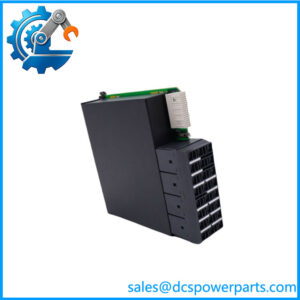
The V7768 platform is documented as a VMEbus SBC built around Intel 945GME chipset technology, with front-panel access to networking, serial, display, and PMC expansion functions.
Product Introduction
The GE V7768-320001 is a 6U VMEbus single-board computer designed for embedded industrial computing, control-system processing, data acquisition, and other applications requiring an x86 processor within a VME architecture. The board supports an Intel Core 2 Duo processor configuration up to 2.16 GHz, up to 2 GB DDR2 SDRAM, bootable CompactFlash storage, and a VMEbus interface for integration with existing VME-based systems.
For engineers maintaining legacy VME equipment, the GE V7768-320001 is particularly relevant when the original processor board must be replaced without immediately redesigning the entire chassis. Its dual Gigabit Ethernet, USB 2.0, SATA, serial, SVGA, and PCI-X PMC interfaces provide substantial local I/O capability, while the PMC expansion architecture allows additional application-specific processing or I/O hardware to be incorporated into the system.
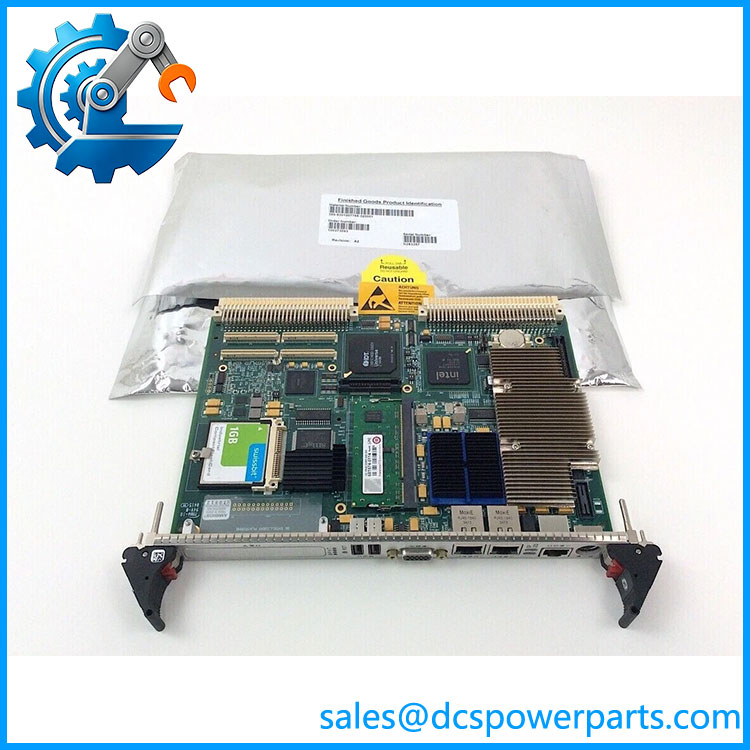
V7768-320001
Application Scenarios & Field Pitfalls — The Engineer’s Perspective
Engineering Pain Point
A common problem with older VME installations is not the VME backplane itself, but finding a processor board that matches the original hardware, BIOS configuration, PMC requirements, storage method, and software environment. Replacing an SBC with a superficially similar board can introduce problems at the operating-system, driver, I/O, or boot-device level even when the physical board appears compatible.
The V7768-320001 is suited to legacy embedded control systems where x86 processing and VMEbus connectivity remain part of the installed architecture. Its combination of processor performance, front-panel communications, storage, and PMC expansion makes it useful for industrial computers, test systems, machine control, data acquisition, and other VME-based automation platforms.
Typical Applications
- Industrial control computers: Embedded supervisory processing inside VME-based control cabinets.
- Test and measurement: High-speed data processing and communication in automated test equipment.
- Data acquisition systems: Local processing of acquired signals before transmission to higher-level systems.
- Factory automation: Legacy machine-control architectures using VMEbus I/O and PMC expansion boards.
Technical Pitfalls to Avoid
1. Do not treat every V7768 configuration as electrically identical.
The V7768 family was offered with different processor and temperature configurations. Before replacement, compare the exact board assembly number, processor configuration, memory, BIOS, and environmental rating rather than relying only on the V7768 family name.
2. Check the PMC architecture before ordering.
The board includes a PCI-X-capable PMC site and can support additional PMC expansion hardware. A replacement must therefore be evaluated against the existing PMC module, mechanical clearance, software driver, and system backplane requirements.
3. Verify the boot and storage configuration.
The platform can use CompactFlash as bootable storage. In a legacy installation, the CF image, BIOS settings, operating system, drivers, and application software can be just as important as the processor board itself. A physically compatible replacement is not automatically a software-compatible replacement.
4. Confirm the exact part-number suffix.
References for V7768 units show associated assembly numbers such as 350-9301007768-320001, with different revision suffixes appearing in the field. For a control-system replacement, photograph comparison and nameplate verification are advisable before purchase.
Related Products
- GE V7768-320001 — The target VME SBC; intended for x86-based embedded processing within a VME chassis.
- GE VMIVME-7750 — Another GE/VMIC VME processor platform; useful when evaluating alternative processor generations within legacy VME systems.
- GE VMIVME-7740 — VMEbus single-board computer that can be considered when maintaining older GE/VMIC embedded-computing architectures.
- GE VMIVME-7807 — Higher-generation VME processor platform; relevant when evaluating a broader processor-platform replacement.
- GE VME-7807RC — VME computing platform for applications requiring a different processor architecture or system configuration.
- GE PMC237CM1 — PMC expansion option associated with the V7768 platform; relevant when additional PMC-based I/O or processing capability is required.
- GE VMIVME-5565 — VME data communication/interface platform that can complement processor-based VME architectures depending on system requirements.
- GE VMIVME-7698 — Earlier VME SBC family worth evaluating when matching a legacy application by processor generation and I/O architecture.
Procurement note: For a V7768-320001 replacement, the most important purchasing checks are the complete assembly number, board revision, processor type, installed memory, CompactFlash configuration, PMC hardware, BIOS/software image, and VME chassis requirements. Stock descriptions frequently collapse several V7768 configurations into one listing, so the physical nameplate and board photographs should take precedence over a generic family description.