Description
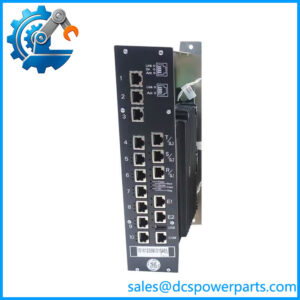
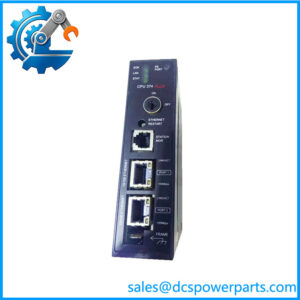
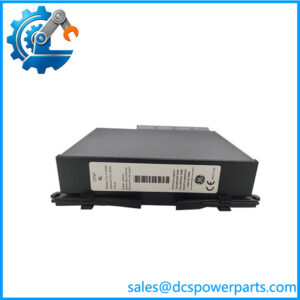
GE IS230PCAAH1A Core Analog I/O Module
Key Technical Specifications
| Parameter | Specification |
|---|---|
| Manufacturer | General Electric |
| Model | IS230PCAAH1A |
| Module Designation | PCAA |
| Product Type | Core Analog I/O Assembly |
| Control Platform | Mark VIe / Mark VIeS |
| Typical Application | Gas turbine control |
| Processor Architecture | Common distributed-I/O processor board |
| Application I/O | Two application I/O boards |
| Ethernet | Dual RJ45 Ethernet connections |
| Network | Mark VIe IONet |
| Module Power | 28 VDC |
| Field Terminals | 120 Euro-style box terminals |
| TCAT Interface | Two 68-pin cable connections |
| Associated Terminal Boards | TCAS / TCAT |
| Supported Signal Classes | Thermocouple, 4–20 mA, seismic, LVDT, pulse-rate and servo-related signals, configuration dependent |
| Redundancy | Simplex, dual, or TMR architecture depending system design |
| DIN-Rail Hardware | Not a DIN-rail I/O module |
| Replacement Level | Complete PCAA assembly |
| Operating Temperature | Verify against the applicable Mark VIe system manual and cabinet configuration |
| Communication Configuration | Verify through Mark VIe/ToolboxST project configuration |
The signal capabilities are architecture-dependent rather than equivalent to a conventional fixed-channel analog card. GE documentation describes PCAA/TCAS/TCAT as supporting multiple signal groups, including thermocouple, current-loop, seismic, LVDT, pulse-rate, and servo-related signals.
Product Introduction
The GE IS230PCAAH1A is a PCAA Core Analog I/O assembly used in GE Mark VIe turbine control systems. It provides a substantial portion of the analog signal interface required by a gas turbine control system. Unlike a simple analog input card, PCAA combines processor and application-I/O circuitry with its associated terminal architecture. GE documentation describes the complete module as the least replaceable unit for this assembly.
PCAA can handle several categories of turbine instrumentation, including thermocouples, 4–20 mA current-loop signals, seismic inputs, LVDT excitation and feedback, pulse-rate signals, and servo-related outputs. The exact signal allocation depends on the Mark VIe application and whether the installation uses TCAS/TCAT signal distribution and simplex, dual, or TMR architecture.
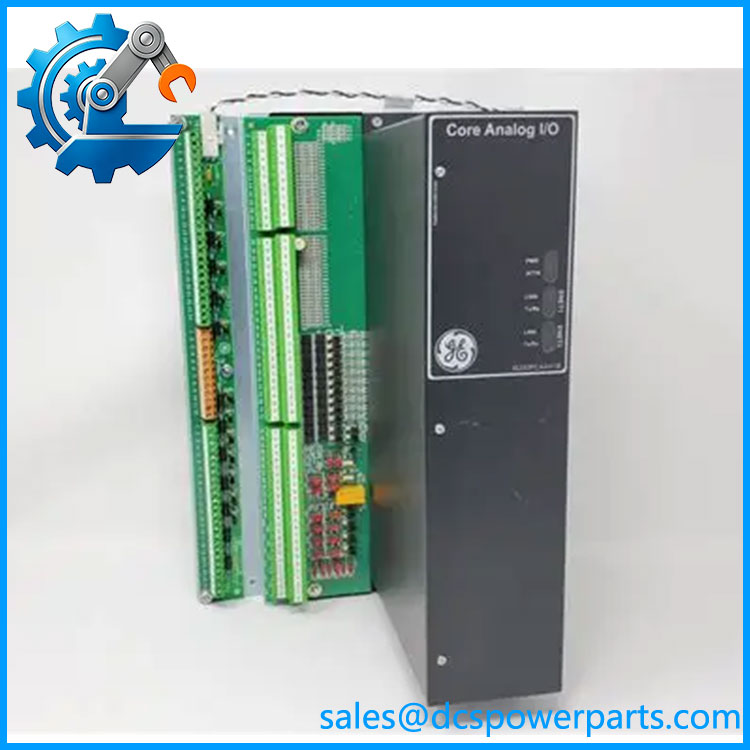
IS230PCAAH1A
Application Scenarios & Field Pitfalls — The Engineer’s Perspective
Engineering Pain Point
The main replacement risk with IS230PCAAH1A is assuming that “Core Analog” means a standardized analog-input card. It does not. PCAA sits inside the Mark VIe distributed I/O architecture and can participate in signal distribution, redundancy, turbine instrumentation, and servo-control functions. A replacement therefore has to match the installed I/O architecture and configuration rather than just the physical board dimensions.
Typical Applications
- Gas turbine control: Processing temperature, pressure, vibration-related and position-related signals used by the turbine control system.
- Thermocouple monitoring: Handling turbine temperature measurements through the PCAA/TCAS/TCAT architecture.
- 4–20 mA instrumentation: Interfacing analog process transmitters and other current-loop devices.
- LVDT and servo applications: Providing excitation, measurement, and control-related interfaces required by turbine control functions.
Technical Pitfalls to Avoid
- Do not confuse PCAA with a standard analog input card.
PCAA is a multifunction distributed-I/O assembly. Its signal allocation is determined by the Mark VIe architecture and application configuration. - Check TCAS versus TCAT architecture.
GE documentation states that PCAA connects to TCAT through two 68-pin cables, while TCAS/TCAT provide the associated terminal architecture. The system can also use PCAA without TCAT when fanned inputs are not required. - Do not replace individual internal boards casually.
The GE system documentation describes the complete PCAA module as the least replaceable unit and does not support field diagnosis or replacement of the individual boards that make up the assembly. - Verify redundancy before ordering.
PCAA can be used in simplex, dual, and TMR arrangements. In a TMR system, the terminal distribution and controller-network arrangement are part of the overall design; a visually identical module does not automatically reproduce the original architecture. - Check processor revision carefully.
GE documentation describes migration of Mark VIe I/O packs from BPPB-based processors to BPPC-based processors. The documentation specifically identifies IS230PCAAH1A and IS230PCAAH1B in this migration context and notes that automatic BPPB-to-BPPC migration is not supported; manual firmware/configuration work through ToolboxST is required. - Do not assume IS230PCAAH1B is simply an unrestricted drop-in replacement for H1A.
The A/B designation is relevant to the processor-generation migration. Confirm the installed Mark VIe software, firmware, configuration, and replacement procedure before changing processor-generation hardware.
Related Products
- IS230PCAAH1B — Later PCAA variant associated with the Mark VIe BPPB-to-BPPC processor migration. Firmware and ToolboxST compatibility must be checked before substitution.
- TCAS — PCAA-associated core analog terminal-board architecture used for field signal termination and distribution. The exact TCAS variant must be matched to the installed system.
- TCAT — Core analog terminal board that can fan selected field inputs to multiple PCAA modules in simplex, dual, or TMR arrangements.
- JGPA — Adjacent board providing additional shield-ground and 24 V field-power connections for applicable PCAA installations.
- IS230SAIIH2A — Mark VIe simplex analog input module; its architecture and signal role differ from the multifunction PCAA assembly.
- IS230SAIIH4A — Another Mark VIe simplex analog input configuration; verify signal requirements before considering it as an alternative.
- IS230SHRAH2A — Mark VIe HART-enabled analog I/O module; it is not a direct replacement for PCAA.
- IS230SNAIH2A — Mark VIe analog I/O module with a different I/O architecture from PCAA.
- IS230SNAOH2A — Mark VIe analog output module, intended for output-focused applications rather than the multifunction PCAA role.
- IS220PTURH1A — Mark VIe turbine I/O pack with a different distributed-I/O function; it should not be substituted for PCAA based only on the Mark VIe designation.
Procurement Note
For a replacement, specify the complete GE IS230PCAAH1A identifier and record the existing PCAA hardware revision, processor generation, TCAS/TCAT configuration, I/O distribution, redundancy arrangement, and ToolboxST project/firmware revision.
The most important check is whether the installed system is still using the original BPPB-based architecture or has migrated to a BPPC-based I/O configuration. GE’s documentation specifically identifies PCAA in this processor migration and requires manual firmware/configuration handling rather than assuming automatic compatibility.
Do not publish a generic “12-channel analog input” specification for this part. The PCAA assembly handles multiple signal classes and its actual field-channel allocation depends on the turbine control application and terminal-board architecture. The safest procurement record is + existing terminal-board part numbers + controller/software revision + redundancy configuration.