Description
Key Technical Specifications
| Parameter | Value |
|---|---|
| Manufacturer | GE |
| Model | IS220PDIAH1BE |
| Part Number | 336A5026ADP4 |
| Product Family | Mark VIe |
| Product Type | Discrete Input I/O Pack |
| Input Channels | Up to 24 discrete contact inputs |
| Input Signal | Discrete contact / switch input |
| Nominal Supply | 24 VDC |
| Maximum Supply Voltage | 28.6 VDC |
| Maximum Contact Input Voltage | 32 VDC |
| Contact Wetting Output | 31 VDC, 110 mA DC for channels 1–21 |
| Network Interface | Dual 10/100 Ethernet ports |
| Network Architecture | Mark VIe I/O network |
| Typical Function | Field contact/status acquisition |
| Operating Temperature | -30°C to +65°C for the documented H1BE configuration |
| Hazardous Area | Specified hazardous-location approvals available |
| Compatible Terminal Boards | IS200STCIH1A, IS200TBCIH2C, IS200TBCIH4C and related configurations |
| Typical System | GE Mark VIe turbine control |
The strongest available technical references identify the IS220PDIAH1BE as a 24-channel discrete input I/O pack, with 24 VDC nominal supply and a maximum 32 VDC contact-input voltage.
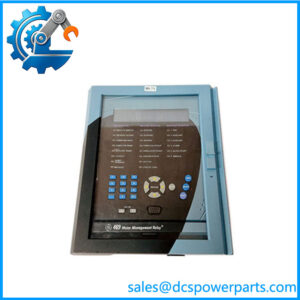
Important: There are conflicting secondary listings that describe this part as a generic communications module or even a servo device. Those descriptions should not be used for engineering selection. The PDIA designation and the available Mark VIe technical information identify this hardware as a discrete input I/O pack.
Product Introduction
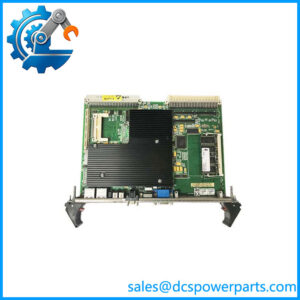
GE IS220PDIAH1BE 336A5026ADP4
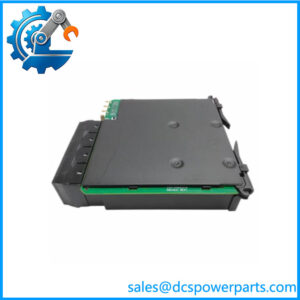
The GE IS220PDIAH1BE 336A5026ADP4 is a Mark VIe discrete input I/O pack used to acquire field contact states for turbine-control logic. It interfaces up to 24 discrete inputs and communicates the acquired status through the Mark VIe I/O network.
Its main advantage is channel density in turbine-control cabinets. One pack can handle numerous permissives, valve-position contacts, breaker states, alarm contacts, and equipment-status signals. The 24 VDC architecture and Ethernet-based I/O interface fit directly into the Mark VIe distributed I/O design.
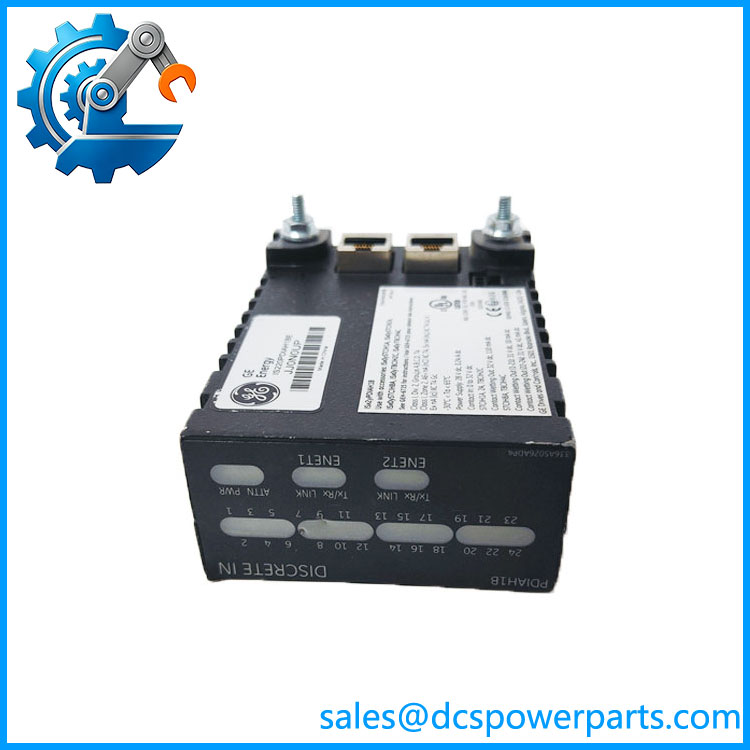
IS220PDIAH1BE
Application Scenarios & Field Pitfalls
Engineering Pain Point
A turbine can be mechanically healthy and still refuse to start because one permissive contact is missing. That makes discrete-input troubleshooting deceptively important. With the IS220PDIAH1BE, the first question should be whether the field contact, wetting voltage, terminal board, and wiring are correct—not whether the I/O pack itself has failed.
Typical Applications
- Gas Turbine Control — Generator breaker status, valve limit switches, lube-oil permissives, fuel-system status, and turbine auxiliary equipment.
- Steam Turbine Control — Valve-position feedback, trip contacts, equipment permissives, and auxiliary-system status.
- Combined-Cycle Power Plants — Boiler, HRSG, generator, auxiliary, and balance-of-plant discrete status acquisition.
- Industrial Power Generation — Start permissives, shutdown interlocks, alarm contacts, motor status, and electrical equipment feedback.
Technical Pitfalls to Avoid
- Do not confuse PDIA with a discrete output pack.
PDIA is used for discrete input acquisition. It reads field status; it is not the module used to energize field loads. - Verify the exact number and type of field signals.
The documented configuration provides up to 24 discrete contact inputs. Do not assume every channel has identical external circuitry without checking the applicable terminal-board documentation. - Check contact wetting voltage.
The available technical data specifies approximately 31 VDC / 110 mA contact-wetting output for channels 1–21. A field contact designed for a different circuit arrangement should not simply be connected without verification. - Do not apply excessive external voltage.
The documented maximum contact-input voltage is 32 VDC. A higher external source can damage the input circuitry. - Check the terminal board before replacing the I/O pack.
The PDIA works with specific Mark VIe terminal-board assemblies. A problem at the terminal board can look exactly like a failed I/O pack from the controller’s perspective. - Check field wiring for normally-open versus normally-closed logic.
A healthy input can still generate the wrong turbine-control state if the field contact philosophy does not match the Mark VIe application configuration. - Do not overlook common field faults.
Broken wires, loose terminal screws, oxidized contacts, incorrect jumpers, and blown external fuses are much more common than simultaneous failure of multiple input channels. - Check the I/O network separately from the field circuit.
A valid field input with lost I/O network communication produces a completely different failure mode from an open field contact. Diagnose the two sides independently. - Verify hazardous-area installation requirements.
The H1BE configuration is associated with hazardous-location approvals, but certification applies to the specified system configuration. Do not assume that the I/O pack alone establishes the complete installation approval. - Do not substitute another Mark VIe I/O pack solely because it has Ethernet.
Mark VIe I/O packs perform different acquisition functions. A PRTD, PSCA, PDIA, or analog I/O pack may share the same general architecture while having completely different field interfaces.
Related Products
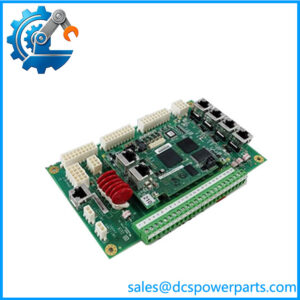
- GE IS200STCIH1A — Compatible discrete terminal-board family for the PDIA application. It provides the field termination interface associated with discrete contact inputs. Verify the exact board revision before replacement.
- GE IS200TBCIH2C — Mark VIe discrete terminal board used with compatible discrete I/O configurations. It is particularly relevant when replacing a PDIA installation where the existing cabinet uses this terminal-board arrangement.
- GE IS200TBCIH4C — Another compatible discrete terminal-board option. The physical board and wiring configuration should be matched to the existing installation rather than selected solely by family name.
- GE IS220PRTDH1A — Mark VIe RTD input I/O pack. It is used for resistance-temperature measurement rather than discrete contact acquisition. It is complementary when a turbine cabinet requires both temperature and status inputs.
- GE IS220PSCAH1A — Mark VIe serial communication I/O pack. It provides serial communications rather than discrete field-contact acquisition and is useful for integrating intelligent external equipment.
- GE IS220PAICH1A — Mark VIe analog input I/O pack. It is intended for continuous analog process signals rather than binary contact states.
- GE IS220PTCCH1A — Mark VIe thermocouple input I/O pack. It is the appropriate functional family for thermocouple temperature acquisition rather than discrete inputs.
- GE IS220PDIAH1B — Related PDIA hardware revision. It performs the same general discrete-input function, but the H1B/H1BE suffix must be verified against the installed system and certification requirements before substitution.
- GE IS220PDOAH1A — Mark VIe discrete output I/O pack. It complements PDIA by providing discrete output control rather than input/status acquisition.
- GE IS220PSVOH1A — Mark VIe servo-control I/O pack. It is used for servo/position-control functions and is not a substitute for PDIA.