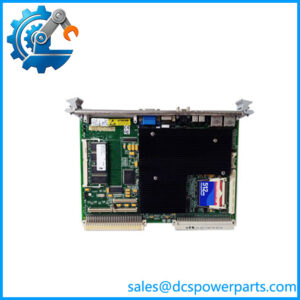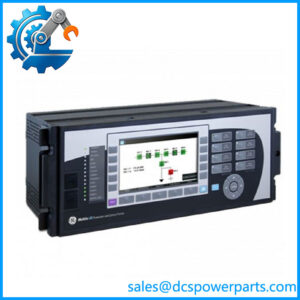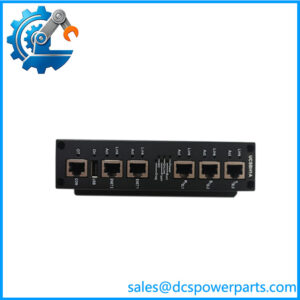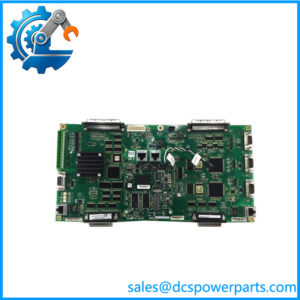
Description
Key Technical Specifications
| Parameter | Specification |
|---|---|
| Manufacturer | GE / General Electric |
| Board Model | IS215UCVFH2BB |
| VME Model | VMIVME-7650-83H |
| Board Part Number | 350-007650-83H-C |
| Product Type | VME CPU / Controller Board |
| Bus Architecture | VMEbus |
| Form Factor | VME board |
| Application Family | GE Industrial Control / Mark VI |
| Typical Application | Turbine and industrial control |
| Installation | VME rack / control chassis |
| Software / Firmware | Application-dependent |
| Memory | Revision-dependent; verify from board documentation |
| Processor | Revision-dependent; verify from board documentation |
| Communication Interfaces | System/configuration dependent |
| Operating Voltage | System backplane dependent |
| Hardware Revision | H2BB |
| Status | Legacy hardware |
A key point here: several online references identify the three part numbers together, but detailed primary-source specifications for IS215UCVFH2BB / VMIVME-7650-83H / 350-007650-83H-C are not readily available.
That makes this a case where publishing guessed processor, RAM, Ethernet, or electrical figures would be poor procurement practice. The H2BB revision should be treated as significant.
Application Scenarios & Pain Points
A VME controller failure can create a surprisingly broad symptom set: loss of communication, missing diagnostics, watchdog faults, or a controller that simply refuses to complete its startup sequence. The board itself may not be the original cause.
- GE Mark VI turbine control: The board is associated with GE Mark VI control hardware and is referenced alongside other Mark VI controller boards.
- VME-based industrial controllers: The VMIVME-7650 designation places the hardware within GE’s VMIC VME controller ecosystem.
- Legacy turbine maintenance: Particularly relevant where an installed control cabinet still depends on VME-based processor hardware and a complete migration is not immediately practical.
- Emergency spare inventory: Keeping an identified H2BB revision available can reduce troubleshooting time when an older controller suddenly fails.
Field note: Before replacing the CPU board, record the board revision, VME slot position, boot behavior, diagnostic LEDs, and software image. If the replacement boots but the application does not load, the board may be healthy and the real problem may be the system image or configuration.
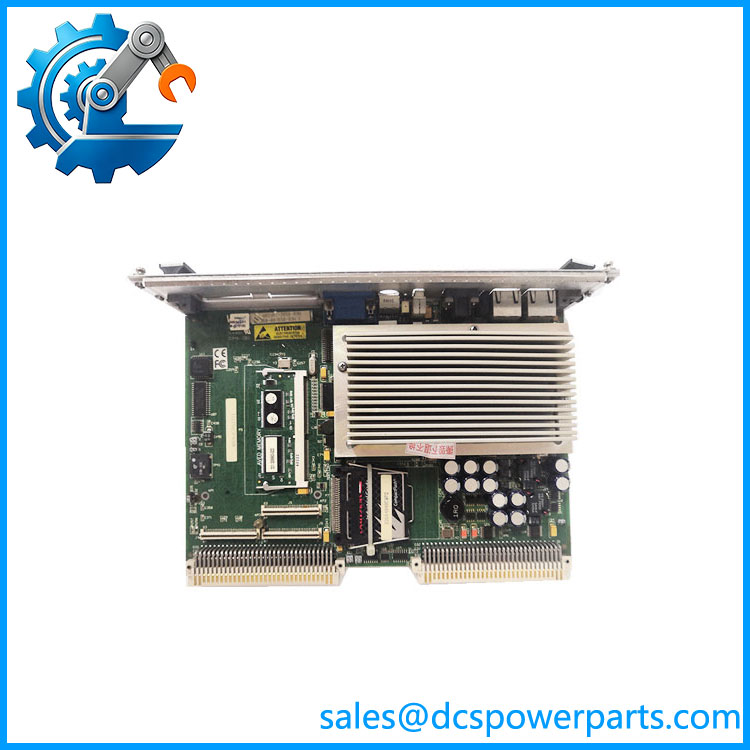
IS215UCVFH2BB VMIVME-7650-83H 350-007650-83H C
Related Products
- GE IS215UCVFH2BB — Exact board covered here. The H2BB revision is part of the identification and should be matched during procurement.
- GE VMIVME-7650-83H — VME product designation associated with the IS215UCVFH2BB assembly. Useful when searching cabinet drawings or older system documentation.
- GE 350-007650-83H-C — Manufacturing/assembly part number associated with the same hardware. Include it in purchase specifications.
- GE IS215UCVEM06A — Another GE VME-based control board from the same broad hardware ecosystem. Its architecture and application are different, so it is not a drop-in substitute.
- GE IS215UCVGM06A — Related UCV-family controller hardware. Useful when reviewing older VME control architectures, but the exact application and hardware configuration must be checked.
- GE IS215UCVEH2AE — VME controller hardware associated with VMIVME-7614-132. It belongs to a related GE VME generation but has a different board identification and function.
- GE VMIVME-7666-111000 — Related VME controller/processor hardware encountered in GE industrial control systems. It should be treated as an alternative architecture, not a direct replacement.
- GE IS215VCMIH2CA — VME interface/control hardware from the GE Mark VI ecosystem. It serves a different role from the UCV processor board.
The Engineer’s Guide: Field Pitfalls to Avoid
⚠️ Do not substitute by the VMIVME number alone.
VMIVME product numbers cover many different processor and interface boards.
How to avoid it: Match all three identifiers:
IS215UCVFH2BB → VMIVME-7650-83H → 350-007650-83H-C
Then compare the hardware revision and PCB markings.
⚠️ Do not assume a similar UCV board contains the same software environment.
The IS215UCVEM, IS215UCVEH, IS215UCVGM, and IS215UCVFH families appear together in legacy GE VME references, but their configurations are not automatically interchangeable.
How to avoid it: Verify the application software, boot media/image, controller configuration, and system revision before installing another UCV-family board.
⚠️ Do not ignore VME backplane and slot condition.
A CPU board that fails to start may be reacting to a poor backplane connection rather than having an internal hardware fault.
How to avoid it: Inspect the VME connectors for bent contacts, contamination, or oxidation. Check the backplane and adjacent cards before condemning the controller.
Frequently Asked Questions (FAQ)
What is GE IS215UCVFH2BB?
is a GE VME-based controller/CPU board associated with the VMIVME-7650-83H and 350-007650-83H-C identifiers. It is used in legacy GE industrial control environments, including Mark VI-related applications.
Are and VMIVME-7650-83H the same product?
The available references associate these identifiers with the same hardware assembly. For purchasing, I recommend listing the complete chain rather than using only one number:
/ / 350-007650-83H-C
Is this a Mark VI turbine control card?
It is associated with GE Mark VI and VME-based industrial control hardware, including turbine-control applications. However, the exact cabinet function should be verified from the site’s drawings and board documentation before describing it as a specific turbine-control function.
Can be replaced by another VMIVME CPU?
Not without an engineering comparison. Processor architecture, memory, boot environment, VME resources, software compatibility, and physical revision can all affect startup.
What should I check before installing a replacement?
At minimum:
- Exact identification.
- designation.
- 350-007650-83H-C assembly number.
- Hardware revision H2BB.
- VME slot position.
- Backplane condition.
- Boot/application image.
- Existing firmware/software revision.
- Diagnostic LED behavior.
- Configuration and communication settings.
How should a refurbished board be tested?
A simple power-on test is not enough for a processor board. Ask for evidence of:
- VMEbus startup
- Processor boot
- Memory operation
- Communication/interface operation where applicable
- Diagnostic LED behavior
- Extended run test
- Hardware revision verification