Description
Key Technical Specifications
| Parameter | Specification |
|---|---|
| Manufacturer | GE / GE Fanuc VMIC |
| GE Model | IS215UCVEH2AE |
| VMIC Model | VMIVME-017614-132 |
| GE Assembly Number | 350-017614-132D |
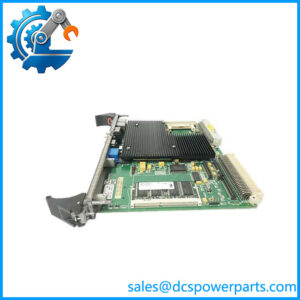
| Product Type | VME Processor Control Card / SBC |
| System | GE Mark VI Speedtronic |
| Form Factor | Single-slot 6U VME |
| Processor | Intel Celeron / Ultra-Low-Voltage Celeron platform |
| Memory | Configuration-dependent; verify actual board |
| Ethernet | 2 × 10/100 Ethernet |
| Ethernet Connector | RJ-45 |
| Serial Ports | 2 × COM interfaces |
| USB | 2 × USB interfaces |
| Display | VGA interface |
| VME Interface | VMEbus |
| Storage | Flash / CompactFlash configuration depending on assembly |
| Application | Turbine control, embedded VME computing |
| Typical Architecture | Simplex / redundant Mark VI control configurations |
Available sources agree that IS215UCVEH2AE / VMIVME-017614-132 / 350-017614-132D is a GE VME processor/controller assembly. The board has dual 10/100 Ethernet connectivity, two COM ports, USB interfaces, and a VGA interface.
There is conflicting secondary information regarding the exact processor speed and memory configuration. One source reports a 300 MHz Intel Celeron with 32 MB DRAM and 16 MB CompactFlash, while another describes a 1067 MHz Intel Ultra-Low-Voltage Celeron with 1 GB SDRAM and 128 MB flash.
For procurement, I would not publish either processor/memory figure as an absolute specification without checking the actual board label or GE documentation for the specific hardware revision. That distinction matters with legacy VMIC assemblies.
Application Scenarios & Pain Points
A failed VME processor in a Mark VI cabinet can produce much more than a simple CPU alarm. Loss of the controller may affect turbine sequencing, I/O processing, network communications, and the application’s real-time operating environment.
- GE Mark VI turbine control: The board is associated with GE Speedtronic Mark VI control hardware and provides the processor resources required by the VME-based control architecture.
- Gas and steam turbine systems: Appropriate where the installed control cabinet uses the corresponding VMIVME/UCVE processor architecture.
- Legacy VME control cabinets: The 6U VME interface allows the board to communicate with the existing backplane and associated VME hardware.
- Maintenance and emergency replacement: Useful as a tested spare when the original processor board has failed and a full control-system migration is not immediately practical.
Field note: Before removing the old board, photograph every front-panel connection. Ethernet ports can look identical while serving different logical networks. A mislabeled cable can turn a five-minute replacement into a much longer commissioning exercise.
Brief Field Case
A VME CPU that powers up but fails to enter the turbine application should not immediately be classified as defective. Check the boot medium, memory, BIOS configuration, VME backplane contacts, and application image first. On equipment of this age, software preservation is often as important as the replacement hardware.
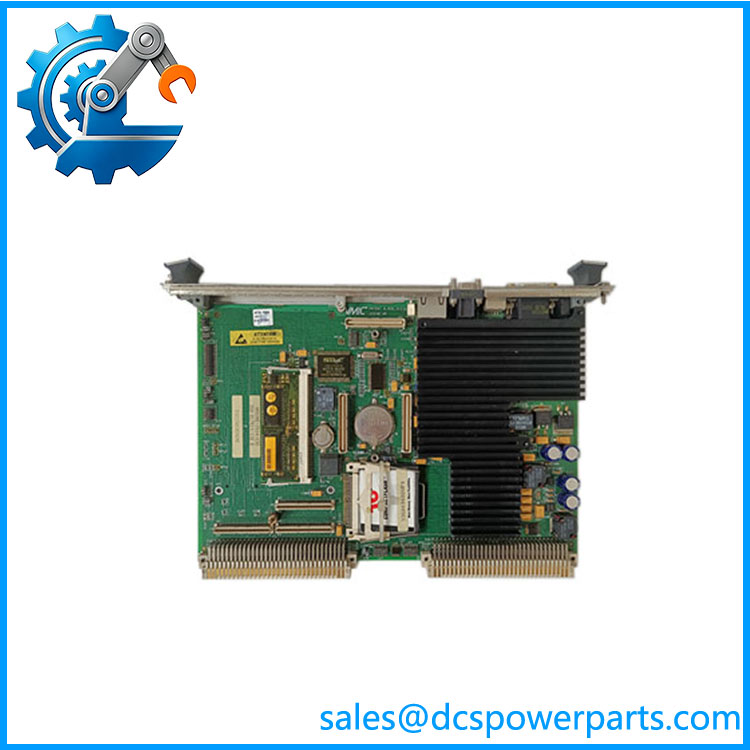
IS215UCVEH2AE
Related Products
- GE IS215UCVEH2AE — Subject Mark VI VME processor/control card. Use the complete H2AE designation when sourcing a replacement.
- GE VMIVME-017614-132 — VMIC model designation corresponding to the H2AE assembly. Useful for identifying the VME hardware family.
- GE 350-017614-132D — GE assembly/catalog identifier associated with the subject board. Match the final revision carefully.
- GE IS215UCVEH2AB / VMIVME-7614-132 / 350-007614-132C — Closely related UCVE VME controller family member. It should not be treated as a direct replacement solely because the board architecture is similar.
- GE IS215UCVEH2AF / VMIVME-7614-133 — Later/related UCVE VME SBC configuration. Different hardware identification; verify application and processor compatibility before substitution.
- GE IS215UCVEM09A / VMIVME-017614-132 — Related UCVE hardware identification found in legacy inventories. Confirm the complete assembly before treating it as equivalent.
- GE VMIVME-7750 — Another GE/VMIC VME computing platform. It belongs to a different SBC family and is not a plug-in replacement for the 7614/017614 platform without engineering review.
- GE VMIVME-7750-834 — Related 7750 configuration used in VME computing applications; processor, I/O, and software differences prevent assuming direct interchangeability.
- GE VMIVME-7698 — Related VME computing hardware appearing in the same legacy GE/VMIC ecosystem. Treat as an alternative platform only after application review.
- GE IS215UCVFH2BB / VMIVME-7650-83H — Another GE/VMIC VME controller family member. It differs substantially from the UCVEH2AE and is not a routine substitute.
The Engineer’s Guide: Field Pitfalls to Avoid
WARNING 1 — Do not buy by “UCVE” alone.
The UCVE family contains multiple configurations. IS215UCVEH2AB and IS215UCVEH2AE, for example, have different VMIVME and GE assembly identifiers.
How to avoid it: Record all three identifiers from the installed board:
IS215UCVEH2AE → VMIVME-017614-132 → 350-017614-132D
WARNING 2 — Be careful with conflicting processor specifications.
Secondary sources currently report materially different processor speeds and memory configurations for this family.
How to avoid it: For a replacement purchase, request a photograph of the actual processor/board identification and confirm the installed memory and storage configuration. Do not accept a generic “same model” statement as sufficient evidence.
WARNING 3 — Do not overlook the boot environment.
The controller hardware is only one part of a Mark VI application. A replacement with a different storage image, firmware environment, or application configuration may power up normally and still fail during startup.
How to avoid it: Preserve the original configuration before replacement whenever possible. Record:
- Boot media
- BIOS settings
- Application version
- Firmware revision
- Ethernet configuration
- Controller role
- VME rack position
- Connected network ports
Also inspect the VME connector contacts. A little oxidation on a backplane pin can mimic a much more expensive CPU failure.
Frequently Asked Questions (FAQ)
What is GE IS215UCVEH2AE?
It is a GE Mark VI VME processor/control card associated with the VMIVME-017614-132 and 350-017614-132D identifiers. It provides CPU and VMEbus computing resources for legacy GE turbine-control systems.
Is the same as ?
The available product references associate these identifiers with the same board assembly:
- — GE board identifier
- — VMIC model
- 350-017614-132D — GE assembly number
For purchasing, listing all three is the safest approach.
Is interchangeable with IS215UCVEH2AB?
Do not assume so. Both are UCVE-family VME processor boards, but they have different VMIVME and GE assembly numbers.
Before substitution, compare:
- Processor.
- Memory.
- Flash/CompactFlash configuration.
- BIOS/firmware.
- VME configuration.
- Mark VI application requirements.
- Ethernet network assignment.
A board that fits the same VME slot is not necessarily functionally equivalent.
How many Ethernet ports does have?
Available technical descriptions identify two 10/100 Ethernet ports using RJ-45 connectors. The ports can serve different logical network functions, so cable position matters during replacement.
Does the board have serial and USB interfaces?
Yes. Published descriptions identify two COM interfaces and two USB ports, along with a VGA interface.
These interfaces are useful during commissioning, diagnostics, and maintenance, depending on the installed Mark VI configuration.
What processor does use?
This is one area where secondary references conflict. One source specifies a 300 MHz Intel Celeron, while another identifies a 1067 MHz Intel Ultra-Low-Voltage Celeron.
I would therefore not use a processor clock speed as the purchasing acceptance criterion unless the actual board revision and GE documentation confirm it. The complete part number and hardware identification should take priority.
What should I request when buying a refurbished ?
For a turbine-control spare, request:
- Exact marking
- identification
- 350-017614-132D assembly number
- Actual board photographs
- Processor identification
- RAM and flash configuration
- BIOS/firmware information
- Ethernet-port test
- Serial-port test
- VMEbus functional test
- Boot test
- Physical connector inspection
- Test report
- Written warranty
A power-on test alone is weak evidence. For this type of legacy controller, successful boot plus VME and network communication testing gives a much better indication that the spare is suitable for an actual plant replacement.