Description
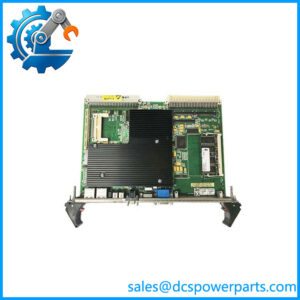
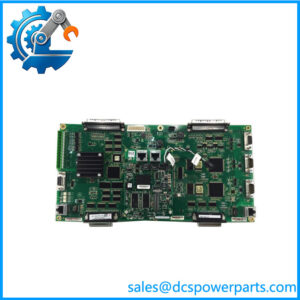
The GE IS215AEPAH1CH is associated with General Electric’s Mark VIe wind turbine control equipment and the AEPA board family used in pitch-axis control applications. In a wind turbine, the pitch-control system adjusts blade angle to regulate rotor speed, manage power output, and respond to operating or protective commands. The correct control hardware is therefore important to turbine availability and safe operating behavior. GE’s related IS215AEPAH1A board is identified by an industrial parts reference as an AEPA assembly for 20 Nm wind pitch-axis control; however, the exact function and configuration of the IS215AEPAH1CH suffix variant could not be independently verified from the available documentation.
For maintenance and procurement teams, the key issue is not simply whether a replacement board carries the same AEPA family designation. Mark VIe wind turbine systems use different pitch-control architectures and board variants. GE’s system guide distinguishes between pitch-axis and pitch-center control boards, and it identifies differences between 20 Nm and 30 Nm pitch systems. Those distinctions make the complete part number, hardware revision, existing installation, and turbine configuration essential checks before ordering.
The GE IS215AEPAH1CH should be purchased against the installed unit’s identification label and applicable equipment records. Before installation, confirm connector condition, PCB revision, coating condition, and any required configuration or commissioning procedures. Do not assume that a similar-looking AEPA board or a neighboring part number is a direct replacement without documented compatibility.
Key Technical Specifications
| Parameter | Details |
|---|---|
| Product Model | IS215AEPAH1CH |
| Manufacturer | General Electric (GE) |
| Product Type | Industrial control circuit board / assembly |
| Product Family | Mark VIe wind turbine control equipment |
| Functional Association | AEPA board family; exact suffix-specific function requires verification |
| Application | Wind turbine pitch-control system maintenance, subject to equipment compatibility |
| Working Voltage | Not independently verified for this exact variant |
| Communication Interface | Exact interface not verified |
| Working Temperature | Confirm from the applicable GE documentation for this exact assembly |
| Installation Method | System-specific board installation; verify chassis and connector arrangement |
| Protection Rating | No confirmed IP rating available |
| Operating Accuracy | Not established for this exact part number |
| Hardware Revision | H1CH suffix; verify against the installed board label |
| Replacement Compatibility | Requires full part-number and system-revision verification |
Specification note: Public references describe related GE AEPA boards, but that information should not be treated as a complete specification sheet for IS215AEPAH1CH.
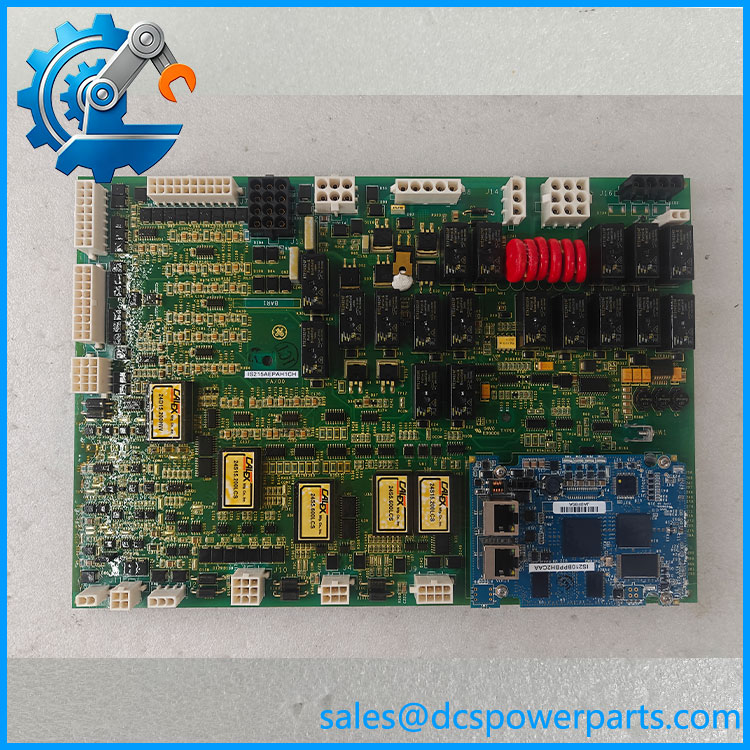
IS215AEPAH1CH
Major Features and Advantages
Wind turbine control-system application
The AEPA family is associated with Mark VIe wind turbine pitch-axis control hardware. Pitch control affects how the turbine responds to wind conditions and operating commands, making correct board identification important during maintenance and fault recovery.
Revision-specific procurement
Industrial control boards that share a product-family prefix may differ in functionality, connectors, firmware expectations, or system compatibility. Ordering against the full IS215AEPAH1CH identifier reduces the risk of receiving a visually similar but unsuitable assembly.
Support for planned maintenance
Keeping a correctly identified spare can help maintenance teams shorten repair delays when a board fault is confirmed. The practical value depends on the spare’s condition, test evidence, and compatibility with the installed turbine configuration.
Inspection before installation
For new, surplus, or refurbished stock, procurement should establish the board’s physical condition and provenance. Inspection should include PCB damage, connector wear, corrosion, contamination, component alterations, and coating defects. Where testing is available, request a written report stating what was tested and under what conditions.
Clear limits on interchangeability
Related GE boards include IS215AEPAH1A, IS215AEPCH1A, IS215AEPCH1B, and IS215WEPAH1B, but these are not confirmed direct replacements for . GE’s system documentation distinguishes pitch-axis hardware from pitch-center control and shows that configurations differ by turbine design.
Application Scenarios and Common Pain Points
- Wind turbine maintenance: Used as a candidate spare when servicing a compatible Mark VIe control assembly.
- Fault recovery: Considered after diagnostics isolate a fault to the relevant board or assembly.
- Spare-parts planning: Held as a controlled spare when the exact installed variant and required revision have been documented.
- Legacy equipment support: Evaluated when maintaining a turbine whose original control hardware is difficult to source.
Common procurement and field risks include misreading the suffix, confusing pitch-axis and pitch-center boards, accepting undocumented refurbished stock, and installing a replacement without validating system compatibility. A board swap alone may not resolve a fault caused by wiring, connectors, power quality, configuration, or another part of the pitch-control system.
Related Products
| Model | General association | Replacement status |
|---|---|---|
| IS215AEPAH1A | GE Mark VIe AEPA assembly for 20 Nm pitch-axis control | Not confirmed as a drop-in replacement |
| IS215AEPCH1A | GE Mark VIe wind pitch-center control family | Different stated control role; not confirmed interchangeable |
| IS215AEPCH1B | GE Mark VIe pitch-center control board family | Compatibility requires verification |
| IS215WEPAH1B | GE wind pitch-axis control hardware associated with a different pitch-system configuration | Not confirmed as a direct replacement |
These related models are useful for cross-reference research only. Confirm the complete installed part number and turbine configuration before substituting any board.
Engineer’s Guide: Field Pitfalls to Avoid
- Check every character on the nameplate. Do not treat as equivalent to IS215AEPAH1A or IS215AEPAH1C without manufacturer documentation.
- Confirm the pitch-system design. Verify the turbine’s pitch-axis and pitch-center architecture, motor configuration, and applicable system documentation.
- Request traceable test evidence. A claim that a board is “tested” should be accompanied by the test scope, results, and any limitations. Do not assume a bench check proves full in-system functionality.
- Inspect storage and handling condition. Check connectors, board edges, corrosion, contamination, component damage, and electrostatic-discharge handling history.
- Preserve configuration records. Record the removed board’s full identifier and revision, the replacement’s identifier, the fault symptoms, and post-installation test results.
- Follow site safety procedures. Wind turbine pitch systems can contain hazardous electrical energy and stored energy. Use the approved isolation, discharge, and commissioning procedures for the specific turbine.
Frequently Asked Questions
Q1: What is the GE ?
It is a GE industrial control board identifier associated with the Mark VIe wind turbine control equipment family. The exact function of this complete suffix variant requires confirmation against the applicable equipment documentation.
Q2: Is used in wind turbine pitch control?
The related AEPA family is associated with wind turbine pitch-axis control. Confirm the exact role of the H1CH variant before using that family-level description as a definitive specification.
Q3: Can IS215AEPAH1A replace ?
Not on the evidence available. A shared AEPA designation does not establish electrical, mechanical, or firmware compatibility.
Q4: What should I verify before purchasing?
Check the complete part number, board revision, installed system configuration, physical condition, supplier test documentation, and any manufacturer-approved replacement guidance.
Q5: Is a refurbished unit suitable for plant maintenance?
Potentially, if its identity and condition are traceable and its test coverage is appropriate for the application. Request written inspection and functional-test results rather than relying solely on a general “tested” claim.
Q6: What technical specifications should be confirmed before installation?
Verify power requirements, connector and chassis fit, applicable interfaces, configuration requirements, environmental limits, and system compatibility using documentation for the exact board variant.
Q7: What information helps confirm compatibility?
The installed board’s full nameplate details, turbine model, pitch-system configuration, and any relevant GE part-list or service-document references are the most useful starting points.