Description
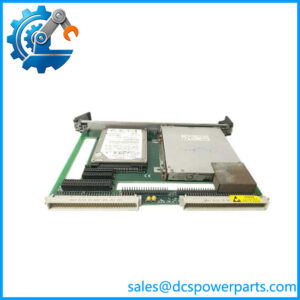
GE IS215ACLEH1BB Application Control Layer Module
Key Technical Specifications
| Parameter | Specification |
|---|---|
| Product Model | IS215ACLEH1BB |
| Base Assembly | IS215ACLEH1B |
| Manufacturer | General Electric (GE) |
| Functional Acronym | ACLE |
| Product Type | Application Control Layer Module |
| System | GE EX2100 Excitation Control |
| Hardware Variant | H1B |
| Processor | 400 MHz class processor |
| Operating System | QNX 4 real-time OS |
| Memory | DRAM, flash, and nonvolatile parameter storage |
| Communication | Ethernet / serial interfaces |
| Control Interface | Dual-port RAM to associated DSP/control electronics |
| Installation | EX2100 control rack |
| Application | Generator excitation and regulator control |
| Configuration Tool | GE Control System Toolbox / applicable engineering tools |
| Replacement Identification | Complete part number, serial number, and ML information should be checked |
The 400 MHz processor and QNX 4 identification are reported specifically for the H1B version, while the GE documentation confirms ACLE as an Application Control Layer module and explains the IS200/IS215 assembly-number structure. Because public secondary sources disagree on individual memory and interface details, those values should be checked against the actual board revision before being used for engineering substitution.
Product Introduction
The is an Application Control Layer (ACLE) module used in GE excitation-control systems. It functions as a microprocessor-based control layer rather than as a conventional discrete or analog I/O board. The ACLE executes application software, exchanges data with associated control electronics, and provides the processing and communications required by the excitation controller. The module is particularly relevant to generator excitation systems where maintaining the original control architecture is important during maintenance or legacy-system support.
The belongs to the H1B hardware generation of the ACLE family. Secondary technical documentation identifies the H1B implementation with a 400 MHz processor and QNX 4 real-time operating environment. The module is associated with control racks and communicates with other control hardware through backplane/DPRAM and external communications interfaces.
For plant procurement, the important distinction is that the is a controller-level component of an excitation system. It should not be treated as a generic Mark VIe I/O pack, safety I/O module, or standalone PLC CPU. The complete board identification must be matched to the installed architecture.
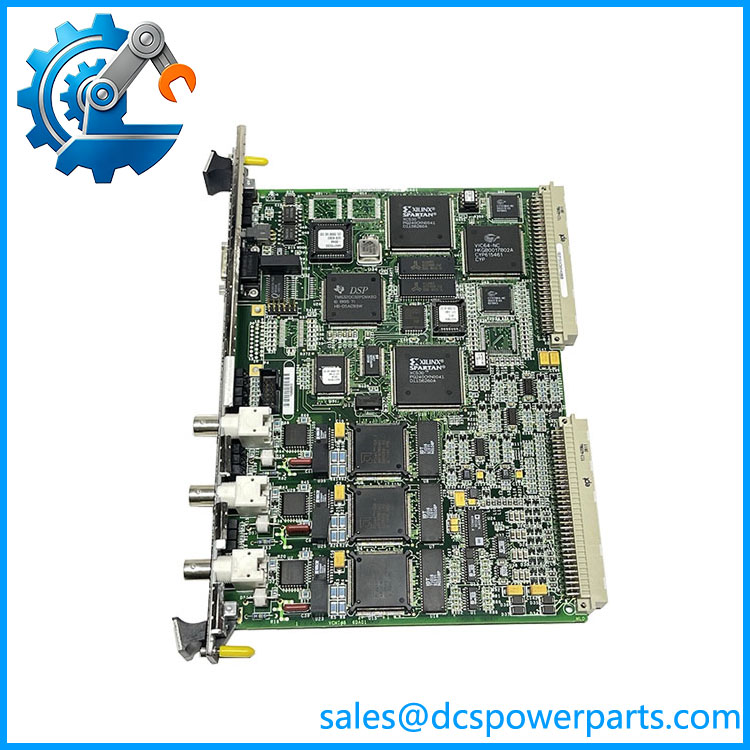
IS215ACLEH1BB
Application Scenarios & Field Pitfalls — The Engineer’s Perspective
Engineering Pain Point
When an controller develops intermittent communication, application-runtime, or processor faults, replacing only the visible control board does not necessarily solve the problem. The ACLE interacts with other boards, firmware, application code, and the excitation-control configuration. A replacement that powers up successfully can still fail to operate correctly if its software environment or system configuration does not match the installed exciter.
Typical Applications
- generator excitation — Provides the application-processing layer for excitation-control functions.
- Static excitation systems — Used within applicable regulator and thyristor control architectures.
- Excitation-system maintenance — Serves as a replacement spare for failed or degraded ACLE hardware.
- Legacy generator control support — Helps plants maintain existing installations without immediately replacing the complete excitation system.
- Control-system refurbishment — May be required when restoring an existing rack after board-level failure.
Technical Pitfalls
- Match the complete H1BB suffix. GE’s board-identification documentation states that all digits are important when ordering or replacing a board. Do not identify the unit only as “ACLE” or “IS215ACLEH1B.”
- Do not assume every ACLE is interchangeable. The ACLE family contains different hardware configurations. Public documentation identifies H1B as a later processor generation, while other ACLE/ACLA variants have different hardware characteristics.
- Firmware and application software matter. A replacement ACLE is not simply a passive circuit-board swap. The installed runtime/application configuration needs to be compatible with the replacement hardware and the control package.
- Verify the DSP/control-board relationship. The ACLE communicates with associated control electronics, including DSPX-based processing hardware in documented configurations. A fault attributed to the ACLE can sometimes originate in the connected backplane, communication path, or companion processor board.
- Do not rely on generic Mark VI terminology. Some secondary listings describe this part as a Mark VI turbine controller or safety I/O module. The more specific technical evidence identifies the ACLE as an Application Control Layer module associated with excitation control.
- Check the replacement history. GE documentation indicates that later replacement boards can sometimes be supplied in place of earlier versions when GE has established backward compatibility, but this should be confirmed against the applicable hardware and firmware revision rather than assumed from the part-number family alone.
Related Products
- GE IS215ACLAH1A — Earlier Application Control Layer assembly associated with the family; hardware generation must be checked before substitution.
- GE IS215ACLEH1B — ACLE H1B assembly designation; the complete suffix should be matched.
- GE IS200DSPXH1D — Digital Signal Processor Control Board used in related GE excitation/control architectures.
- GE IS200EROCH1A — Exciter Regulator Options Card used in regulator systems.
- GE IS200ERDDH1A — Exciter Regulator Dynamics Discharge Board.
- GE IS200ERGTH1A — Exciter Regulator Gate/ground-detector-related hardware used with applicable configurations.
- GE IS200ERIOH1A — Exciter Regulator I/O hardware.
- GE IS200ERBPG1A — exciter regulator backplane.
- GE IS200ERRBG1A — redundant regulator backplane.
Procurement Note
For a replacement request, specify exactly as marked on the board. Include the exciter serial number, Material List (ML) number, existing board revision, and available firmware/application information when possible. GE’s own board-ordering guidance emphasizes complete part-number identification plus serial/ML information for replacement work.
For used or refurbished inventory, inspect the processor board, connectors, memory/flash devices, faceplate, and board revision markings. A useful acceptance test should go beyond a power-on check and include communication, application loading, diagnostics, and interaction with the associated control hardware.
Important: I would not publish exact claims such as 128 MB DRAM, 16 MB CompactFlash, dual 10/100Base-T Ethernet, specific minimum firmware versions, or hot-swap capability as universal specifications for every without matching the exact GE manual/revision. Secondary sources provide these figures, but the available evidence is not sufficiently consistent to treat every one as a universal specification.