Description
Key Technical Specifications
| Parameter | Specification |
|---|---|
| Manufacturer | General Electric (GE) |
| Mark VI Model | IS215VCMIH2BB |
| PCB / Board Model | IS200VCMIH2BCC |
| Product Type | VME Bus Master Controller / VME Communication Interface |
| Product Family | Mark VI Speedtronic |
| Processor | Texas Instruments TMS320C32, 32-bit DSP |
| Form Factor | 6U VME |
| VME Function | Bus Master Controller |
| IONet Ports | 3 |
| IONet Speed | 10 Mbps |
| IONet Connector | BNC / coaxial Ethernet interface |
| Serial Interface | 1 × RS-232C |
| Serial Speed | Up to 38.4 kbps |
| Parallel Interface | 1 × 8-bit bidirectional EPP 1.7 |
| Dual-Port Memory | 32 KB |
| SRAM | 64K × 32 |
| Flash Memory | Configuration-dependent; VCMIH2B documentation lists 128K × 8 |
| Control Mode | Simplex or TMR |
| Installation | Mark VI VME rack / Central Control Module |
| Primary Role | Controller-to-I/O and IONet communication |
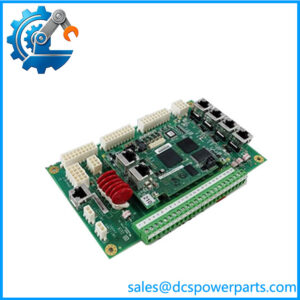
The technical references identify IS215VCMIH2BB as a VME Bus Master Controller using a TMS320C32 32-bit DSP, with three IONet ports and one RS-232C interface.
The corresponding IS200VCMIH2BCC is described as the Mark VI PCB installed in the Central Control Module, with three IONet connections, a serial port, reset switch, and multiple status LEDs.
One point worth clarifying for procurement: some inventory pages call this simply a “VME communication card,” while others call it a “VME Bus Master Controller.” The latter is the more useful technical description because the VCMI does more than pass communications; it also manages VME bus functions within the Mark VI architecture.
Application Scenarios & Pain Points
A VCMI failure can look deceptively broad. Multiple I/O boards may suddenly become unavailable even though those individual boards have no hardware fault. In a turbine cabinet, that distinction matters because replacing several healthy I/O cards will not restore the communication path.
- GE Mark VI gas turbine control: The VCMI provides the communication path between the main controller, I/O boards, and IONet control network.
- Steam turbine control: The same Mark VI VME architecture can use the VCMI as the rack communication and bus-master interface.
- Remote I/O configurations: The three IONet connections support communication arrangements involving distributed I/O racks, subject to the specific Mark VI system architecture.
- Simplex and TMR systems: The H2 version is documented for simplex or TMR configurations, making correct rack identification important during replacement.
Field note: If all three IONet paths suddenly show communication trouble, check the VCMI and network infrastructure before replacing individual I/O boards. One failed communication master can create a cabinet full of secondary-looking alarms.
Brief Field Case
A common troubleshooting pattern is a controller that remains powered while several I/O boards simultaneously disappear from the control application. The first checks should include VCMI status LEDs, IONet cable continuity, VME seating, and the controller-to-VCMI communication path. That sequence can save a considerable amount of unnecessary card swapping.
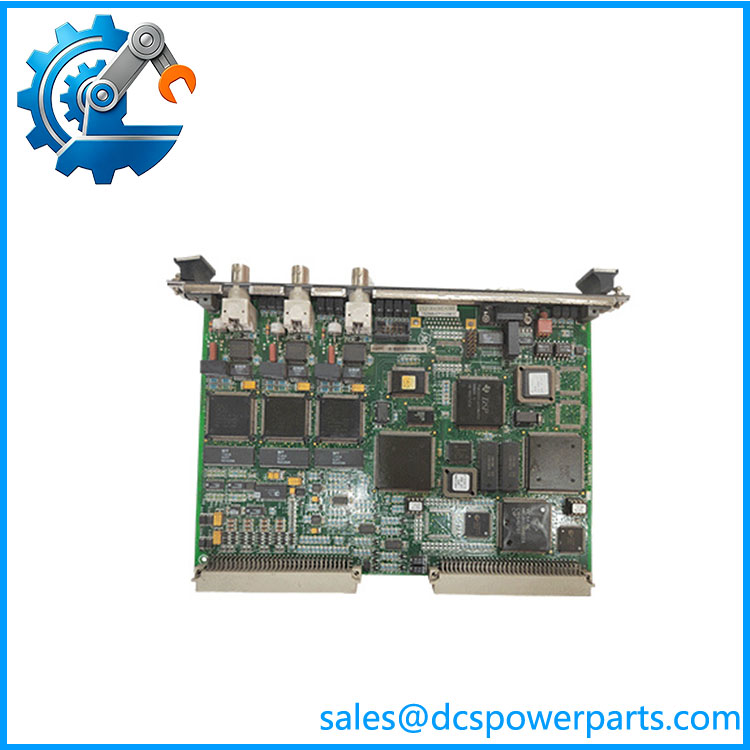
IS200VCMIH2BCC
Related Products
- GE IS215VCMIH2BB — The subject H2 VCMI assembly designation. It identifies the complete VME communication/controller board used in Mark VI systems.
- GE IS200VCMIH2BCC — Corresponding PCB identifier associated with IS215VCMIH2BB. Both numbers should be recorded when purchasing a replacement.
- GE IS215VCMIH1BB — H1 VCMI family variant. It belongs to the same general Mark VI communication architecture but has a different hardware configuration; do not assume direct interchangeability.
- GE IS200VCMIH1BCC — PCB-level H1 VCMI designation. Useful when identifying an older rack configuration, but the H1 and H2 versions should be matched against the system BOM.
- GE IS215VCMIH2BC — Related VCMI ordering designation associated with the H2 board family. Verify the complete board suffix before treating it as an exact replacement.
- GE IS200VCMIH2B — Base PCB family identification. The complete suffix is important because Mark VI boards can have hardware revisions that look nearly identical.
- GE IS215VCMIH2CA — Related VCMI family board appearing in Mark VI inventories. It should be treated as a different configuration unless the system documentation explicitly permits substitution.
- GE IS200VCMIH2CAA — Related PCB designation in the VCMI family. It is useful as a comparison part, not as an automatic substitute.
- GE IS200VCMIH2BCD — Another H2 VCMI PCB variant documented as a 6U VME Bus Master Controller. It shares the general Mark VI function but has a different board suffix and should be verified before use.
The Engineer’s Guide: Field Pitfalls to Avoid
WARNING 1 — Do not confuse the IS215 and IS200 numbers.
For this assembly, IS215VCMIH2BB is used as the board/assembly identification while IS200VCMIH2BCC identifies the associated PCB. They should not automatically be treated as two independent replacement products.
How to avoid it: Put both identifiers on the purchase specification:
IS215VCMIH2BB / IS200VCMIH2BCC
Then ask for a photograph of the actual nameplate and PCB markings.
WARNING 2 — IONet cable position matters.
The H2B VCMI has three IONet ports.
How to avoid it: Photograph and label each BNC connection before removal. Do not assume the ports are interchangeable from a system-function perspective. Record which network segment each cable serves.
WARNING 3 — Do not diagnose a VCMI fault from one communication alarm alone.
A failed IONet cable, VME seating problem, power issue, controller fault, or downstream network condition can produce symptoms similar to a failed VCMI.
How to avoid it: Check the fault pattern:
- Does the VCMI power/status indication appear normal?
- Are one or all IONet paths affected?
- Are local VME I/O boards visible?
- Does the controller recognize the VCMI?
- Are the network LEDs showing expected activity?
- Does the fault follow the VCMI when a known-good spare is installed?
Also inspect the VME connector pins. Old cabinets occasionally develop contact problems that are easy to mistake for board failure.
Frequently Asked Questions (FAQ)
What is the GE used for?
It is a VME Bus Master Controller and communication interface for the GE Mark VI control system. Its job includes communication between the controller and VME I/O boards, plus IONet network management.
It is therefore a rack-level communication component rather than a conventional analog or digital I/O module.
Is the same board as IS200VCMIH2BCC?
The available technical references associate with IS200VCMIH2BCC as the corresponding assembly/PCB identification.
For purchasing, specify both numbers. That reduces the risk of receiving a visually similar VCMI variant.
How many IONet ports does the have?
The H2B version is documented with three IONet Ethernet ports, plus one RS-232C serial interface.
The IONet connections are a key reason why the H2B should not automatically be substituted with an older VCMI version having a different network arrangement.
What processor does the VCMIH2B use?
Technical references identify a Texas Instruments TMS320C32 32-bit digital signal processor.
That processor is part of the board’s real-time communication and bus-management architecture. Processor substitution is therefore not a practical field modification.
Can be used in a TMR Mark VI system?
Yes. Available technical specifications identify the H2 VCMI as supporting simplex or TMR configurations.
The important point is to verify the exact rack role and system architecture before installation. A board being electrically compatible does not by itself establish that it is correctly configured for a particular TMR position.
What should I check if the Mark VI suddenly loses several I/O boards?
Start at the communication layer rather than replacing every missing I/O board.
Check:
- VCMI status LEDs
- Three IONet connections
- BNC cable condition
- VME board seating
- Controller-to-VCMI communication
- Rack power
- Network topology
- Controller diagnostics
If several I/O boards disappear simultaneously, a common communication-path fault is more likely than several independent I/O failures.
What should I request when buying a replacement ?
For a production turbine-control spare, request:
- Exact identification.
- PCB marking.
- Clear photographs of both sides.
- Processor identification.
- Three IONet-port functional test.
- RS-232 test.
- VMEbus communication test.
- Status LED verification.
- Firmware/configuration information where available.
- Written test report and warranty.
A supplier saying “powers on” is not enough. For this particular board, VME communication and all three IONet interfaces should be part of the acceptance test.