Description
Key Technical Specifications
| Parameter | Specification |
|---|---|
| Product Model | IS200TSVCH1AED |
| Manufacturer | General Electric |
| Functional Acronym | TSVC |
| Product Type | Servo I/O Terminal Board |
| System | Mark VI / Mark VIe turbine control |
| Primary Interface | Servo valves and position-feedback devices |
| Servo Outputs | 2 independent servo channels |
| Feedback | LVDT valve-position feedback |
| Pulse Inputs | 2 pulse-rate inputs are reported for the TSVC architecture |
| I/O Pack Association | PSVO I/O pack in Mark VIe configurations |
| Field Connection | Barrier-type terminal blocks |
| PCB Construction | Conformal-coated assembly |
| Typical Application | Electro-hydraulic turbine valve control |
GE’s TSVC board is specifically intended for servo-valve interfacing rather than general-purpose analog I/O. Available technical documentation identifies the board as providing the field interface for two electro-hydraulic servo valves and LVDT feedback, with the PSVO I/O pack used in the Mark VIe implementation.
Product Introduction
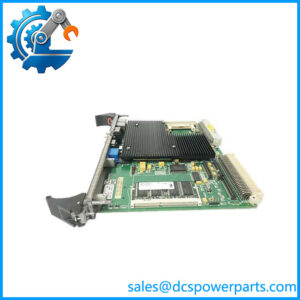
The GE IS200TSVCH1AED is a TSVC servo I/O terminal board used in GE Mark VI/Mark VIe turbine-control architecture. Its primary job is to provide the field-side interface between the control electronics and electro-hydraulic servo valves, while also accepting LVDT signals used to determine actual valve position. This makes it an important interface in closed-loop fuel, steam, and other turbine actuator control.
For maintenance engineers, the board should be viewed as part of a complete servo-control channel, not as an isolated analog terminal card. Compatibility depends on the associated I/O pack, control architecture, field wiring, redundancy arrangement, and exact board revision. A visually similar TSVC board with a different suffix should not automatically be treated as an equivalent replacement.
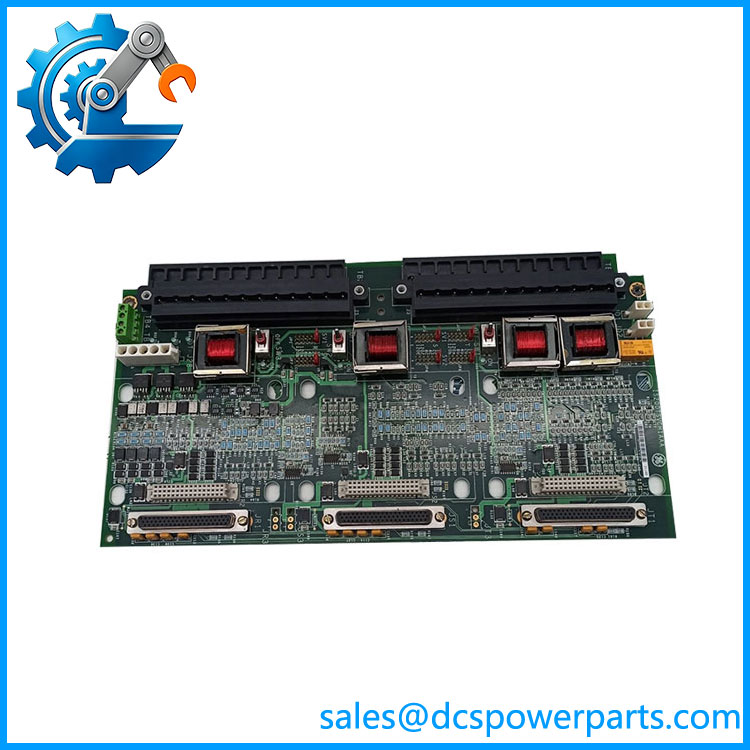
IS200TSVCH1A
Application Scenarios & Field Pitfalls
Engineering Pain Point
A servo-control fault on a turbine can be difficult to isolate because the control command, servo current, hydraulic actuator, and LVDT feedback form one closed-loop chain. A problem at the terminal-board level can therefore appear as an actuator problem or an unstable valve-position signal.
With the IS200TSVCH1AED, technicians should separate the investigation into three areas: servo output, position feedback, and field wiring. Replacing the TSVC board before checking these three paths can result in replacing a healthy board while the actual fault remains in the valve coil, LVDT, cable, or I/O pack.
Typical Applications
- Gas turbine fuel control — interface for electro-hydraulic fuel-valve servo control and position feedback.
- Steam turbine governing — servo control of steam admission or governing valves.
- Combined-cycle power plants — Mark VI/Mark VIe turbine control cabinets using closed-loop actuator control.
- Turbine control system maintenance — replacement of failed or aging TSVC terminal hardware in existing GE installations.
Technical Pitfalls to Avoid
- Do not confuse TSVC with a general analog I/O board. Its design is specifically centered on turbine servo-valve interfacing and LVDT feedback.
- Verify the complete suffix. IS200TSVCH1A, IS200TSVCH1ADC, IS200TSVCH1AED, and other TSVC variants should not be assumed interchangeable simply because they share the same base model. The revision and hardware configuration can affect application compatibility.
- Check the PSVO relationship. In Mark VIe installations, the TSVC field interface works with the PSVO I/O pack. A TSVC board replacement should therefore be checked against the actual I/O-pack configuration rather than purchased as a standalone “servo board.”
- Do not diagnose an LVDT fault from the HMI indication alone. An apparent position-feedback failure can originate in the LVDT, excitation circuit, field cable, terminal connection, I/O pack, or TSVC interface.
Related Products
- IS200TSVCH1A — base TSVC servo I/O terminal board; closely related to the AED variant and used for servo-valve/LVDT field interfacing.
- IS200TSVCH1ADC — another TSVC revision; catalog suffix and hardware revision should be checked before considering substitution.
- IS200TSVOH1A — servo termination card used within the broader Mark VI servo-control hardware family; its role differs from the TSVC board.
- IS200TSVOH1B — later TSVO servo termination variant; verify system architecture before substitution.
- IS200VSVOH1B — Mark VI servo control hardware associated with servo-valve control functions; not a direct field-terminal replacement for TSVC.
- IS200TQBAH1B — Mark VI analog-output hardware that may appear in related servo architectures, but should not be treated as a direct replacement for the TSVC terminal board.
- IS200TVIBH1B — Mark VI LVDT/analog feedback interface hardware used in related turbine-control applications.
- IS220PSVOH1A — Mark VIe PSVO I/O pack associated with servo-valve control; the TSVC field interface and PSVO pack should be evaluated together in Mark VIe applications.
- IS200TRPAH2A — Mark VI turbine protection/relay hardware serving a different protection function rather than servo-valve interfacing.
Procurement check: For an IS200TSVCH1AED replacement, match the full part number and board revision, then verify the installed PSVO/servo architecture, LVDT configuration, redundancy arrangement, and terminal wiring. The base designation “TSVC” alone is not enough to establish interchangeability.