Description
Key Technical Specifications
| Parameter | Value |
|---|---|
| Manufacturer | General Electric |
| Product Family | Mark VIe / Mark VIeS |
| Model | IS200TREAS1A |
| Functional Acronym | TREA |
| Product Type | Turbine Emergency Trip Terminal Board |
| Primary Application | Aeroderivative turbine emergency trip protection |
| Associated I/O Pack | IS220PPRAS1B |
| Speed Inputs | 9 passive pulse-rate inputs |
| Speed Input Arrangement | 3 per X/Y/Z section |
| Speed Signal | Passive magnetic/pulse-rate pickup |
| Trip Output Architecture | Two TMR-voted output contacts |
| Trip Output Voltage | 24 VDC or 125 VDC, depending on board terminal configuration |
| Trip-String Monitoring | Four DC voltage-detection circuits |
| Terminal Arrangement | Two 24-point pluggable terminal blocks or 48 Euro-style terminals, depending on board variant |
| Redundancy | TMR-compatible |
| System | Mark VIe / Mark VIeS |
| Related Daughterboard | IS200WREAS1A |
| Installation | Panel-mounted terminal board |
| Main Function | Field termination and signal distribution for emergency turbine protection |
GE’s certification documentation specifically identifies IS200TREAS1A as the Turbine Emergency Trip Terminal Board and pairs it with the IS220PPRAS1B Control PPRA Emergency Turbine Protection Module.
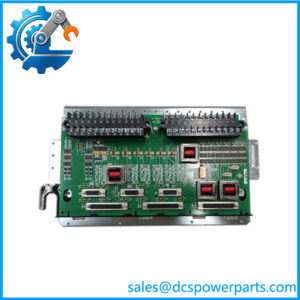
The TREA board provides the interface for three groups of turbine-speed inputs, TMR trip outputs, and trip-string voltage monitoring. The exact terminal arrangement depends on the board’s hardware configuration.
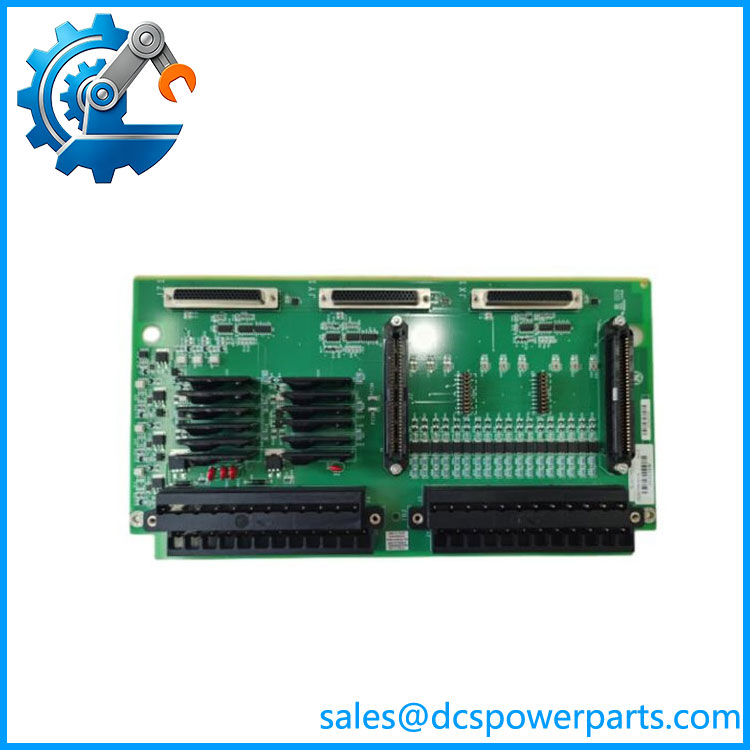
IS200TREAS1A
Product Introduction
GE IS200TREAS1A Product Introduction
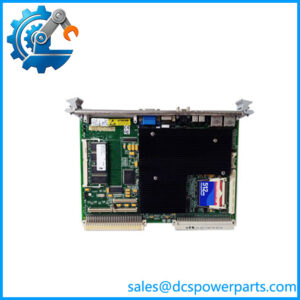
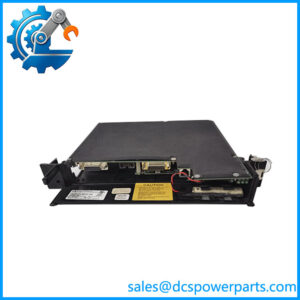
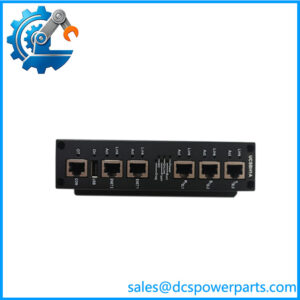
The GE IS200TREAS1A is a TREA terminal board used in the Mark VIe/Mark VIeS emergency turbine protection architecture. It provides field termination and signal distribution between turbine emergency-trip devices and the associated protection I/O pack. GE documentation identifies the board as an accessory to the IS220PPRAS1B PPRA Emergency Turbine Protection module.
This is protection hardware, not a general-purpose I/O terminal board. The board handles critical turbine-speed sensing, trip-output paths, and trip-string monitoring. For replacement work, matching the complete board configuration and associated I/O pack is essential.
Application Scenarios & Field Pitfalls (The Engineer’s Perspective)
Engineering Pain Point
Emergency-trip circuits are unforgiving. A turbine can run normally for months and then fail a startup permissive because one speed pickup, trip-string monitor, or termination point has degraded. With a TREA board, the first troubleshooting step should be identifying which part of the protection chain has failed rather than immediately replacing the PPRO/PPRA I/O pack.
Typical Applications
- Aeroderivative Gas Turbines — Emergency overspeed and turbine trip signal interfacing.
- Power Generation — TMR emergency-trip architectures for critical turbine protection.
- Industrial Gas Turbines — Speed pickup and trip-string monitoring associated with turbine shutdown circuits.
- Mark VIeS Safety Applications — Emergency turbine protection using the PPRA protection I/O architecture.
Technical Pitfalls to Avoid
- Do not confuse TREA with TREG.
TREA is associated with the aeroderivative turbine emergency-trip architecture. TREG is a different turbine emergency-trip terminal-board design. Their names are similar, but they are not interchangeable. - Match the protection I/O pack.
GE explicitly identifies IS200TREAS1A and IS200WREAS1A as accessory terminal boards for the IS220PPRAS1B PPRA Emergency Turbine Protection module. - Check the speed-pickup wiring carefully.
The TREA architecture uses nine passive pulse-rate inputs, arranged as three inputs for each X/Y/Z protection section. A wiring error here can affect the protection system’s speed validation. - Verify the trip-output voltage configuration.
Available TREA configurations support 24 VDC or 125 VDC trip-output arrangements. Do not assume that every IS200TREAS1A has identical field terminals or voltage capability. - Do not bypass the TMR protection path during troubleshooting.
This board participates in a turbine protection chain. Temporary bypasses or forced signals should only be performed under the plant’s approved turbine protection procedures.
Related Products
- IS220PPRAS1B — PPRA Emergency Turbine Protection I/O Module. This is the principal I/O pack associated with . It processes the signals presented through the TREA terminal board.
- IS200WREAS1A — Turbine Emergency Trip Daughter/Terminal Board associated with the TREA architecture. GE certification documentation lists it together with for the PPRA emergency-protection system.
- IS220PPROS1B — Backup Turbine Protection I/O Module. This belongs to a different protection function and uses other terminal-board families, including IS200TREAH1A/H3A and TPRO/SPRO boards. It should not be substituted for PPRA without reviewing the protection architecture.
- IS200TREAH1A — TREA-family terminal-board variant used with the PPRO Backup Turbine Protection architecture. The H-series terminal boards should not be assumed equivalent to the S1A board.
- IS200TREAH3A — Another backup-protection TREA terminal-board configuration. Applicable to specific Mark VIe PPRO installations and different terminal arrangements.
- IS200TPROH1C — Turbine Primary/Backup Protection terminal board used with PPRO-related protection architectures. It serves a different interface role from the TREA board.
- IS200TRPAH1A — Primary Turbine Protection Input terminal board used with the IS220PTURH1B turbine-specific primary-trip module. This is a primary-trip interface rather than the PPRA emergency-trip interface.
- IS220YTURS1A — Turbine Specific Primary Trip I/O Module. It belongs to the turbine primary-trip architecture and uses the TRPA terminal-board family rather than TREA.
- IS200TRPGS1B — Turbine Primary Trip terminal board associated with the primary turbine protection architecture. It should be evaluated separately from the emergency-trip TREA system.