Description
Product Introduction
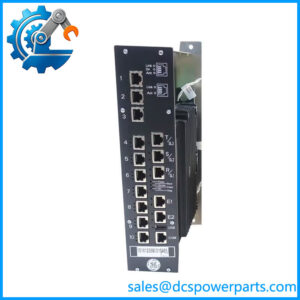
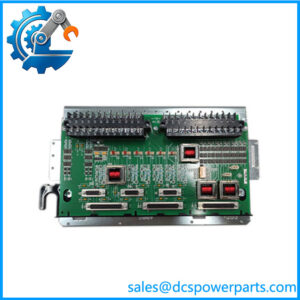
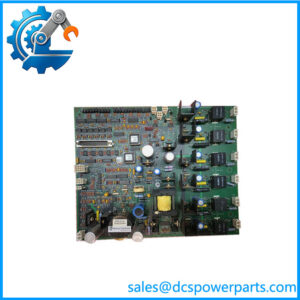
Intermittent status signals from limit switches, relay contacts, and other field devices can complicate turbine-control troubleshooting, particularly when electrical noise or a failed input path creates misleading indications. The GE IS200TBCIH2BCE is identified in supplier catalogs as a contact-input terminal board with group isolation, associated with GE’s TBCI control hardware family.
The TBCI design supports up to 24 dry-contact inputs and uses noise suppression to help limit the effects of surges and high-frequency interference. Before selecting the GE IS200TBCIH2BCE as a replacement, verify the full part number, revision, excitation-voltage requirements, and controller-side connections against the installed hardware.
Key Technical Specifications
| Parameter | Details |
|---|---|
| Product model | IS200TBCIH2BCE |
| Manufacturer | General Electric (GE) |
| Product family | Mark VI / TBCI contact-input hardware |
| Board type | Contact input terminal board with group isolation |
| Input capacity | 24 dry-contact inputs |
| Field wiring | Two barrier-type terminal blocks |
| Contact excitation | DC excitation; confirm the exact voltage variant |
| Noise suppression | Yes, intended to help protect against surges and high-frequency noise |
| Control architecture | TBCI family supports simplex, dual, and triple-modular-redundant configurations, subject to the specific system and hardware version |
| Controller interface | Depends on the installed Mark VI or Mark VIe configuration |
| Communication protocol | Not a standalone network interface; no Ethernet or Modbus capability should be assumed |
| Installation | System-specific terminal-board mounting and cable connections |
| Operating temperature | Confirm from documentation for the exact part and revision |
| Dimensions and weight | Verify against the physical board and its revision |
| Condition / warranty | Supplier-specific; request written confirmation |
The technical distinction matters here: GE documentation describes different TBCI versions with different contact-excitation voltages and system-interface arrangements. It also states that the Mark VIe system requires the appropriate C-version board for mechanical alignment with its I/O pack support. Do not assume that a similar-looking board is interchangeable.
Application Scenarios & Pain Points
A turbine controller can remain operational while a single faulty input channel causes alarms, incorrect status indications, or time-consuming fault isolation. The terminal board is one part of the signal path that maintenance teams should inspect.
- Gas and steam turbine controls: Interfaces discrete status signals used by turbine-control logic, subject to the configured system architecture.
- Field switch monitoring: Handles dry-contact signals from equipment such as limit switches and relay contacts when wired to the appropriate input circuit.
- Control-system maintenance: Provides a potential replacement option when a confirmed terminal-board fault affects field signal acquisition.
- Redundant control installations: The TBCI family supports simplex and redundant configurations, but the exact board revision and connection arrangement must match the installation.
Field check: If several inputs fail together, inspect the shared excitation supply, common wiring, and terminal connections before replacing the board. A group-level supply or wiring fault can resemble a failed input board.
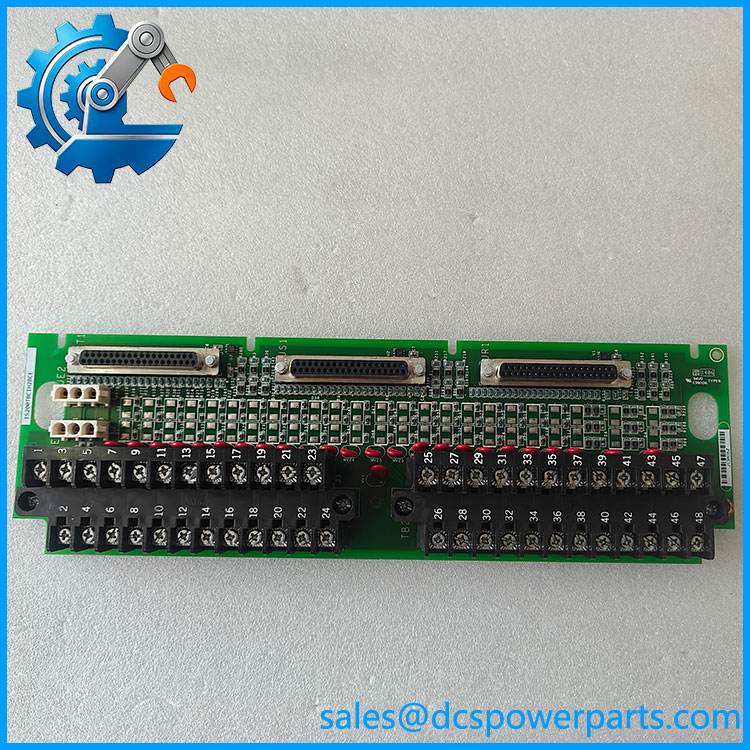
IS200TBCIH2BCE
Related Products
These models belong to related GE turbine-control hardware families. They are useful for comparison during parts identification, but they are not confirmed drop-in replacements for IS200TBCIH2BCE.
- IS200TBCIH2B — TBCI contact-input board family member; compare revision and hardware configuration.
- IS200TBCIH2C — Related C-version designation; verify the full order code and applicable system generation.
- IS410TBCIS2C — Mark VIeS 24 V DC contact-input terminal board; a distinct safety-system part.
- IS410TBCIS3C — Mark VIeS 48 V DC contact-input terminal board; different excitation-voltage configuration.
- IS420YDIAS1B — Mark VIeS contact-input I/O pack used with specified IS410 terminal boards; not the terminal board itself.
- IS200TBTCH1C — GE thermocouple-input terminal board; intended for analog temperature measurement rather than dry-contact inputs.
Engineer’s Guide: Checks Before Replacement
1. Match the complete part number and revision. Warning: Do not order by the IS200TBCI prefix alone. The suffix can distinguish hardware revisions and system-interface requirements. Confirm that the nameplate reads IS200TBCIH2BCE.
2. Verify the excitation voltage and wiring. The TBCI family includes different voltage variants. Check the installed drawing, field-wiring schedule, and excitation supply before moving wires. Never assume a 24 V DC version is interchangeable with a 48 V DC or 125 V DC version.
3. Confirm the controller interface and system generation. Compare connector assignments, cable type, mounting arrangement, and supported controller hardware. The Mark VI and Mark VIe implementations have different interface considerations; physical fit alone is not proof of compatibility.
For incoming inspection, record the board’s complete label, revision, visible damage, connector condition, and any included test or refurbishment report. For a used or refurbished board, request evidence of functional testing rather than relying solely on a visual inspection.
Frequently Asked Questions
Q1. What is the GE IS200TBCIH2BCE used for?
It is identified as a GE TBCI contact-input terminal board used to interface field dry-contact signals with turbine-control hardware. The TBCI family supports up to 24 inputs. Confirm the precise revision and application before installation.
Q2. How many inputs does the support?
The TBCI family is documented for 24 dry-contact inputs. Verify the exact part revision and its wiring documentation before relying on that specification for a plant modification.
Q3. Is the compatible with every GE Mark VI or Mark VIe system?
No universal compatibility should be assumed. The controller generation, terminal-board revision, excitation voltage, connectors, and I/O hardware all matter. Compare the existing board against the system’s hardware manual and drawings.
Q4. Does this terminal board communicate over Modbus TCP/IP or Ethernet?
Do not treat it as an independent Ethernet or Modbus interface. Its documented purpose is contact-input termination and signal interfacing; communications depend on the associated control hardware.
Q5. Can I replace an with an IS200TBCIH2B or another TBCI revision?
Not without verification. Related TBCI versions can differ in mechanical alignment, revision, or intended system interface. Confirm the complete part number and approved replacement information before swapping boards.
Q6. How can I confirm whether the supplied board is new or refurbished?
Request a written condition statement, clear photographs of the nameplate and connectors, serial or revision details where available, and a test report for refurbished stock. “In stock” does not establish that a board is new or tested.
Q7. What warranty and lead time should I expect?
Warranty and dispatch timing depend on the supplier, stock condition, and testing requirements. Request written confirmation of the warranty period, actual stock status, handling time, shipping estimate, and return terms before placing an order.