Description
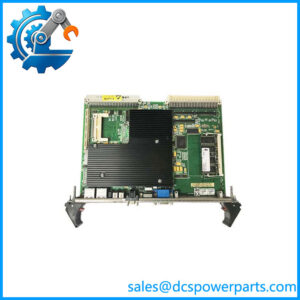
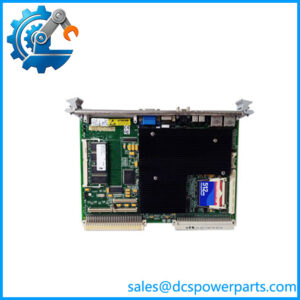
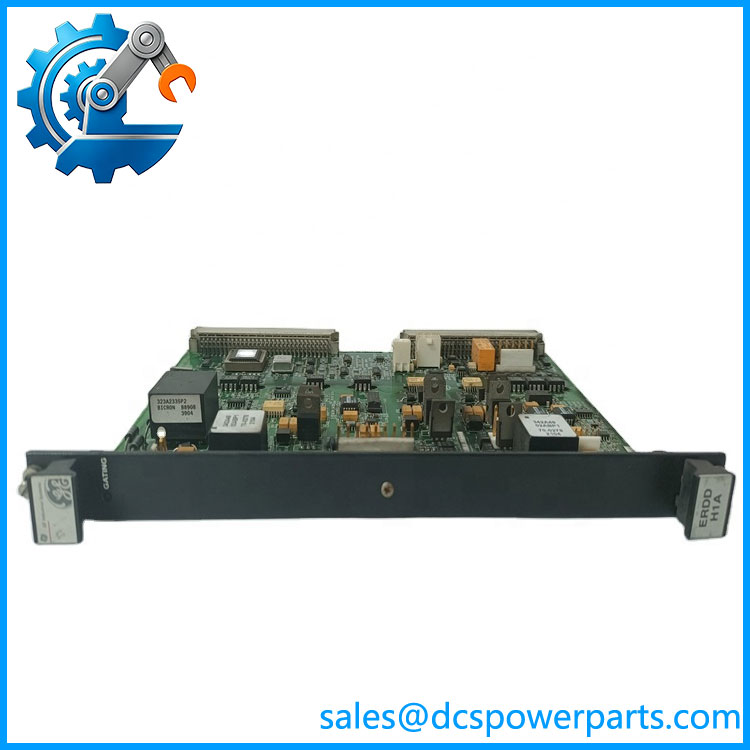
GE IS200ERDDH1ABA Exciter Regulator Dynamics Discharge Board
Key Technical Specifications
| Parameter | Specification |
|---|---|
| Manufacturer | General Electric (GE) |
| Full Part Number | IS200ERDDH1A |
| Base Board | IS200ERDDH1A |
| Functional Acronym | ERDD |
| Product Type | Exciter Regulator Dynamics Discharge Board |
| System | GE EX2100 Excitation Control |
| Operating Modes | Simplex / Redundant |
| Simplex Mounting | ERBP backplane |
| Redundant Mounting | ERBP and ERRB backplanes |
| Simplex Relay Function | K3 charging relay |
| Redundant Relay Function | K41 de-excitation relay |
| Control Function | Gate-drive and dynamic-discharge control |
| Feedback Functions | Field/DC-link voltage, shunt current, bridge temperature, gate-drive status |
| PCB Configuration | Standard GE IS200 board assembly |
| Revision Code | H1 / A / B designation within complete part number |
The IS200ERDDH1A is documented as an EX2100 Exciter Regulator Dynamics Discharge Board. In simplex operation, it is associated with the K3 charging relay; in redundant operation, two ERDD boards are used with the ERBP and ERRB backplanes and the board controls the K41 de-excitation relay.
Product Introduction
The is an ERDD board used within the GE excitation-control architecture. Its role is closely tied to the excitation bridge and regulator rather than ordinary PLC-style signal processing. The board provides interface and monitoring functions around the bridge, including feedback associated with field and DC-link voltage, shunt current, IGBT gate-drive status, and bridge temperature, while also participating in dynamic discharge control for excessive DC-link voltage.
For plant maintenance, the should be specified by its complete catalog number. The H1A base designation and the ABA revision suffix are important when matching an installed board. The operating arrangement also matters: an ERDD installed in a simplex system is not necessarily interchangeable with another board merely because both carry an ERDD designation. The correct backplane position, system configuration, and associated excitation hardware should be confirmed before installation.
IS200ERDDH1ABA
Application Scenarios & Field Pitfalls — The Engineer’s Perspective
Engineering Pain Point
When an excitation system develops a DC-link overvoltage, bridge-feedback fault, charging-relay problem, or de-excitation issue, replacing the ERDD board without understanding its role can lead to repeated trips. The board is connected to functions that interact directly with the excitation power bridge, so troubleshooting should distinguish an ERDD control/interface fault from a defective power semiconductor, discharge circuit, relay, sensor, or backplane connection.
Typical Applications
- GE generator excitation systems — excitation regulator interface and bridge-related monitoring.
- Generator field-control systems — monitoring field and DC-link conditions.
- Excitation bridge protection and discharge — controlling dynamic discharge functions associated with excessive DC-link voltage.
- Simplex and redundant excitation architectures — ERDD implementation differs according to the system configuration.
Technical Pitfalls
1. Do not confuse ERDD with an overspeed protection module.
Several secondary listings incorrectly describe this part as an emergency overspeed board or Mark VIe safety module. That identification is not consistent with the more specific ERDD documentation.
2. Simplex and redundant installations are different.
In simplex operation, the board is installed on the ERBP backplane and controls the K3 charging relay. In redundant operation, two ERDD boards are used, with one associated with the ERBP position and the other with the ERRB backplane.
3. Check the dynamic-discharge circuit as a complete system.
A suspected ERDD fault should not automatically lead to a board replacement. The discharge resistor circuit, DC-link sensing, relay circuitry, bridge components, wiring, and associated feedback should be checked as part of the fault investigation.
4. Verify the exact revision.
The complete number should be compared with the original board label. Revision differences can affect hardware configuration and system compatibility. Do not substitute another IS200ERDDH1A revision solely because the base model appears identical.
5. Inspect used boards carefully.
For surplus or repaired inventory, examine connectors, board-edge contacts, component discoloration, capacitors, solder joints, and evidence of previous thermal stress. An excitation-control board can appear visually acceptable while still having intermittent interface faults.
6. Do not rely on unsupported generic specifications.
Public reseller pages contain conflicting claims for this part, including Ethernet interfaces, large numbers of digital/analog I/O points, and safety ratings. Those claims should not be used for engineering procurement. The defensible identification is an ERDD Exciter Regulator Dynamics Discharge Board.
Related Products
- GE IS200ERDDH1A — base ERDD Exciter Regulator Dynamics Discharge Board designation.
- GE IS200DSPXH1D — DSPX Digital Signal Processor board used for high-speed control processing in compatible GE excitation/drive systems.
- GE IS200ISBBG2 — earlier board referenced in secondary documentation in connection with the ERDD/ISBB hardware lineage; verify exact application before substitution.
- GE IS200EXHSG3A — related excitation-control hardware; function differs from the ERDD.
- GE IS200EGDMH1A — GE excitation gate-drive interface hardware; not a direct ERDD replacement.
- GE IS200GFOIH1A — excitation-related interface hardware with a different electrical function.
- GE IS200DAMEG1A — GE drive/excitation control hardware; application-specific compatibility must be confirmed.
- GE IS215UCIBG1A — GE control/interface hardware from a different control architecture and not a direct ERDD substitute.
Procurement Note
For a replacement , provide the supplier with the complete number, board revision, original application, and simplex/redundant configuration. For used inventory, photographs of the board label and connectors are worth requesting before purchase. If the existing board is available, record its revision and system location before removal; this reduces the risk of installing a physically similar but configuration-incompatible ERDD assembly.