Description
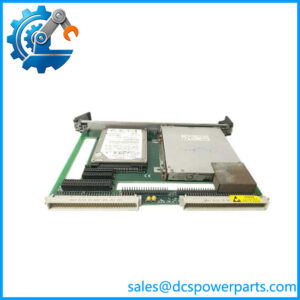
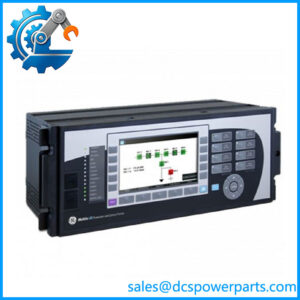
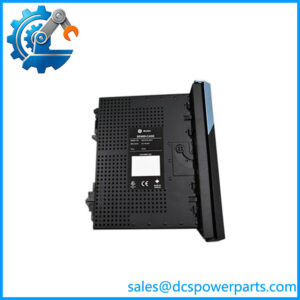
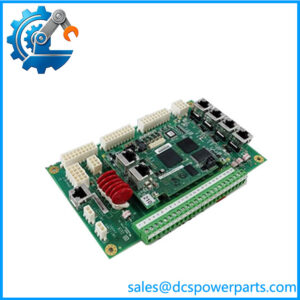
GE IS200DSPXH1DBD Digital Signal Processor Control Board
Key Technical Specifications
| Parameter | Specification |
|---|---|
| Manufacturer | General Electric (GE) |
| Full Part Number | IS200DSPXH1D |
| Base Board | IS200DSPXH1D |
| Functional Acronym | DSPX |
| Product Type | Digital Signal Processor Control Board |
| Primary Systems | Innovation Series Drives, EX2100 / EX2100e |
| Processor | 60 MHz DSP |
| ISBus Interfaces | 2 × 5 Mb/s |
| Serial Interfaces | Asynchronous TTL interfaces |
| Memory | Flash, RAM, NVRAM, identification/configuration memory |
| Onboard Firmware | Application code, boot loader, configuration parameters |
| I/O Connectors | P1, P5, P6 |
| Status Indication | Status and fault LEDs |
| Mounting | GE control rack / system backplane |
| Coating | H1D conformal-coated configuration |
The 60 MHz processor, dual ISBus interfaces, onboard memory and DSPX control architecture are reported consistently across available technical references. Exact electrical and environmental limits should be checked against the applicable GE system manual rather than assumed from reseller listings.
Product Introduction
The is a DSPX Digital Signal Processor Control Board intended for GE Innovation Series drive and EX2100 excitation-control equipment. It handles real-time digital processing, application logic and system interface functions rather than acting as a conventional PLC I/O card. In drive applications, DSPX hardware is associated with bridge control, motor regulation and gating functions; in excitation applications, it participates in generator field-control processing.
For maintenance teams, the complete catalog number is important. The designation identifies more than a generic DSPX board, and replacement selection should account for the H1D hardware configuration and D functional revision. GE-oriented documentation also indicates that firmware includes application code, boot loader and configuration parameters, so installing a physically correct board does not by itself guarantee that the system configuration will match the original installation.
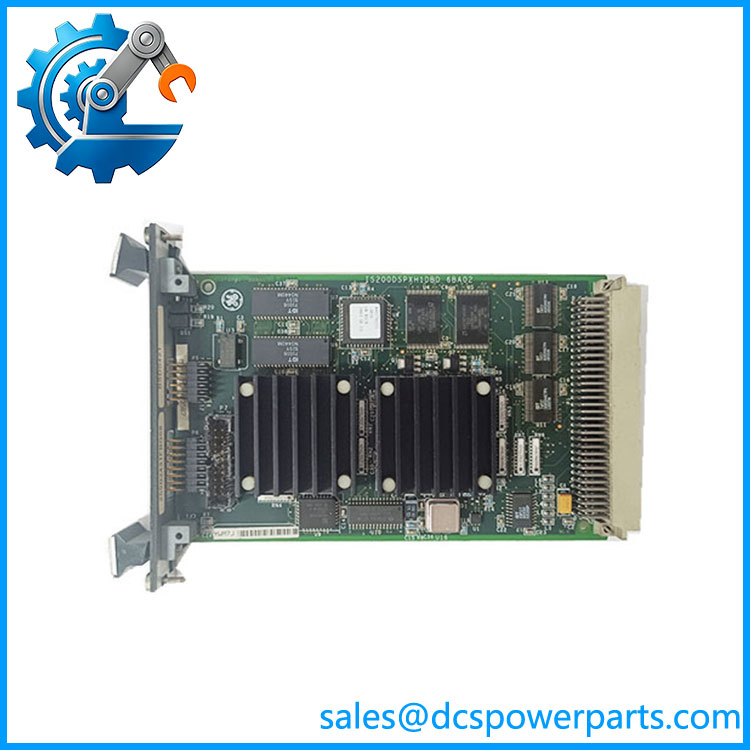
IS200DSPXH1DBD
Application Scenarios & Field Pitfalls — The Engineer’s Perspective
Engineering Pain Point
A failed DSPX board can create a much larger commissioning problem than a straightforward board swap. The processor is part of the control architecture, and its application firmware and configuration are tied to the host drive or excitation system. A board that looks identical at the PCB level may still be unsuitable if its full catalog number, revision, firmware or application configuration differs from the installed unit.
Typical Applications
- GE Innovation Series drives — digital control processing, bridge regulation, motor regulation and gating functions.
- GE EX2100 excitation systems — generator field-control and excitation processing.
- Legacy industrial drive maintenance — replacement of failed DSPX control hardware in installed equipment.
- Power-generation control systems — maintenance of excitation and associated power-conversion control equipment.
Technical Pitfalls
1. Match the complete part number.
Do not order solely against “DSPX” or “IS200DSPXH1D.” The full identification should be compared with the original board label and system documentation. Technical references specifically warn that the catalog number is important when selecting a replacement.
2. Do not confuse the DSPX with a generic processor card.
Its firmware and control functions are application-specific. It participates directly in drive or excitation control, so substitution should be treated as a system-level compatibility decision.
3. Firmware matters after replacement.
Available documentation identifies application code, boot loader and configuration parameters as separate firmware/data elements. Configuration may need to be restored using the applicable GE engineering tools and system procedure.
4. Verify connectors and physical condition.
Inspect P1, P5 and P6, board-edge contacts, mounting hardware and any signs of corrosion or thermal damage. A used board can be electrically functional while still having connector or component-aging issues.
5. Check the host application before energizing.
For an Innovation Series drive, verify the drive configuration and associated control hardware. For an EX2100 installation, confirm the excitation application and associated control boards. Do not assume a drive-configured DSPX can simply be transferred into an excitation application.
6. Test before returning critical equipment to service.
For a line-down replacement, functional testing should include processor startup, board diagnostics, communication, application loading and relevant control feedback. A visual inspection alone is not sufficient for a safety- or production-critical control board.
Related Products
- GE IS200DSPXH1D — base DSPX digital signal processor control board designation associated with the assembly.
- GE IS200DSPXH1B — earlier DSPX hardware variation; do not substitute without confirming the complete system configuration.
- GE IS200DSPXH2CAA — another DSPX hardware configuration requiring exact application and revision matching.
- GE IS200ACLEH1B — associated GE control hardware found in power-control applications; function differs from DSPX.
- GE IS200DSFCG1AEB — GE drive-related control board; verify application before considering it as a related replacement.
- GE IS200WROBH1A — GE control-system board with a different functional role from DSPX.
- GE IS215VCMIH2B — Mark VI control/interface hardware; not a direct DSPX substitute.
- GE IS220PSVOH1B — GE servo valve control hardware; functionally different from DSPX.
Procurement Note
For a replacement , the safest purchasing specification is the complete board number plus the visible hardware/functional revision, rather than “DSPX board” alone. For used or surplus inventory, request photographs of the board label, connector area and revision markings before accepting a substitute. If the original board is available, its firmware/configuration information and application assignment should also be documented before removal.