Description
Product Overview
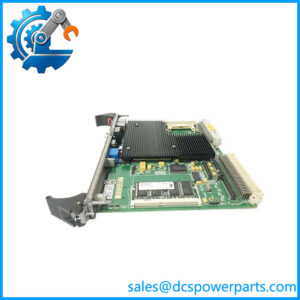
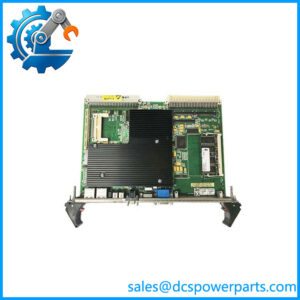
Two boards arrive in one order because the trade quotes them as a set, and their identities have to be kept separate even though they are often described together. IS200AEPAH1ACB is an AEPA board — the functional acronym is in the model number itself — and IS210BPPBH2BMD is a BPPB board. The two acronyms come from different parts of the same GE control world: AEPA from the excitation side, where the board is described as the exciter power amplifier that sits between the control logic and the power bridges and provides the gate drive to the thyristors; BPPB from the Mark VIe I/O side, where GE’s own functional-safety assessment of the Mark VIeS safety controller defines it in one sentence.
That sentence is worth quoting because it resolves most of the nonsense in the resale listings: BPPB is the “common I/O processor board which is used for all I/O types”, and it is “combined with an I/O type specific data acquisition board in order to create a specific type of I/O module”. In other words, BPPB is not a complete I/O module and not a controller. It is the processor half that every Mark VIe I/O type shares, and the I/O type itself — analogue input, discrete output, relay feedback and so on — is defined by the acquisition board that mounts with it. That is also why the pack-level ordering numbers a plant buys are IS220 numbers such as the discrete output pack whose parts list reads “acquisition and common processor board” with “processor board type BPPB”, while the board inside carries an IS210 prefix. A plant ordering a replacement therefore has two legitimate descriptions of the same hardware: the pack number for the assembly, and the board number for the spare that goes inside it.
The AEPA side is less well documented in public, and the honest position is that the function is stated consistently by the trade but not by an OEM data sheet that could be retrieved here. What the listings agree on is coherent: AEPA is the exciter power amplifier, the interface between the control logic and the power bridges, driving the thyristor gates in a static excitation system, and it is used in Mark VI and Mark VIe excitation applications as well as in turbine control cabinets that integrate excitation. The board appears both as an IS200 board and inside an IS215 assembly, which is the same pattern as BPPB — a board number underneath an assembly number — and that pattern is the strongest structural evidence available for how these parts sit in the system.
The suffix fields are the part of the number that decides whether a spare fits, and they are routinely misread. IS200AEPAH1ACB is the IS200AEPA board with an H1-family hardware revision followed by a two-letter build code; IS210BPPBH2BMD is the IS210BPPB board with an H2 hardware revision and a further build suffix. The trailing letters are configuration and build fields, not functions. A board with a different trailing field is the same function and possibly a different revision level, which matters when a plant is replacing one board in a redundant set: matching the tail is how you avoid mixing revisions inside the same module.
The disk the channel has invented around these two numbers is worth naming plainly. IS200AEPAH1ACB is sold as an “analogue expansion module”, as an “analogue input card”, as an “acoustic emission processor”, as a “power distribution module” and, in one garbled listing, as a wind-turbine pitch axis controller. IS210BPPBH2BMD is sold as a “TMR processor pack”, as a “redundant power supply module” accepting 110/220 Vac and delivering 24 Vdc, as a “power redundancy part”, and as an “auxiliary board component”. None of that survives the definitions above. AEPA is not an analogue input card and not an acoustic processor; BPPB is not a power supply, not a TMR processor pack and not an auxiliary board — it is an I/O processor board, and the redundancy in a Mark VIe I/O module comes from how the packs are configured, not from this board’s own circuits.
The practical consequence is a buying rule that is worth stating as a rule. For IS210BPPBH2BMD, identify the pack it belongs to and order the board against that pack’s parts list, because a BPPB board on its own has no defined I/O type and a plant that fits one without the matching acquisition board has a processor with nothing to process. For IS200AEPAH1ACB, identify the excitation assembly and the revision level it belongs to, and confirm the trailing build code against the board in service, because an excitation amplifier is not a part to fit on the strength of a family name alone.
Technical Specifications
| Parameter | Value |
|---|---|
| Board 1 | IS200AEPAH1ACB |
| Functional acronym | AEPA |
| Function (trade-sourced) | Exciter power amplifier — interface between control logic and the power bridges, gate drive to excitation thyristors |
| Board family | Mark VI / Mark VIe excitation and turbine control |
| Assembly relationship | AEPA exists as an IS200 board and within an IS215 assembly |
| Board 2 | IS210BPPBH2BMD |
| Functional acronym | BPPB |
| Function (OEM-sourced) | Common I/O processor board used for all I/O types; combined with an I/O-type-specific data acquisition board to form a specific I/O module |
| Board family | Mark VIe I/O modules and packs |
| Pack-level relationship | Board inside IS220 packs (e.g. discrete output packs list “processor board type BPPB”) |
| Suffix fields (AEPA) | H1 hardware revision plus two-letter build code (CB on this board) |
| Suffix fields (BPPB) | H2 hardware revision plus build suffix (MD on this board) |
| Power consumption | Not published per board in the sources reviewed |
| Board dimensions and mass | Not published |
| Operating temperature | Not published per board; Mark VIe cabinet environment applies |
| Conforming coating | Not confirmed for these two specific build codes |
| Firmware / software dependency | Mark VIe boards depend on the controller’s ControlST generation; verify version before replacing a populated board |
| Redundancy | A property of the pack and rack configuration, not of the BPPB board itself |
| Origin | United States, as stated for GE boards of this generation |
| Data sheet status | BPPB definition documented in GE’s Mark VIeS functional-safety assessment; AEPA function is trade-sourced and not confirmed from an OEM data sheet here |
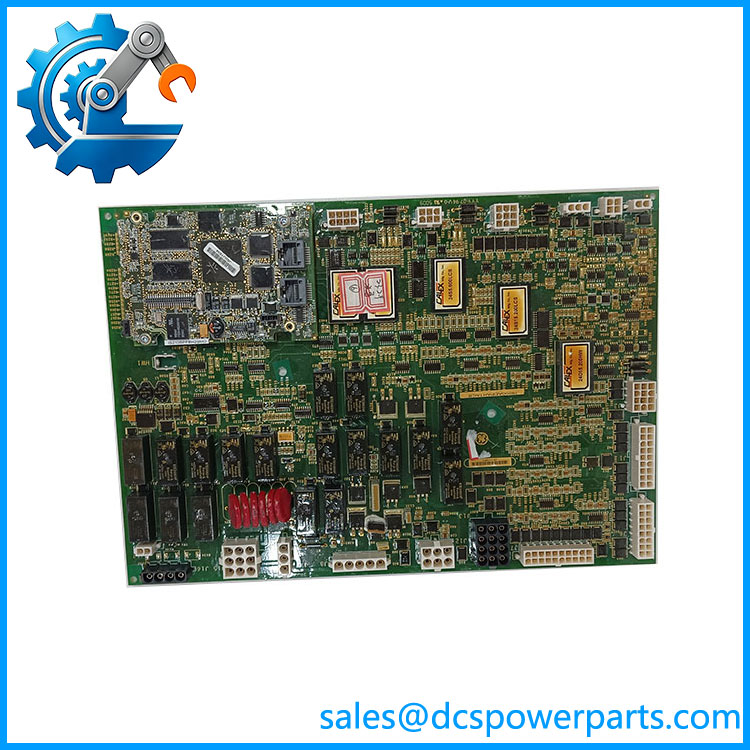
IS200AEPAH1ACB+IS210BPPBH2BMD
Key Features and Advantages
Two clearly separated roles: one board drives the excitation bridge, the other processes I/O — mixing them up is the commonest error in this product area, and the acronyms in the model numbers prevent it.
BPPB defined by GE’s own words: the common I/O processor board, shared across all I/O types and paired with the acquisition board that defines the type.
A pack-level route to the right spare: order against the IS220 pack number, and the board inside is unambiguous.
Suffix fields that support revision matching: the H-revision and the trailing build code are how a replacement is matched to the board in service, including inside a redundant set.
Excitation-specific amplification: AEPA’s placement between control logic and power bridge is what makes it an amplifier board rather than an I/O board.
Board and assembly numbers both recorded: AEPA appears at both levels, so a spare can be ordered as the board or as part of the assembly depending on what failed.
A familiar GE board format: standard rack-mounted PCB construction, front-accessible, with the replaceable-board maintenance model the Mark VI/VIe cabinets are built around.
A pair the trade already tracks together: quoting the two numbers as a set reflects how these cabinets are actually maintained, even though the boards serve different functions.
Applications
Static excitation systems: the AEPA board’s primary home, driving the thyristor bridge that controls generator field current.
Generator voltage and reactive power control: the excitation loop that the amplifier board closes through the power bridge.
Turbine control cabinets with integrated excitation: Mark VI and Mark VIe installations where excitation and turbine control share a cabinet family.
Mark VIe I/O modules: the BPPB board inside analogue, discrete, relay-feedback and other I/O packs, where the acquisition board defines the type.
I/O pack replacement: plants replacing a pack or its internal processor board, where the pack number and the board number are both needed.
Redundant I/O configurations: installations where packs are configured for redundancy and revision matching matters.
Legacy Mark VI support: plants keeping Mark VI-era cabinets running, where board-level spares rather than pack-level assemblies are the available route.
Repair and exchange: failed boards sent for component-level repair, identified by the full number including the trailing build code.
Related Products
IS215AEPAH1C assembly — the assembly form in which an AEPA board is supplied; the board-level and assembly-level numbers describe the same hardware at different levels. IS220-series I/O packs (e.g. discrete output packs) — the pack-level assemblies whose parts lists name BPPB as the processor board type. The I/O-type-specific acquisition boards — the boards that mount with BPPB to define a pack’s I/O type; a BPPB without one has no defined function. IS200 terminal boards of the Mark VI generation — the front-end boards that carry field terminations for Mark VI I/O. Mark VIe controllers (UCSA/UCSB/UCSC families) — the controllers that own and configure the I/O packs; distinct from BPPB, which is an I/O processor board. ControlST software suite — the configuration environment whose version determines which board revisions and firmware a system will accept. Mark VIeS safety controller documentation — the functional-safety assessment that defines BPPB and enumerates the I/O types. Related AEPA build codes (H1A/H1B variants) — same function, different revision and build fields; the tail must match the board in service.
Installation and Maintenance
Before installation: for the BPPB board, establish the pack it belongs to and confirm the acquisition board that will sit with it, because the pair is what constitutes an I/O module. For the AEPA board, establish the excitation assembly and the revision level, and match the trailing build code against the board being replaced. In both cases record the full number including the suffix — a plant that stores “IS210BPPB” without the H2B and MD fields has stored an incomplete identity. Confirm the controller’s software generation will accept the board revision before it is fitted.
Installation: isolate the cabinet and follow the plant’s procedure for the rack; GE cabinets are built for front-accessible board replacement, so the mechanical work is straightforward and the risk lies in identity and configuration. Seat the board fully on its connectors and standoffs, confirm the mounting screws and any daughter-board fixings, and verify that the pack or assembly recognises the board when the system is powered. On an excitation amplifier, confirm the bridge is in the state the procedure requires before the gate drive is enabled, and do not treat a successful power-up as proof of correct phasing — the excitation system’s commissioning checks exist for that reason.
Maintenance: match revisions inside a redundant set, because a mixed set defeats the point of redundancy. Record the board numbers with their build suffixes in the asset register, and keep the pack number alongside the board number so that the next order is placed at the right level. Inspect connectors and standoffs at each removal, check for conformal coating where the environment requires it, and where a board has been repaired, verify the repair against the original build code rather than against the family name. Keep the cabinet’s filters and airflow clean, since these boards are convection-cooled within the cabinet and depend on it.
Warranty and Quality
This listing covers two GE boards quoted together as a set: IS200AEPAH1ACB, an AEPA board described in the trade as the exciter power amplifier sitting between control logic and the power bridges and providing the gate drive to the excitation thyristors, and IS210BPPBH2BMD, a BPPB board which GE’s own Mark VIeS functional-safety assessment defines as the common I/O processor board used for all I/O types and combined with an I/O-type-specific data acquisition board to form a specific I/O module — the same processor board named in the parts lists of IS220-series I/O packs, in Mark VI/VIe cabinets whose AEPA boards also appear inside IS215 assemblies, with the H1 and H2 fields denoting hardware revisions and the CB and MD fields denoting build codes rather than functions. Units are offered as used, refurbished or surplus stock exactly as described, inspected for connector and standoff damage, bent pins, daughter-board fixings, contamination and residue, signs of heat damage and evidence of previous repair, with the full number including the trailing build suffix recorded against each board rather than shortened to the family name. Six corrections are stated plainly: is an excitation amplifier board and not an analogue expansion module, an analogue input card, an acoustic emission processor, a power distribution module or a pitch axis controller; is an I/O processor board and not a TMR processor pack, a redundant power supply module, a power redundancy part or an auxiliary board; BPPB carries no I/O type of its own, so a board supplied without its acquisition board is an incomplete module rather than a working spare; the H1, H2 and trailing letter fields are revision and build codes and must be matched, not read as functions; AEPA’s function is stated consistently in the trade but was not confirmed here from an OEM data sheet, so the excitation description should be verified against the plant’s own documentation before a critical replacement; and no power-supply, voltage-conversion or redundancy capability belongs to either board. A 12-month repair, replacement or refund commitment applies. Technical support covers board and assembly-level identification, pack-level ordering of BPPB spares, acquisition-board pairing, revision and build-code matching within redundant sets, ControlST generation compatibility, excitation amplifier replacement procedure and the spares, repair and legacy-support options for Mark VI and Mark VIe cabinets.