Description
Product Overview
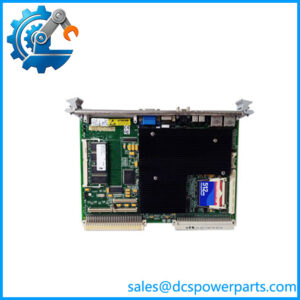
The GE IC698CPE010 is a 300 MHz CPU for the PACSystems RX7i PLC platform, designed to execute real-time control programs for machinery, process equipment, and material-handling applications. It communicates with I/O and intelligent option modules through the RX7i rack backplane using the VME64 standard, while its embedded Ethernet interface provides programming, diagnostics, data exchange, and HMI connectivity. The processor uses a Celeron microprocessor with floating-point capability and supports up to 512 program blocks, with a maximum individual block size of 128 KB.
For GE IC698CPE010, memory architecture is important when evaluating an older RX7i installation. The CPU provides up to 10 MB of battery-backed user memory together with 10 MB of non-volatile flash user memory. The reference tables support up to 32 Kbits each for discrete %I/%Q, while %AI/%AQ can be configured up to 32 Kwords. The processor also includes three isolated serial interfaces and an embedded 10/100 Mbps Ethernet interface. Later product revisions added functions such as Modbus/TCP client and server support, SRTP services, Ethernet Global Data, SNTP synchronization, and dual Ethernet ports with an internal switch.
The GE IC698CPE010 is therefore a controller CPU, not an I/O expansion card. It occupies the CPU position in an RX7i rack and can support Series 90-70-compatible I/O and other supported VME modules. For a legacy replacement, the CPU revision is worth checking carefully: documented firmware revisions range from early 1.x releases through later 6.x releases, and supported features vary by firmware level.
Product Introduction
Older RX7i systems often remain in service because the surrounding VME-based I/O architecture is still performing well. GE IC698CPE010 provides the original 300 MHz RX7i processing platform with 10 MB battery-backed memory, 10 MB flash memory, and 10/100 Mbps Ethernet.
For an RX7i PLC CPU replacement, firmware is not a minor detail. The IC698CPE010 has documented firmware revisions ranging from early releases to version 6.75, with different Ethernet revisions and feature sets across the product history.
Key Technical Specifications
| Parameter | Value |
|---|---|
| Manufacturer | GE Fanuc / GE Intelligent Platforms |
| Model | IC698CPE010 |
| Product Family | PACSystems RX7i |
| Product Type | Central Processing Unit |
| Processor | 300 MHz Celeron |
| Backplane Standard | VME64 |
| User Memory | 10 MB battery-backed RAM |
| Non-Volatile Flash | 10 MB |
| Discrete Memory | Up to 32 Kbits %I / 32 Kbits %Q |
| Analog Memory | Up to 32 Kwords %AI / 32 Kwords %AQ |
| Program Blocks | Up to 512 |
| Maximum Block Size | 128 KB |
| Floating Point | Yes |
| Ethernet | 10/100 Mbps auto-sensing |
| Ethernet Ports | 2 × RJ-45 on later documented revisions |
| Serial Interfaces | RS-232, RS-485, dedicated RS-232 Station Manager |
| Serial Protocols | SNP, Modbus RTU Slave, Serial I/O |
| Ethernet Services | EGD, SRTP, Modbus/TCP, programming, diagnostics |
| Web/FTP Connections | Up to 16 combined |
| Operating Temperature | 0 to 50°C without fan tray |
| Extended Temperature | 0 to 60°C with fan tray |
| Power Requirement | Approx. 3.2 A at +5 VDC, plus ±12 V rails |
| VME Compatibility | ANSI/VITA 1 VME64 |
| Battery Retention | Approx. 5 years at 20°C; approximately 40 days nominal without applied power |
| Typical Boolean Execution | Approx. 0.33 ms / 1,000 contacts/coils |
| Firmware | Revision-dependent; documented releases extend to 6.75 |
The CPU specifications vary slightly across documentation revisions, particularly current consumption and Boolean execution figures. The later GFK-2244AG documentation specifies 3.2 A nominal at +5 VDC, while earlier documentation lists different values.
Related Products
- IC698CPE020 — 700 MHz RX7i CPU with the same general platform architecture but substantially higher processing performance. It is a possible upgrade path, but software and application compatibility should be checked first.
- IC698CPE030 — 600 MHz RX7i M-Class CPU with 64 MB user memory. It provides more memory than the CPE010 and belongs to a later CPU generation.
- IC698CPE040 — 1.8 GHz RX7i M-Class CPU with 64 MB user memory. It is a much later performance tier and should be considered an upgrade rather than an automatic replacement.
- IC698CRE020 — 700 MHz redundant RX7i CPU. Designed for applications requiring controller redundancy rather than a single CPE010 processor.
- IC698CHS009 — 9-slot RX7i VME rack. Provides the rack architecture in which an RX7i CPU such as CPE010 can operate.
- IC698CHS017 — 18-slot rear-mount RX7i rack for larger controller configurations.
- IC698PSA100 — 100 W AC-input RX7i power supply, suitable for rack power requirements within its specified load limits.
- IC698PSA350 — 350 W RX7i AC-input power supply for systems with higher rack power demand.
- IC698PSD300 — 18–30 VDC, 300 W RX7i power supply for DC-powered installations.
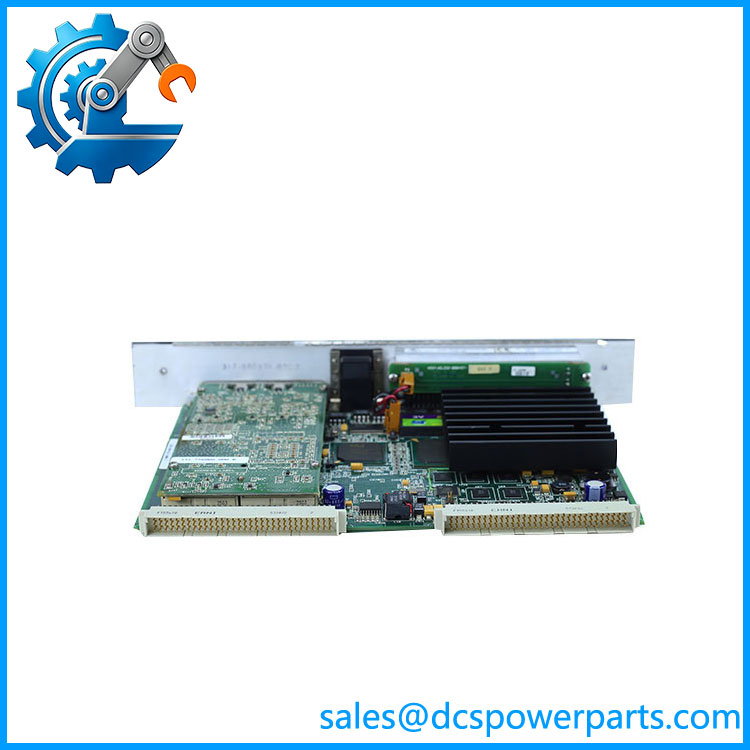
IC698CPE010
Frequently Asked Questions
What is GE used for?
The is the central processor for a PACSystems RX7i PLC.
It executes the control application and exchanges data with I/O and intelligent modules through the VME64 backplane. It also provides Ethernet and serial communication functions for programming, diagnostics, HMI communication, and data exchange.
Can be used with Series 90-70 I/O?
Yes, within the supported module list.
GE documentation states that RX7i CPUs support Series 90-70 discrete and analog I/O, communications, and other modules, as well as supported VME modules.
Before replacing an older CPU, check the exact rack inventory. A system may contain legacy modules whose support depends on the CPU firmware revision.
Can I hot-swap the ?
Do not treat the CPE010 as a generic hot-swappable module.
The CPU is connected directly to the VME backplane and contains the active control application. The installation procedure calls for removing rack power before physically removing the CPU.
For a running production system, use the plant’s approved shutdown or redundancy procedure. If controller redundancy is required, the appropriate redundant CPU architecture should be evaluated rather than attempting a live CPE010 exchange.
Will replacing erase my PLC logic?
The replacement CPU itself does not automatically erase the application stored elsewhere, but the CPE010’s battery-backed RAM is part of its memory-retention system.
GE specifies approximately 10 MB of battery-backed user memory, with a nominal retention period of about 40 days without applied power in the documented specification.
Before replacing a processor:
- Back up the complete application.
- Record CPU firmware revision.
- Record Ethernet configuration.
- Record rack/slot configuration.
- Verify battery status.
- Confirm the replacement CPU’s firmware compatibility.
Do not rely on the old CPU’s battery to preserve the only copy of the program.
Does support firmware v3.1?
Yes, a documented firmware version 3.11 exists. GE’s release documentation identifies -EJ with CPU firmware 3.11.
However, “v3.1” should not be treated as a complete compatibility statement. Later revisions reached CPU version 6.75, with Ethernet firmware revisions also changing over time.
For a replacement, match the existing CPU revision against the application’s required features instead of simply selecting the newest available firmware.
What is the difference between and IC698CPE020?
The main distinction is processor performance:
- 300 MHz Celeron
- CPE020: 700 MHz Pentium III
Both belong to the RX7i CPU family and use the VME64 architecture, but the CPE020 provides substantially higher processing performance.
A CPE020 should not be installed as an automatic drop-in upgrade without checking the application, firmware, timing behavior, power consumption, and system documentation.
How should I test a New Surplus ?
For a surplus CPU, a basic power-up test is not sufficient.
Recommended acceptance procedure:
- Verify the exact catalog number.
- Record hardware and firmware revisions.
- Inspect the VME backplane connector.
- Verify the battery condition.
- Power the CPU in a compatible RX7i rack.
- Confirm OK/RUN/ENA status.
- Test both Ethernet ports where applicable to the installed revision.
- Test RS-232 and RS-485 communications.
- Establish programmer communication.
- Verify the CPU firmware identification.
- Load a controlled test application.
- Exercise representative I/O communications.
- Test EGD/SRTP or Modbus/TCP if those services are required.
- Document diagnostics and fault behavior.
The CPU’s embedded Ethernet supports EGD, SRTP, Modbus/TCP, programming/configuration, and diagnostic services on later documented revisions.
Procurement note: The is a legacy RX7i processor. For a critical replacement, the exact firmware revision, battery status, and application backup are more important than simply confirming that the CPU powers on.