Description
Key Technical Specifications
| Parameter | Specification |
|---|---|
| Product Model | IC697VDD100 |
| Manufacturer | GE Fanuc |
| PLC Family | Series 90-70 |
| Module Type | Digital input |
| Input Channels | 64 |
| Channel Isolation | Individually isolated |
| Input Voltage | 5–250 VDC |
| Input Current | Approximately 0.7–1.0 mA |
| Functions | COS, SOE, pulse accumulation |
| Debounce | Programmable |
| Backplane | VMEbus |
| Installation | Series 90-70 PLC rack |
| Connector | 96-pin board connector |
| Terminal Hardware | IC697ACC822 terminal assemblies with IC697ACC801/804 cables |
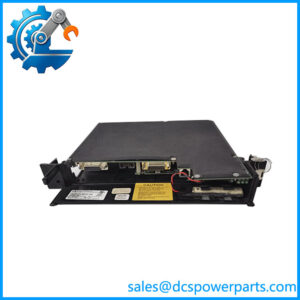
GE Fanuc’s Series 90-70 catalog identifies the IC697VDD100 as a 64-channel isolated digital input board with a 5–250 VDC input range and individually isolated channels. GE documentation also identifies it as an SOE-capable module.
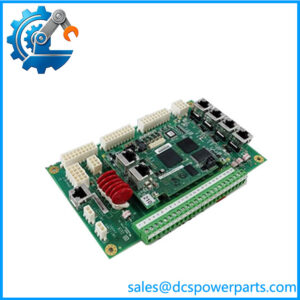
The connector documentation specifies a 96-pin board connector for the VDD100. The module uses external cable and terminal hardware rather than providing conventional front-mounted field terminals directly on the electronics module.
Product Introduction
The GE Fanuc IC697VDD100 is a high-density digital input module for Series 90-70 PLC systems. It provides 64 individually isolated discrete input channels, making it suitable for applications where a large number of field status signals must be acquired while maintaining electrical separation between channels. Its input range is documented as 5–250 VDC, giving it considerably broader voltage coverage than conventional 24 VDC-only Series 90-70 input modules.
The VDD100 is more than a basic on/off input card. Its architecture supports change-of-state detection, sequence-of-events monitoring, programmable debounce, pulse accumulation, and interrupt functions, which makes it particularly useful where event timing and diagnostic information matter.
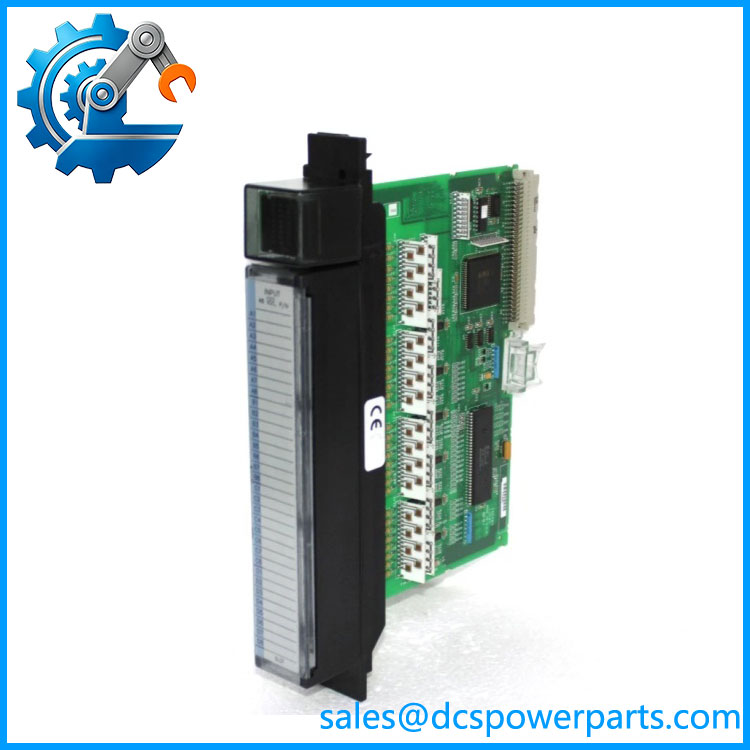
IC697VDD100
Application Scenarios & Field Pitfalls
Engineering Pain Point
The VDD100 is usually encountered in legacy control systems where a high channel count and event monitoring were required without installing dozens of conventional discrete input modules. During replacement, the biggest risk is treating it as a normal 24 VDC digital input card. Its wide input range, isolation arrangement, SOE functions, and external termination hardware all form part of the original system design.
Typical Applications
- Power generation: breaker, contactor, trip, permissive, and equipment-status acquisition.
- Process automation: high-density discrete monitoring from valves, switches, alarms, and interlocks.
- Industrial machinery: sequence-of-events and pulse-related status monitoring.
- Utility systems: large numbers of isolated field contacts distributed through Series 90-70 control cabinets.
Technical Pitfalls to Avoid
- Do not describe the VDD100 as a standard 24 VDC-only input card. GE’s catalog specifies 5–250 VDC for this module. Some current reseller listings simplify it to 24 VDC, which can be misleading when matching the original field wiring.
- Do not confuse SOE capability with ordinary input logging. The VDD100 was specifically documented as an input board with multifunctional intelligent-controller capability and SOE functionality. That can be important to the application software and sequence-analysis strategy.
- Check the termination hardware. The module uses a 96-pin board connector and external cable/terminal assemblies. A replacement card without the correct existing cable and termination arrangement may not be immediately installable.
- Do not substitute a conventional 32-point Series 90-70 input module. The VDD100’s 64-channel density and individual isolation are fundamental differences, not simply channel-count advantages.
- Be careful with modern replacement claims. Some sources identify an embedded VME product as a replacement for the discontinued , but that should be treated as an engineering replacement path rather than a direct electrical and software drop-in.
Related Products
- IC697MDL640 — 16-point 125 VDC Series 90-70 input module; much lower channel density and different input architecture.
- IC697MDL651 — 32-point 5 VDC TTL input module; intended for low-voltage logic signals rather than the ‘s wide-range field inputs.
- IC697MDL652 — 32-point 12 VDC positive/negative logic input module.
- IC697MDL653 — 32-point 24 VDC positive/negative logic input module.
- IC697MDL654 — 32-point 48 VDC positive/negative logic input module.
- IC697MDL671 — interrupt-input module with 14 interrupt points and additional configurable inputs; useful when interrupt response is the main requirement.
- IC697VDQ120 — 8-point digital output module; complementary output function rather than input acquisition.
- IC697VDR151 — 64-point relay output module; same general high-density VME I/O family but fundamentally different field function.
- IC697VAL301 — 32-channel, 12-bit analog output module; unrelated signal type but another high-density Series 90-70 I/O option.
Procurement Check
Before purchasing IC697VDD100, verify:
- Exact model: IC697VDD100
- Series 90-70 rack compatibility
- Existing field input voltage for all 64 channels
- Individual-channel isolation requirement
- Whether the application uses SOE
- Change-of-state and pulse-accumulation configuration
- Existing 96-pin connector
- IC697ACC801 / IC697ACC804 cable length
- IC697ACC822 terminal assembly
- PLC CPU and software compatibility
- Existing configuration backup
- Condition of the replacement module and connector pins
Bottom line: the GE Fanuc IC697VDD100 is a 64-channel individually isolated digital input module for the Series 90-70 platform, with a documented 5–250 VDC input range and SOE-oriented processing capabilities. It is a discontinued legacy module, so the exact field-voltage arrangement, termination hardware, and application configuration should be checked before accepting a substitute.