Description
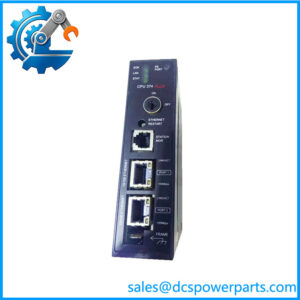
GE Fanuc IC697CPM790-GD | Series 90-70 GMR CPU | Legacy ESD Controller
Key Technical Specifications
| Parameter | Specification |
|---|---|
| Product | IC697CPM790-GD |
| Product Family | GE Fanuc Series 90-70 |
| Module Type | CPU / Central Processing Unit |
| CPU | 80486DX2 |
| Clock Speed | 64 MHz |
| CPU Architecture | 32-bit floating point |
| Installation | 1 Series 90-70 rack slot |
| Battery-Backed Memory | 1 MB |
| User Ladder Memory | Up to 512 KB |
| Boolean Execution | 0.4 µs per Boolean function |
| Simplex Discrete I/O | Up to 12K points |
| Voted Discrete I/O | Up to 2,048 voted inputs and 2,048 voted outputs |
| Simplex Analog I/O | Up to 8K analog inputs and 8K analog outputs |
| Voted Analog Inputs | Up to 1,024 |
| Serial Interface | 15-pin connector; RS-422/RS-485 compatible |
| Programming | GE Series 90-70 programming software |
| Redundancy | Genius Modular Redundancy / GMR |
| Status Indication | Four CPU status LEDs |
| Operating Mode | Three-position switch |
| Battery | IC697ACC701 lithium battery |
The core IC697CPM790 specifications above are documented in the Series 90-70 CPU data sheet. The -GD designation should not be treated as a completely different CPU architecture; it represents a particular revision/configuration of the CPM790 family.
Product Introduction
The GE Fanuc IC697CPM790-GD is a single-slot CPU for the Series 90-70 PLC platform, intended for control architectures where Genius Modular Redundancy is required. Its 64 MHz 80486DX2 processor provides floating-point calculation capability, while 1 MB of battery-backed memory supports application logic and retained system data. The CPU supports both conventional simplex control and GMR configurations with voted I/O.
For an existing ESD, fire-and-gas, or other critical control installation, the important issue is not simply finding a CPM790 with the same catalog number. GMR software and CPU firmware revisions are tied together; GE documentation identifies CPM790 release 6.02 or later for later GMR software, with release 6.03 or later required for Ethernet programming support. A replacement should therefore be checked against the installed GMR software, CPU revision, application program, and redundancy architecture before installation.
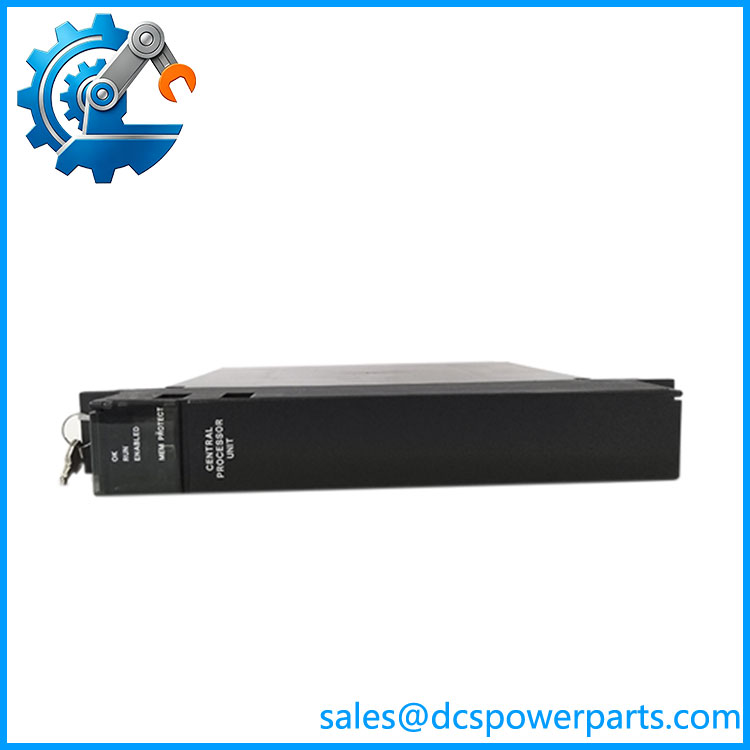
IC697CPM790-GD
Application Scenarios & Field Pitfalls — Engineer’s Perspective
Engineering Pain Point
The IC697CPM790-GD is frequently encountered in legacy critical-control installations where the original GMR architecture is still operational. Replacing the CPU without confirming the complete GMR revision stack can create a situation where the processor powers up correctly but cannot reproduce the behavior of the existing control configuration.
Typical Applications
- Emergency Shutdown (ESD): Used as the processing element in legacy Series 90-70 critical shutdown architectures.
- Fire and Gas Systems: Suitable for older GMR-based detection and shutdown systems.
- Process Safety Control: Triplex CPU configurations can provide processor-level redundancy with voted I/O.
- Legacy Critical PLC Systems: Maintains existing Series 90-70 installations without forcing an immediate platform migration.
The CPM790 is explicitly documented for ESD, fire-and-gas, and other critical control applications, while the GMR architecture supports duplex or triplex CPU configurations.
Technical Pitfalls to Avoid
1. Do not treat IC697CPM790-GD as an ordinary Series 90-70 CPU.
The GMR application has specific CPU, GMR software, Genius Bus Controller, and I/O compatibility requirements. GE documentation states that all CPUs in a duplex or triplex PLC configuration must be the same model.
2. Verify the firmware revision before substitution.
For later GMR software, CPM790 release 6.02 or later is required, while release 6.03 or later is required for Ethernet programming. A catalog-number match alone does not establish firmware compatibility.
3. Check the battery and application backup before removing the existing CPU.
The CPU uses battery-backed memory. The original GE data sheet specifies the IC697ACC701 battery and provides an explicit battery-replacement procedure; program and configuration data should be backed up before disturbing a live legacy CPU.
4. Do not confuse GMR with generic PLC redundancy.
GMR uses specific Genius I/O and bus arrangements. The CPM790’s support for IC660/IC661 I/O and the limitations surrounding IC697 I/O need to be evaluated against the actual rack design.
Related Products
- IC697CPM790 — Base CPU family; the primary technical reference for the -GD revision.
- IC697CPU789 — Earlier Series 90-70 CPU supporting GMR architectures, but with different revision/software limitations.
- IC697CPU788 — Earlier GMR-capable CPU intended for older GMR software configurations.
- IC697BEM731 — Series 90-70 Genius Bus Controller used in GMR systems.
- IC687BEM731 — Single-width Series 90-70 Genius Bus Controller variant.
- IC697CHS790 — Series 90-70 rack/chassis associated with the platform.
- IC697ACC701 — Lithium battery used for battery-backed memory.
- IC697BEM713 — Series 90-70 Bus Transmitter Module used for I/O expansion architectures; its function differs from the GMR Genius Bus Controller.
- IC697PWR748 — Series 90-70 power supply for legacy rack installations; verify the actual rack power architecture before substitution.
Procurement and Replacement Guidance
When sourcing an IC697CPM790-GD, request more than a catalog-number confirmation. The critical checks are:
- Exact front-label part number and revision
- CPU firmware revision
- Existing GMR System Software revision
- Number of CPUs in the redundant architecture
- Genius Bus Controller model and firmware
- Genius I/O block configuration
- Application program backup
- Battery condition
- Operating history and test results
- Whether the unit is new surplus, used-tested, or repaired
One important distinction: the is a CPU revision, not a generic 24 VDC input PLC module. Some current listings publish conflicting voltage, temperature, memory, and communication specifications for this part. The GE CPU data sheet is the safer reference for the core architecture, while the physical nameplate and installed system documentation should govern revision-specific replacement decisions.
Procurement recommendation: for a live GMR/ESD installation, match the CPU revision and GMR software environment first; price and physical condition are secondary until compatibility has been established.