Description
Key Technical Specifications
| Parameter | Value |
|---|---|
| Manufacturer | GE Fanuc |
| Model | IC687BEM742 |
| Product Type | FIP Bus Controller Module |
| PLC Family | Series 90-70 |
| Rack Type | IC697 VME Integrator Rack |
| Bus Protocol | FIP / WorldFIP |
| Communication Channels | 2 channels |
| Data Rate | 1 Mbit/s |
| Memory | 2 MB RAM, 2 MB Flash |
| Backplane Voltage | 5 VDC |
| Current Consumption | 1.4 A typical |
| Serial Port | RS-485 compatible firmware upgrade port |
| Front Indicators | OK, RUN, CD1, TEN1, CD2, TEN2 LEDs |
| Bus Connector | Dual 9-pin FIP connectors |
| Maximum Devices | 32 devices per FIP section |
| Maximum Bus Length | 1000 m per section; up to 4000 m with repeaters |
| Mounting Position | Single half-slot in VME Integrator rack |
| Configuration | Software-based, no DIP switches/jumpers |
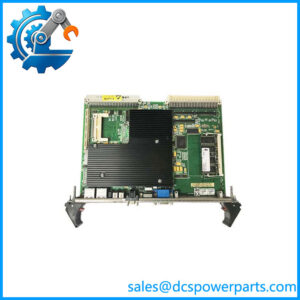
The original GE Fanuc documentation identifies IC687BEM742 as a two-channel FIP Bus Controller occupying a single half-slot position in an IC697 VME Integrator rack. It provides asynchronous I/O scanning on the FIP network and transfers data between FIP devices and the PLC CPU.
Product Introduction
GE Fanuc IC687BEM742 FIP Bus Controller Module
The GE Fanuc IC687BEM742 is a communication module used in Series 90-70 PLC installations requiring FIP or WorldFIP fieldbus connectivity. The module manages communication between the PLC processor and remote FIP devices, handling bus scanning and data exchange without placing the full communication load on the CPU.
Its two-channel design allows redundant FIP bus arrangements, making it suitable for applications where remote I/O availability is important. For existing Series 90-70 systems, maintaining the correct FIP configuration, firmware revision, and field wiring is critical when replacing this legacy communication module.
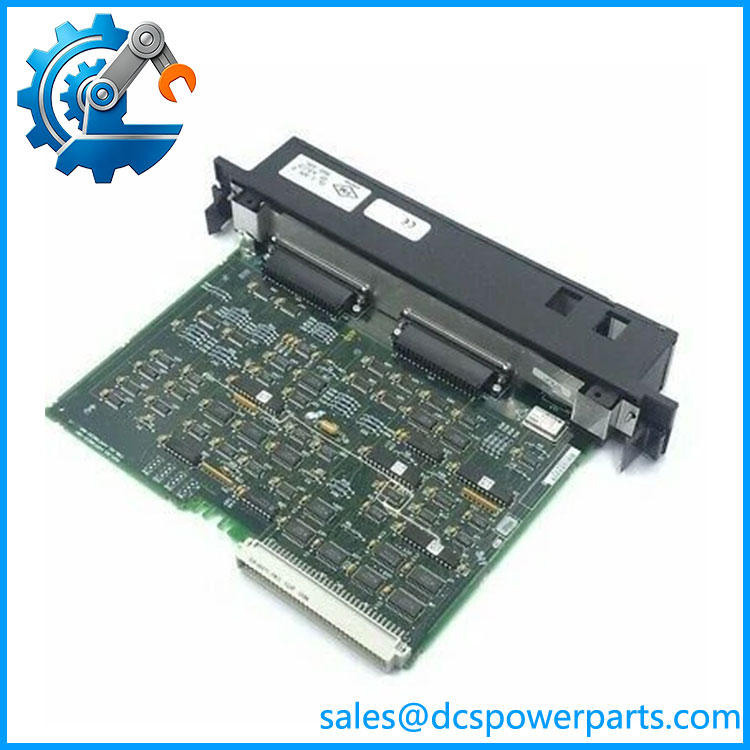
IC687BEM742
Application Scenarios & Field Pitfalls — Engineer’s Perspective
Engineering Pain Point
A failed fieldbus controller can stop an entire remote I/O segment even when the PLC CPU remains healthy.
The IC687BEM742 sits between the control processor and the FIP network. Replacing it is not only a hardware swap. The bus configuration, device addresses, firmware version, and remote device database all need to match the existing installation.
Typical Applications
- Process automation systems — remote I/O communication over FIP networks in distributed control cabinets.
- Large machinery systems — connecting remote sensors and actuators through WorldFIP field devices.
- Power and utility equipment — redundant communication networks requiring dual FIP channels.
- Legacy GE Fanuc Series 90-70 installations — maintaining existing VME-based control architectures.
Technical Pitfalls to Avoid
- Do not confuse IC687BEM742 with a standard Series 90-70 rack expansion module.
The “BEM” designation causes confusion because other BEM modules perform different functions. is specifically a FIP Bus Controller, not a backplane expansion device. - Verify FIP network parameters before startup.
FIP device configuration, node information, and bus timing settings must match the existing application. A replacement module with incorrect configuration may show normal hardware status while the field network remains offline. - Check firmware revision compatibility.
The module supports firmware upgrades through its RS-485 serial port. Existing installations may depend on a specific firmware revision for compatibility with remote FIP devices. - Inspect both communication channels.
If the system uses redundant FIP wiring, both Channel 1 and Channel 2 connections must be verified. A single damaged cable or connector can appear as a module failure. - Do not rely on incorrect marketplace specifications.
Some listings incorrectly describe as a CPU or general bus expansion module. The GE Fanuc manual identifies it as a FIP Bus Controller with 2 MB RAM and 2 MB Flash.
Related Products
- GE Fanuc IC697BEM731
Genius Bus Controller for Series 90-70 systems. Different protocol and network architecture; used for Genius I/O rather than FIP devices. - GE Fanuc IC687BEM731
VME single-slot bus controller within the IC687 family. Different communication role compared with the FIP-specific . - GE Fanuc IC697BEM713
Bus Transmitter Module for Series 90-70 VME communication expansion. - GE Fanuc IC697BEM733
Remote I/O Scanner module used for distributed I/O communication in Series 90-70 systems. - GE Fanuc IC697CHS790
Standard nine-slot Series 90-70 rack. Used as the hardware platform for many IC697 control configurations. - GE Fanuc IC697CGR772
Hot Standby CPU module for redundant Series 90-70 control systems. - GE Fanuc IC697PWR711
Series 90-70 power supply module supporting IC697 rack installations. - Hardware revision variant of . Confirm firmware and revision compatibility before substitution.
Procurement Note
For replacement records, specify:
GE Fanuc — Series 90-70 FIP Bus Controller — Dual Channel FIP/WorldFIP Communication Module
Before approving a replacement, verify:
- Existing IC697 VME rack configuration
- FIP device list and network parameters
- Firmware revision
- Redundant or single-channel bus arrangement
- Remote I/O compatibility
This module belongs to a mature Series 90-70 communication architecture. A visually identical card is not enough. The FIP network configuration and firmware revision are the deciding factors for successful commissioning.