Description
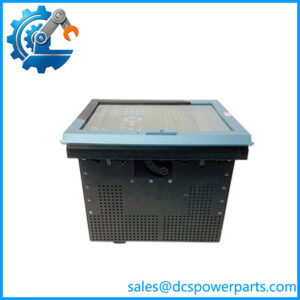
GE Fanuc IC660BBD110 | 115VAC Discrete Input Block | Genius I/O
Key Technical Specifications
| Parameter | Specification |
|---|---|
| Manufacturer | GE Fanuc |
| Model | IC660BBD110 |
| Product Family | Genius I/O |
| Product Type | 115 VAC Discrete Input Block |
| Number of Circuits | 16 |
| Input Configuration | Inputs only |
| Nominal Input Voltage | 115 VAC |
| Operating Voltage | 93–132 VAC |
| Frequency | 47–63 Hz |
| Input Banks | 2 × 8 circuits |
| Typical Input Impedance | 11.6 kΩ |
| Input Processing Time | Approximately 1 ms, before selectable filtering |
| Input Filter | 10–100 ms, selectable in 10 ms increments |
| Input Threshold | Programmable, approximately 25–85% |
| Open-Wire Detection | Programmable threshold |
| Short-Wire Detection | Fixed 10–90% thresholds |
| Input-to-Ground/Bus Isolation | 1500 V |
| Terminal Board Rating | 5 A |
| Block Current | 80 mA maximum |
| Input Circuit Current | 200 mA maximum |
| Heat Dissipation | Up to 28 W with all inputs conducting at full current |
| Operating Temperature | 0–60°C |
| Storage Temperature | -40–100°C |
| Humidity | 5–95%, non-condensing |
| Dimensions | Approx. 224 × 89 × 100 mm |
| Weight | Approx. 1.8 kg |
The original Genius I/O documentation specifies as a 16-circuit, inputs-only block for 115 VAC signals. It receives its operating power from the same power line supplying the input circuits, so a separate block power supply is not required.
Product Introduction
The is an intelligent 16-point discrete input block from the Genius I/O family, designed to collect 115 VAC field signals and report their states over the Genius serial bus. The sixteen circuits are arranged as two groups of eight and are intended for devices such as pushbuttons, selector switches, limit switches, contact closures, and compatible two-wire or three-wire proximity sensors.
Unlike conventional rack-mounted PLC input cards, the is a distributed Genius Block. It can be located close to the field devices, reducing long point-to-point wiring runs. The block contains its own input processing and diagnostics, while a Genius bus controller or compatible communications interface handles network-level communication with the host control system.
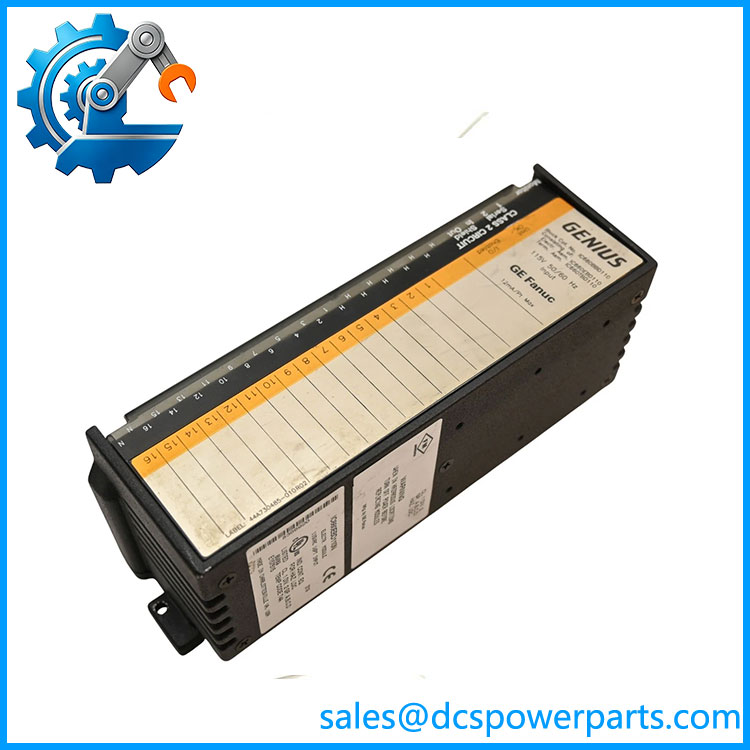
IC660BBD110
Application Scenarios & Field Pitfalls — The Engineer’s Perspective
Engineering Pain Point
With legacy Genius I/O installations, a failed input point is not necessarily evidence of a failed . A missing signal can originate from the 115 VAC source, field switch, fuse, terminal wiring, threshold configuration, input filtering, or the Genius communication path. Because this block combines field input circuitry with distributed-bus electronics, troubleshooting should separate the field electrical problem from the Genius network problem.
Typical Applications
Machine status monitoring
The 16 inputs can monitor limit switches, selector switches, pushbuttons, machine-position contacts, and other 115 VAC discrete devices.
Factory automation
Distributed Genius blocks were designed for installation close to machines and field devices, making the suitable for production equipment where long conventional I/O wiring would otherwise be required.
Process equipment
The module can monitor discrete permissives, alarms, valve limit switches, motor auxiliary contacts, and equipment status signals where the field voltage falls within its 93–132 VAC input range.
Legacy PLC systems
The remains relevant when maintaining installed GE Fanuc Genius I/O networks rather than replacing the complete control architecture.
Technical Pitfalls
- 115 VAC is the critical distinction.
The is not a 24 VDC discrete input block. Its specified operating input range is 93–132 VAC at 47–63 Hz. Do not substitute a visually similar Genius block without checking the field voltage. - It is inputs-only.
The original documentation identifies this specific catalog number as a 16-circuit input block. Do not confuse it with mixed or configurable Genius blocks that provide output circuits. - The block is powered from the input supply.
There is no separate block power supply connection in the standard architecture. Loss of the input-side AC supply can therefore affect both field sensing and block operation. - Input thresholds are configurable.
A field signal that measures correctly with a meter can still produce an unexpected logic state if the configured threshold is inappropriate. The block provides programmable ON/OFF thresholds within its documented range. - Filter settings affect response time.
The input processing time is approximately 1 ms before the selected filter time. The selectable 10–100 ms filtering can reject electrical noise and contact bounce, but it also increases the effective response time. - Revision suffixes matter.
Versions such as IC660BBD110A, B, C, K, L, M, N, P, Q, and others exist in the field. Later housing revisions can require the corresponding door/terminal arrangement, so procurement should match the complete installed part number rather than only the base catalog number. - Do not confuse the complete block with its subassemblies.
IC660TBD110 is the terminal assembly, while IC660EBD110 is the electronics assembly. The complete is the assembled I/O block.
Related Products
- GE Fanuc IC660BBD020 — Related Genius discrete I/O block with a different electrical configuration.
- GE Fanuc IC660BBD110A — Revision of the 115 VAC 16-circuit input block; verify housing and terminal compatibility.
- GE Fanuc IC660BBD110K — Later revision of the same base catalog family.
- GE Fanuc IC660BBD110L — Another revision of the 115 VAC input block.
- GE Fanuc IC660EBD110 — Electronics assembly for the .
- GE Fanuc IC660TBD110 — Terminal assembly associated with the .
- GE Fanuc IC660BBD120 — Related Genius discrete input family with a different field-voltage configuration.
- GE Fanuc IC660BBD101 — Related Genius discrete I/O hardware; verify voltage and circuit configuration before substitution.
- GE Fanuc IC660BBD025 — Related Genius discrete I/O block used in legacy distributed I/O architectures.
- GE Fanuc IC660HHM501 — Handheld Monitor used for configuration and diagnostics of Genius I/O blocks.
Procurement Note
For replacement of an , specify the complete catalog number and revision suffix shown on the existing unit. Confirm that the installation requires 115 VAC input, that the existing terminal assembly is compatible, and that the Genius bus controller/software configuration supports the replacement revision.
For used or surplus stock, inspect the terminal area, hinged door, bus connections, enclosure, LEDs, and PCB for heat damage or corrosion. A meaningful acceptance test should apply representative 115 VAC signals to all sixteen points, verify threshold behavior, confirm input filtering, check Genius-bus communication, and exercise the diagnostic functions where the test setup permits.