Description
Product Overview
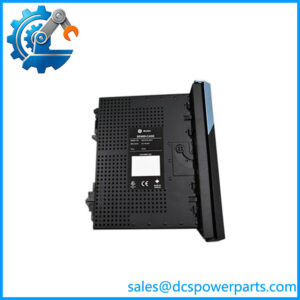
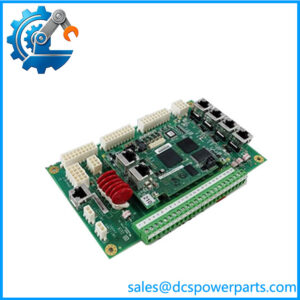
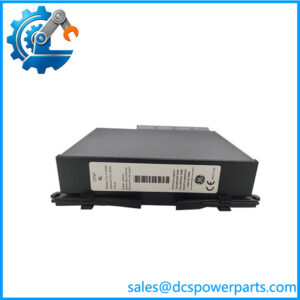
The GE HE700GEN200C is a dual-channel GENI VME interface module designed to connect GE GENI/Genius bus networks with a VMEbus-based computer or control platform. Unlike a conventional discrete I/O card, its primary function is communication between the VME host and GENI bus devices. The board therefore becomes part of the system-level data path, allowing a VME CPU to exchange process and control information with compatible GENI devices. Available technical references identify HE700GEN200C as a VME interface module and describe two GENI channels.
Within a legacy automation architecture, GE HE700GEN200C requires configuration on both sides of the interface. The VME CPU must have compatible address-space and interrupt capabilities, while each GENI channel requires its own bus address and baud-rate configuration. The technical documentation reproduced in available references specifically calls out VME address-modifier codes, short and standard address spaces, VME interrupts and vectors, GENI bus addresses, GENI baud rates, and startup output behavior as configuration items. This is important during replacement because an electrically functional board can still fail to communicate if the VME addressing or GENI settings do not match the host application.
For GE HE700GEN200C procurement, the exact hardware should be identified before approval. Available references associate the model with GE Fanuc and the HE700 family, while other listings use the broader GE designation. Public specifications also vary, so claims such as the exact transfer rate, operating system support, dimensions, or weight should be treated as reference information unless confirmed from the board’s original documentation. For a legacy VME installation, board revision, connector condition, configuration switches, firmware/EPROM, GENI bus parameters, and host VME mapping matter more than a generic catalog description.
Product Introduction
A failed VME communication interface can interrupt an entire group of GENI-connected devices even when the field hardware remains healthy. GE HE700GEN200C bridges two GENI channels with a VME host, making it a communication-layer component rather than a conventional PLC I/O module.
For a legacy VME system replacement, configuration is the main concern. VME address mapping, interrupt settings, GENI bus addresses, baud rates, and startup behavior must match the existing application before the replacement is commissioned.
Key Technical Specifications
| Parameter | Value |
|---|---|
| Manufacturer | GE Fanuc / GE |
| Model | HE700GEN200C |
| Product Type | Dual-Channel VME Interface Module |
| Product Family | HE700 |
| Primary Interface | VMEbus |
| Field/Network Interface | GENI / Genius bus |
| Number of GENI Channels | 2 |
| Data Transfer Rate | Up to 100 MB/s reported by secondary sources |
| Host Function | VME-to-GENI communications |
| VME Addressing | Short and standard address-space configuration |
| VME Interrupts | Supported/configuration-dependent |
| GENI Configuration | Bus address and baud rate configurable |
| Startup Function | Output-control behavior configurable |
| Operating Systems | VxWorks and Windows NT reported by secondary sources |
| Application | Industrial control, robotics, motion control, machine automation |
| Board Dimensions | Approximately 233 × 160 × 64 mm reported |
| Weight | Approximately 1.5 kg reported |
| Condition | New Surplus, subject to inspection and functional testing |
Technical caution: The most useful documentation available for this exact model emphasizes configuration rather than a conventional electrical datasheet. It specifies that the VME CPU addressing, interrupt capabilities, GENI bus addresses, baud rates, and startup output behavior all need to be determined during configuration. Secondary sources report the 100 MB/s figure, dual-channel architecture, VxWorks/Windows NT support, and physical dimensions, but those figures should be verified against the actual hardware revision.
Related Products
- HE700GEN200 — Closely related HE700 GENI/VME interface designation. Confirm the complete suffix before treating it as an interchangeable replacement for .
- HE700GEN100C — Related GENI interface hardware identified alongside the in industrial automation catalogs. Its channel/configuration arrangement differs, so it should not be assumed to provide identical functionality.
- GE Genius Bus Devices — GENI-connected remote I/O and control devices that communicate through the . These remain field-side devices; the provides the VME host interface.
- VME CPU Boards — Host processors that execute the VME application and access the through VMEbus addressing and interrupt mechanisms.
- VMEbus I/O Modules — Complementary boards providing analog, digital, or specialized I/O. The instead handles communications between the VME host and GENI network.
- VME Backplane — Provides the physical VMEbus connection between the and host CPU/other VME modules.
- GENI/Genius Network Infrastructure — The field/network side supported by the interface. Bus address and baud-rate configuration must agree with the existing network.
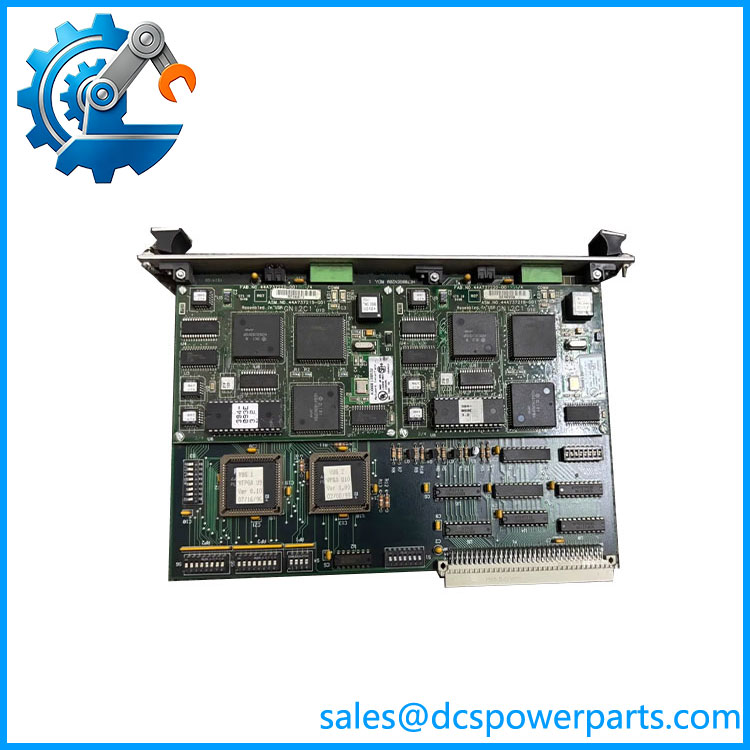
HE700GEN200C
Frequently Asked Questions
What is GE used for?
The is a VME-to-GENI interface module. Its purpose is to allow a VME-based host computer or controller to communicate with devices on the GENI/Genius bus.
It should therefore be treated as a communications interface rather than a standalone PLC CPU or ordinary analog/digital I/O card.
How many GENI channels does have?
The available technical reference identifies two GENI channels.
Each channel must be configured correctly for the connected GENI network. This includes determining the appropriate GENI bus address and baud rate.
Does support VME interrupts?
Yes, the configuration documentation specifically requires determining whether the VME CPU supports interrupts and which interrupt levels and vectors are available before configuring the interface.
That means VME interrupt compatibility is part of the system design, not simply an optional specification to ignore during replacement.
Can I hot-swap the ?
Do not assume it is hot-swappable.
The board is part of an active VME communications architecture. Removing it while the VME system and GENI networks are operating can interrupt communications and potentially affect control functions.
Unless the installed chassis and application documentation explicitly support live insertion, use the approved shutdown and isolation procedure.
What must be configured after replacing ?
At minimum, review the following:
- VME address modifier codes
- Short-address configuration
- Standard-address configuration
- VME interrupt level
- VME interrupt vector
- GENI bus address for each channel
- GENI baud rate
- Startup output behavior
These configuration items are explicitly identified in available documentation.
Does support 100 MB/s?
Some secondary references specify a data-transfer rate up to 100 MB/s.
I would not use that figure as the sole basis for system-performance calculations. Actual throughput depends on the VME host, memory access, GENI bus configuration, application software, interrupt behavior, and network traffic.
Will replacing erase my PLC or VME application?
The interface card should not be treated as the primary location of the complete VME application. The host VME CPU and its associated storage/boot environment normally carry the system software.
Still, replacement work can require restoring the interface configuration. Before removing the original board, record its address switches, GENI addresses, baud rates, interrupt settings, firmware/EPROM identification, and startup configuration.
How should I verify a New Surplus ?
For this legacy communication board, incoming inspection should include:
- Exact marking
- PCB revision
- GE/GE Fanuc identification
- GENI connector condition
- VME edge connector condition
- DIP-switch/jumper positions
- Firmware or EPROM identification
- Two-channel communication test
- VMEbus recognition test
- GENI network communication test
- Verification of configured address and baud-rate parameters
To be completely transparent, public information on this model is inconsistent: some catalogs classify it broadly as a GE control-interface module, while the more useful technical reference describes the board specifically as a uGENI VME interface and focuses on its VME and GENI configuration requirements. For a plant spare, I would prioritize the actual board revision and test report over a generic online specification.