Description
Product Overview
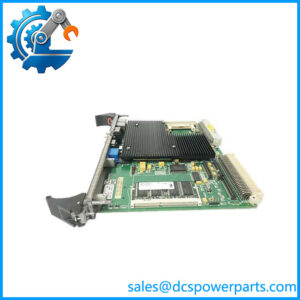
The GE CT11T7F10PN1 PMC676RCTX V2.3 01 16 C1145 CR11 V2.x is identified as a PMC-based network interface card associated with the PMC676RCTX hardware platform. Its primary role is communication rather than standalone process I/O control. The available product references describe the unit as an Ethernet network interface, with an RJ-45 connection and a PCI-X/PMC-oriented hardware architecture. In practical terms, this places the board closer to an embedded communications adapter than to a conventional GE PLC CPU or VersaMax I/O module.
The GE CT11T7F10PN1 PMC676RCTX V2.3 01 16 C1145 CR11 V2.x is particularly relevant in older embedded control, instrumentation, and industrial computing systems where a PMC expansion card provides the network path between the host processor and an Ethernet infrastructure. The PMC676RCTX designation should be retained when identifying a spare because the hardware revision information can matter when matching legacy host equipment, drivers, and board support software. One secondary source specifically describes the assembly as a GE Ethernet network interface card, while another labels it an interface board.
The GE CT11T7F10PN1 PMC676RCTX V2.3 01 16 C1145 CR11 V2.x deserves careful specification control. Some online listings claim two 10/100 Mbps Ethernet ports, two RS-485 interfaces, Modbus TCP/RTU, 24 VDC input, and substantial onboard RAM/Flash. Those specifications appear to have been copied from a generic industrial-controller description rather than established from a primary GE datasheet for this exact board. For procurement purposes, I would therefore verify the physical connectors, PMC carrier requirements, board revision, Ethernet controller, and driver requirements from the installed system before publishing those values as guaranteed specifications.
Key Technical Specifications
| Parameter | Value |
|---|---|
| Product Model | CT11T7F10PN1 |
| Assembly Identification | V2.3 01 16 C1145 CR11 V2.x |
| Manufacturer | GE |
| Product Type | PMC Network Interface Card |
| Hardware Family | |
| Board Revision | V2.3 |
| CR Identification | CR11 V2.x |
| Interface Type | PMC / PCI-X-oriented interface |
| Network Interface | Ethernet |
| External Connector | RJ-45 reported |
| Application | Embedded industrial networking and control systems |
| Host Platform | Compatible PMC carrier / embedded computing platform |
| Protocol | Ethernet; exact higher-level protocols require verification |
| Ethernet Speed | Exact configuration requires verification |
| Number of Ethernet Ports | Requires verification from physical board |
| Power Requirement | Host/PMC carrier dependent |
| Operating Temperature | Exact rating requires verification |
| Firmware | Hardware/host-system dependent |
| Driver Requirement | Host-system dependent |
| Condition | New Surplus / subject to test |
Specification caution: The publicly available descriptions do not provide a sufficiently reliable primary source for exact Ethernet speed, port count, power consumption, temperature range, or protocol stack. I would not publish the frequently repeated claims of “2 × 10/100 Mbps Ethernet + 2 × RS-485 + 24 VDC” as confirmed specifications for this exact assembly.
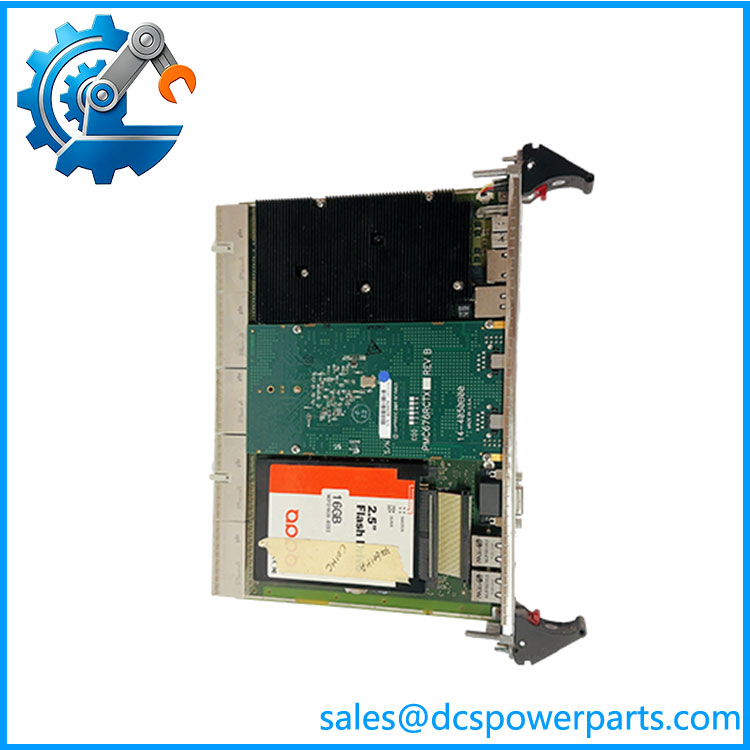
CT11T7F10PN1
Related Products
- — The underlying PMC network-interface platform identified by the board marking. It is the closest family reference when comparing hardware revisions and replacement assemblies.
- — The hardware revision represented by the supplied identification. Revision matching is important when legacy host software or drivers are involved.
- GE CT11T7F10PN1 — The exact ordering/model designation supplied for this board. Use the complete designation rather than “PMC676” alone when purchasing a replacement.
- GE PMC675 Series — Related PMC hardware family appearing in industrial automation inventories. It may share certain embedded-computing concepts, but it should not be considered a direct substitute without carrier and interface verification.
- GE Ethernet Interface Cards — Related GE embedded communication hardware can perform similar network functions but may use different PMC/PXI/VME interfaces, Ethernet controllers, or software drivers.
- GE Embedded Control Platforms — Compatible host systems provide the processor and application environment for a PMC network card. The host carrier must be checked before installation.
- GE V2.x Hardware — The V2.x identification appears on the supplied assembly marking and should be used when tracing hardware revisions or replacement records.
Frequently Asked Questions
1. What is GE used for?
The available evidence identifies it as an Ethernet network interface card associated with the platform. Its role is to provide network connectivity to a compatible embedded host rather than operate as a standalone PLC CPU.
This distinction matters when preparing a spare: the host PMC carrier and its software environment remain part of the compatibility equation.
2. Can I replace with another PMC network card?
Not automatically.
Check these items first:
- PMC mechanical and electrical interface.
- Host carrier compatibility.
- Ethernet controller/device ID.
- Driver availability.
- Board revision.
- Connector arrangement.
- Application software expectations.
A card that physically fits a PMC slot can still fail at driver initialization or network-device enumeration.
3. Does support firmware v3.1?
There is no reliable primary documentation establishing a universal firmware v3.1 specification for .
The marking should not be confused with firmware version 3.1. It appears to identify a hardware revision. Firmware, driver, and host-software compatibility should be checked against the installed system.
4. Can I hot-swap this PMC network interface?
Do not assume it.
A PMC board normally depends on the host carrier for power and PCI/PCI-X signaling. Removing it while the carrier is energized can cause electrical or software faults.
For a field replacement:
- Shut down the host.
- Isolate system power.
- Record network settings.
- Remove the existing card.
- Install the replacement.
- Confirm device recognition.
- Verify Ethernet link and application communication.
5. Will replacing cause me to lose my PLC logic?
The board is identified as a network interface, so it should not normally be treated as the primary storage location for the host application’s control logic.
Still, preserve the complete system image before replacement, including:
- Host operating system
- Application software
- Network configuration
- Device drivers
- Startup parameters
- Hardware configuration
This is especially important in older embedded systems where application and driver dependencies may no longer be readily available.
6. How do I verify a New Surplus is authentic?
For this particular board, use the physical markings rather than relying only on a catalog title.
Verify:
- 01 16
- C1145
- GE identification
- PMC connector condition
- RJ-45 or other network connector arrangement
- PCB revision
- Power-up and Ethernet-link test
The conflicting specifications found in secondary listings make physical identification particularly important.
7. Is this a GE PLC CPU or an Ethernet communication module?
It should be classified as a PMC network interface card, not a conventional PLC CPU.
Some secondary listings incorrectly describe the same marking as a complete industrial controller with digital and analog I/O. There is insufficient evidence to support that classification. The stronger identification is an Ethernet/PMC interface associated with .