Description
Key Technical Specifications
| Parameter | Value |
|---|---|
| Manufacturer | General Electric |
| Model | 531X301DCCAFG2 |
| Product Family | 531X Series |
| System Family | Mark V |
| Product Type | Drive Control Board |
| Functional Description | Main Drive Control |
| Processor | Intel 80186 |
| Processor Architecture | 16-bit x86 |
| Program Storage | EEPROM |
| Software Loading | EEPROM programming / download |
| Processor Restart | Onboard push-button restart |
| Application | GE drive control systems |
| Typical Environment | Industrial drive/control cabinets |
| Lifecycle | Obsolete / legacy |
| Board Function | Drive sequencing, control processing, and system-level drive management |
The available records consistently identify the board as Drive Control / Main Drive Control and associate it with the Mark V architecture.
Important specification limitation: I would not publish channel counts, analog-input ranges, 24 VDC supply ratings, ADC resolution, or PLC backplane specifications for this part. Some online pages incorrectly describe 531X301DCCAFG2 as a GE Fanuc Series 90-30 analog-input module. That description conflicts with the Mark V documentation trail and the board’s established Drive Control Board identification.
Product Introduction
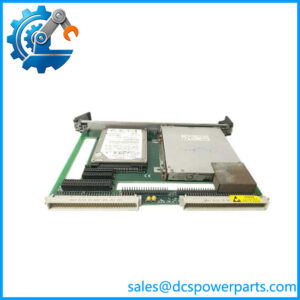
GE 531X301DCCAFG2
The GE 531X301DCCAFG2 is a processor-based drive control board used in GE Mark V drive-control equipment. It is not a conventional PLC I/O module. Its control processor is based on an Intel 80186, with EEPROM used for application/control software.
For plants maintaining older GE drive installations, the board remains relevant as a direct service spare. The real value is compatibility with the existing Mark V control architecture, installed firmware, and drive configuration. Replacing the entire control system is a much larger engineering job than maintaining a known-good legacy control card.
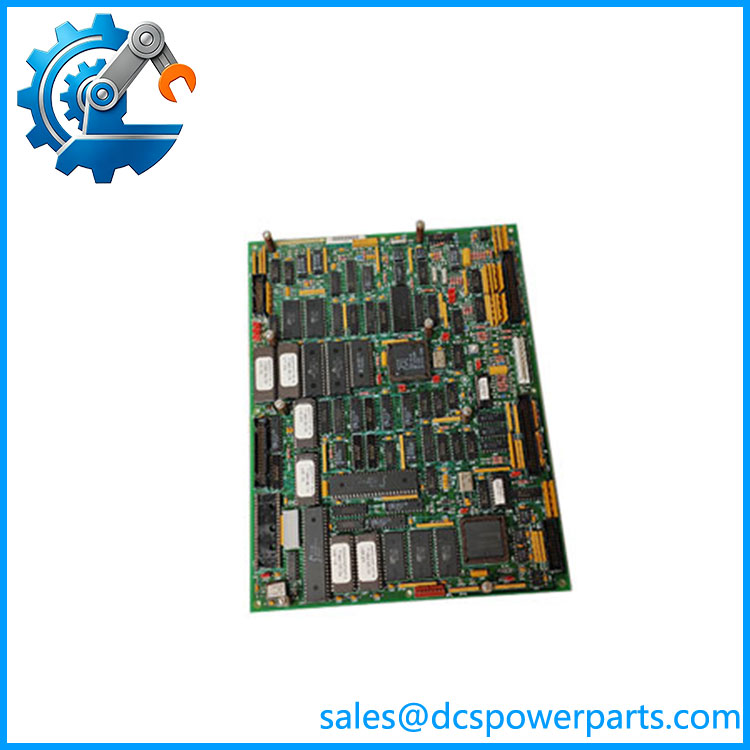
531X301DCCAFG2
Application Scenarios & Field Pitfalls
Engineering Pain Point
A failed 531X301DCCAFG2 can stop an entire drive even when the power section is healthy. The trap is assuming that a processor-board fault is the same thing as a drive-power fault. Before replacing the card, check the control power, board diagnostics, EEPROM/software configuration, and signals exchanged with the rest of the Mark V system.
Typical Applications
- Industrial Drives — Main processor/control functions for GE Mark V drive systems.
- Power Generation — Legacy motor and auxiliary-drive control where Mark V hardware remains in service.
- Gas Turbine Plants — Drive-control equipment supporting pumps, fans, compressors, and auxiliary machinery.
- Factory Automation — Older high-power drive installations requiring continued operation without a full control-system migration.
Technical Pitfalls to Avoid
- Do not mistake it for a PLC analog-input board.
This is the most important correction. Multiple secondary sources identify 531X301DCCAFG2 as a Drive Control Board, while at least one listing incorrectly assigns it to a GE Fanuc 90-30 analog-input application. The Mark V identification is the technically consistent one. - Preserve the existing EEPROM/software configuration.
The board uses EEPROM for software storage, and documented Mark V service procedures involve downloading software to EEPROM followed by processor restart. Do not erase or overwrite the original configuration without a verified backup. - Check the complete Mark V card set.
A 531X301DCCAFG2 rarely operates as an isolated control component. Mark V systems commonly include additional control, terminal, power-supply, and interface boards. A fault on another board can present as a processor/control-board problem. - Check the control power before condemning the CPU.
Mark V panels can receive power from multiple AC/DC sources. The documented architecture includes separate power inputs and distribution to individual power-supply boards. - Record the board revision and EEPROM contents.
The same base part number does not necessarily mean identical installed software. For a legacy turbine/drive system, firmware and configuration are often more important than the bare PCB. - Use the processor restart switch carefully.
The board has an onboard processor restart push-button. A restart can be useful during maintenance, but it should not be treated as a substitute for diagnosing the underlying fault. - Check system event history.
Mark V systems provide detailed event and trip logging. The available documentation describes event time tagging down to millisecond resolution for certain contact events. Use the recorded sequence to determine whether the board failed first or another system fault caused the shutdown. - Do not blindly substitute 531X cards.
Cards such as 531X306LCCBAG3 and other 531X boards have different functions. Similar physical dimensions do not establish electrical or software compatibility. - Handle the board as legacy electronics.
ESD protection is mandatory. Also inspect edge connectors and socketed devices for oxidation, contamination, or mechanical damage before installation. - Verify the drive application after replacement.
A successful power-up does not prove that the drive-control system is operational. Confirm the expected control signals, sequencing, interlocks, feedback, and drive response before returning the equipment to service.
Related Products
- GE 531X306LCCBAG3 — Related 531X-series control card frequently found in Mark V installations. It performs a different control/interface function and should not be treated as a direct replacement for the 531X301DCCAFG2.
- GE 531X305NTBAJG1 — Another 531X-series board used in GE control architectures. It is complementary hardware rather than a direct CPU/control-board substitute.
- GE 531X307LTBAKG1 — Related 531X-series board used in legacy GE control systems. Verify its exact cabinet function before substitution.
- GE DS200TCCAG1AHB — Mark V terminal/control board appearing in documented Mark V card sets alongside 531X301DCCAFG2. It serves a different I/O/interface role.
- GE DS200TCPSG1AKE — Mark V power-supply board. It is particularly relevant when a control-board failure may actually be caused by unstable control power.
- GE DS200CTBAG1ACC — Mark V terminal/interface hardware. It is part of the broader control architecture rather than a replacement for the 531X301DCCAFG2.
- GE DS200TCQAG2BDC — Mark V I/O hardware used alongside the drive/control processor architecture. Its function is signal interfacing rather than central drive processing.
- GE 531X301DCCAGG2 — Reported successor/superseding part number for 531X301DCCAFG2 in some GE gas-turbine spare-parts records. Treat this as a potential successor, not an automatic drop-in replacement; verify the exact GE interchange documentation for the installed system.
- GE Mark V Control System — The primary system family associated with this board. Compatibility depends on the specific drive cabinet, software revision, and complete card complement.