Description
Product Overview
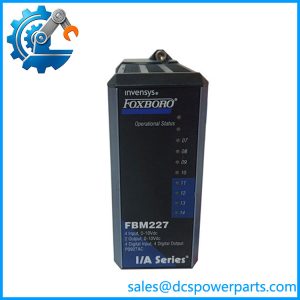
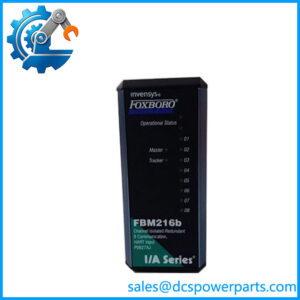
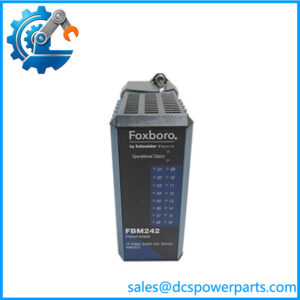
The Foxboro H929LCW0H00 is identified in available industrial automation documentation and product records as a Foxboro Field I/O Module associated with the Foxboro I/A Series distributed control system. Its role is at the field interface layer, where process instrumentation and discrete or analog signals are brought into the control system for monitoring, control, alarm processing, and operator display. Unlike a DCS controller or engineering workstation, a field I/O module operates much closer to the physical process and forms part of the signal path between plant equipment and the control application.
For maintenance teams working with legacy Foxboro installations, the Foxboro H929LCW0H00 should be treated as a configuration-specific spare rather than a generic replacement I/O card. The available public identification confirms the Field I/O classification, but it does not provide enough authoritative information to safely assign channel count, signal type, voltage range, accuracy, or terminal arrangement to this exact ordering code. That distinction is important when purchasing a replacement: an apparently similar Foxboro module can have a completely different field interface.
Within an existing I/A Series system, Foxboro H929LCW0H00 can therefore have practical value as a maintenance spare where the installed control strategy and field wiring are already engineered around this hardware. Before installation, compare the complete part number, hardware revision, cabinet location, termination assembly, field wiring, and system configuration against the existing module. To be completely transparent, I would not use an unverified channel specification from a reseller listing as a basis for commissioning. The publicly indexed source confirms the product as a Foxboro Field I/O Module, but detailed electrical specifications for H929LCW0H00 require primary documentation or an actual module nameplate.
Product Introduction
A field I/O replacement is rarely just a matter of matching the connector. Foxboro H929LCW0H00 belongs to the field-interface layer of the Foxboro I/A Series DCS, where correct signal type and termination compatibility determine whether a replacement can actually be commissioned.
For a legacy DCS replacement, verify the installed I/O database, termination hardware, cabinet wiring, and module revision before installation. Publicly available records identify H929LCW0H00 as a Field I/O Module, but do not establish a complete electrical specification.
Key Technical Specifications
| Parameter | Value |
|---|---|
| Product Model | |
| Manufacturer / Brand | Foxboro |
| Product Family | I/A Series DCS |
| Product Type | Field I/O Module |
| System Application | Foxboro distributed control system |
| Functional Layer | Field I/O / Process Interface |
| Primary Role | Interface between field signals and DCS control architecture |
| Channel Count | Not independently verified |
| Signal Type | Not independently verified for this exact part number |
| Input / Output Range | Not independently verified |
| Field Wiring / Termination | Configuration dependent; verify against installed system |
| Hardware Revision | Verify from module nameplate |
| Condition | New Surplus — subject to unit-specific inspection |
Procurement note: The public source used for identification lists simply as a Foxboro Field I/O Module and does not provide enough authoritative information to assign a specific channel count, signal range, or electrical rating.
H929LCW0H00
Related Products
Related Products
- Foxboro FCP280 — A Foxboro field control processor used within newer I/A Series architectures. It performs controller-level processing rather than serving as a direct substitute for an individual field I/O module.
- Foxboro P0926GS / FCM100ET — An I/A Series Field Control Ethernet communication module. It handles field-control network communication, so its function is different from the process-signal interface provided by a field I/O module.
- Foxboro P0916TQ / FCM2F10 — A fiber fieldbus communication module. It provides communication infrastructure and should not be confused with a channel-level field I/O module.
- Foxboro FBM207C / P0917GY — A 16-channel, 48 VDC channel-isolated discrete input module in the I/A Series Compact 200 family. It illustrates the type of application-specific I/O hardware used within Foxboro systems, but it should not be treated as a direct replacement without a point-by-point compatibility check.
- Foxboro P0916DC — A Type-1 termination cable assembly. Termination hardware is particularly important when replacing legacy I/O because the field wiring interface must correspond to the installed module.
- Foxboro E33NCHA-LNN-NS-00 — A Foxboro input/output processing module appearing in the same industrial automation spare-parts ecosystem. Its exact application differs from and requires separate verification.
- — The primary field I/O module covered here. For an installed-system replacement, the exact module identification and cabinet documentation should take precedence over similarities in physical appearance.
Frequently Asked Questions
Frequently Asked Questions
1. What is Foxboro used for?
Available product identification describes as a Foxboro Field I/O Module. Its position in the control architecture is therefore the field interface between plant signals and the Foxboro DCS.
It should not be confused with:
- A DCS controller
- An engineering workstation
- A communication-only module
- A generic PLC analog card
The exact signal type and channel arrangement should be confirmed from the installed system documentation before replacement.
2. Can I use as a direct replacement for another Foxboro I/O module?
Not without checking the complete hardware configuration.
A proper replacement check should include:
- Exact existing part number.
- Hardware revision.
- Signal type.
- Channel count.
- Field voltage/current requirements.
- Termination assembly.
- Cabinet slot and mounting arrangement.
- I/A Series software and I/O database configuration.
Two Foxboro field modules can look similar while serving different signal types. The part-number match is the safer starting point.
3. What signal type does support?
The publicly available source I could verify identifies the unit as a Field I/O Module, but does not establish a sufficiently reliable channel-level specification for this exact part number.
For procurement purposes, I would not label it as a specific analog input, analog output, digital input, or digital output module without the manufacturer’s documentation or a clear photograph of the module identification plate.
4. Can I hot-swap ?
Do not assume hot-swapping is permitted.
Before removing the module, confirm the installed Foxboro I/A Series architecture and the applicable maintenance procedure. Consider the consequences for:
- Process measurements
- Control outputs
- Alarms
- Interlocks
- Redundant I/O arrangements
- Associated termination hardware
If the point is involved in an operating process, place the affected loop in its approved maintenance state before disturbing the I/O hardware.
5. Will replacing erase my DCS logic?
Replacing a field I/O module is not the same operation as replacing a DCS controller or workstation.
The control strategy normally resides in the appropriate DCS control-processing environment, while the I/O module provides the physical signal interface. Even so, replacement can affect I/O availability, channel diagnostics, scaling, and alarm behavior if the replacement hardware is not correctly matched.
After replacement, verify the affected points individually rather than assuming the loop is operational because the module powers up.
6. How should I verify a New Surplus ?
For a critical DCS spare, inspect the physical unit before installation.
Recommended checks:
- Confirm the exact part number.
- Photograph the identification label.
- Record serial number and hardware revision.
- Inspect connectors and terminal interfaces.
- Check for corrosion, contamination, or damaged components.
- Compare the replacement with the installed module.
- Confirm the correct termination assembly.
- Verify the I/O database configuration.
- Perform controlled point testing after installation.
“New surplus” describes the procurement condition; it does not independently establish electrical compatibility or authenticity.
7. Where can I find the exact channel specifications for ?
For this particular part number, the publicly indexed information I could verify is limited. It identifies as a Foxboro Field I/O Module but does not provide enough reliable detail to state its channel count, signal range, accuracy, or terminal assignment.
For a purchase or replacement decision, the most useful evidence would be the original Foxboro datasheet, system bill of materials, cabinet drawing, I/O list, or a clear photograph of the module’s complete nameplate. Those sources can establish the exact electrical configuration without guessing from the model family.
Quality-control note: I deliberately left the channel count and electrical signal specifications unconfirmed. The searchable evidence I found identifies as a Foxboro Field I/O Module, but does not substantiate the more specific parameters needed for a safe engineering specification.