Description
FOXBORO 69TA-2RI — Product Technical Guide
Key Technical Specifications
| Parameter | Specification |
|---|---|
| Full model number | 69TA-2RI |
| Manufacturer | Foxboro |
| Product category | Current-to-air transducer |
| Electrical input | 4–20 mA DC, reported for this model |
| Output type | Pneumatic pressure signal |
| Output range | Must be confirmed from the exact model datasheet and nameplate |
| Supply pressure | Verify against the installed unit’s requirements |
| Electrical connection | Confirm terminal arrangement and wiring from unit documentation |
| Mounting method | Confirm enclosure and mounting configuration |
| Operating temperature | Not verified for the exact suffix |
| Protection rating | Not verified for the exact suffix |
The 69TA family is identified as a current-to-air transducer family, and a model-specific listing identifies the 69TA-2RI with a 4–20 mA input. Exact suffix-level specifications remain unconfirmed.
Procurement note: Do not assume a standard 3–15 psi output or a particular supply pressure solely from the family name. Confirm the output range, pneumatic connections, supply requirements, and action direction before installing a replacement.
Product Introduction
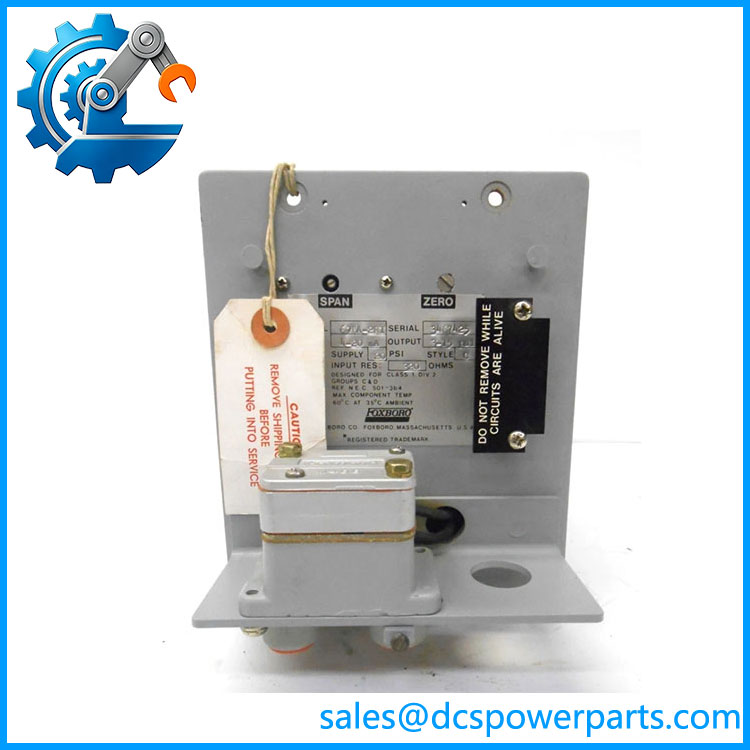
69TA-2RI
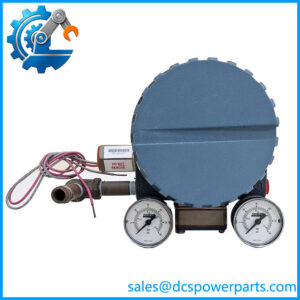
FOXBORO 69TA-2RI Current-to-Air Transducer
The FOXBORO 69TA-2RI is a current-to-air transducer used to connect electrical control signals with pneumatic instrumentation. In a process control loop, it converts an electrical input into a pneumatic output that can operate compatible pneumatic control equipment. The model is associated with the legacy Foxboro 69TA transducer family.
For maintenance teams supporting older plants, the main consideration is functional compatibility with the existing control loop. Before replacement, verify the input range, output pressure range, air supply, mounting arrangement, and signal action. A matching model number is a useful starting point, but it does not replace a wiring and pneumatic compatibility check.
Application Scenarios & Field Pitfalls — The Engineer’s Perspective
Engineering Pain Point
A control valve stops responding correctly after a transducer failure, even though the DCS output remains within its normal current range. This is a common diagnostic challenge in legacy electro-pneumatic control loops: the fault may originate in the transducer, the instrument air supply, the pneumatic tubing, or the downstream actuator. Replacing the FOXBORO 69TA-2RI without checking these conditions can leave the original fault unresolved.
Typical Applications
- Oil and gas: Electrical-to-pneumatic signal conversion in legacy process control loops.
- Petrochemical processing: Pneumatic control valve operation in temperature, pressure, and flow control systems.
- Water and wastewater treatment: Interface between electrical controllers and compatible pneumatic instrumentation.
- Power generation: Maintenance of older pneumatic control equipment and associated process instrumentation.
Technical Pitfalls to Avoid
1. Verify the pneumatic output range. Do not assume that every transducer in the same product family uses the same output span. Check the nameplate and applicable technical documentation against the actuator or positioner’s required signal range.
2. Check instrument air before condemning the unit. Low supply pressure, moisture, oil contamination, and restricted tubing can cause poor response or insufficient actuator travel. Confirm air quality and supply pressure against the equipment specifications.
3. Check signal action and loop wiring. Confirm the input polarity, current signal at the terminals, and whether the required output action is direct or reverse. Test the complete loop under controlled conditions before returning the valve to service.
4. Inspect the replacement before installation. For legacy instrumentation, inspect the enclosure, terminals, pneumatic ports, and identification plate. Confirm the exact suffix and revision where applicable. Follow site isolation procedures and electrostatic precautions for any electronic components.
Related Products
The following Foxboro models and product families are useful comparison points for maintenance planning. They are not confirmed drop-in replacements for the 69TA-2RI. Verify dimensions, signal ranges, air supply, connections, and operating action before substitution.
- FOXBORO 69TA — The broader current-to-air transducer family. Useful as a reference when identifying legacy equipment, but the complete model designation must match the required configuration.
- FOXBORO E69F — Field-mounted current-to-pneumatic converter. A candidate for evaluating field installation requirements, enclosure protection, and pneumatic connections. Direct compatibility with the 69TA-2RI is not established.
- FOXBORO E69R — Rack-mounted current-to-pneumatic converter. Worth reviewing where the installation uses panel or rack-mounted conversion equipment rather than a field-mounted unit.
- FOXBORO IP24 — Current-to-pneumatic converter intended for field service. Compare its electrical input, pneumatic output range, air supply, and environmental rating when assessing alternatives. It should not be treated as a direct replacement without engineering verification.
- FOXBORO 40P Series — Legacy recording, indicating, and control instrumentation identified in Foxboro’s pneumatic instrument documentation. Relevant when tracing older instrument loops; not a substitute for the transducer itself.
- FOXBORO 40M Series — Related legacy recording, indicating, and control instrumentation. Review when documenting an existing installation or diagnosing the wider control loop.
- FOXBORO 43AP Series — Indicating controller family referenced in Foxboro instrumentation documentation. Useful for understanding the surrounding control equipment, but its function differs from current-to-air conversion.
- FOXBORO 43EP Series — Another legacy indicating controller family that may be relevant when identifying the equipment connected to an older transducer. Confirm the actual loop configuration before selecting parts.
- FOXBORO 45P Series — Legacy transmitter family referenced in the instrumentation documentation. Consider it when reviewing the wider measurement and control loop, not as an assumed substitute for the 69TA-2RI.
Final engineering check: Before ordering a FOXBORO 69TA-2RI for a shutdown-critical application, obtain a clear photograph of the complete nameplate and verify the required pneumatic output range and air supply. Those details are more important than a superficial model-family match.