Description
Product Overview
EPSD-0603 sits in a boiler’s furnace safety system at the point where the flame has to be turned into a decision. Flame detectors — ultraviolet, infrared, ion-current or visible-light — produce a signal that rises with combustion and collapses when the burner goes out, and something has to read that signal, decide what it means, and close a fuel valve when the answer is “no flame” within a time the boiler’s safety logic can tolerate.
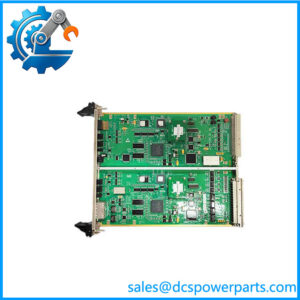
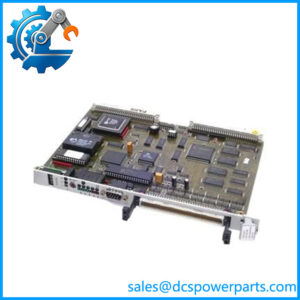
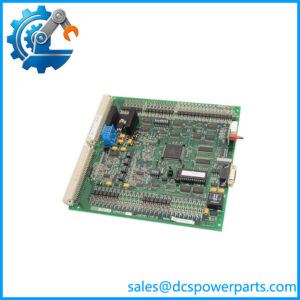
That something is this module. It is a DIN-rail unit with panel keys and four indicator LEDs, fed from a 24 VDC supply that it accepts across an 18 to 36 volt window, reading up to six analog flame-intensity channels and driving three analog outputs back to the control system, while carrying three potential-free relay contacts that do the actual interlocking. It talks Modbus RTU over RS-485, which is how the plant’s DCS learns what the burner front end is seeing without being trusted to decide anything.
The distinction between those two paths is the whole design idea, and it is the reason this part exists at all. The relay is the safety path: it is hardwired into the fuel valve circuit and it operates whether or not a controller, a serial link or a network is alive. The Modbus link is the diagnostic path: it carries flame intensity, burner status and fault codes to the operator so that a dirty lens or a drifting detector is caught before it becomes a trip. A plant that routes the flame-loss trip through the serial link has replaced a hardware interlock with a data hop, and no amount of good software makes that a safety function.
The family context matters for spares. EPSD-0603 appears in market documentation alongside the DFI-150-0003 flame-detector interface board, and the pairing is consistent across sources even though the module’s own datasheet is not publicly available. What that means practically: this is a burner front end whose behaviour depends on the detector type fitted and on the settings held in its parameters — flame threshold, flame-out delay, output logic — and those settings are the difference between a boiler that stays lit through a coal puff and one that trips on every flame flicker.
Because no OEM document for this part number was located, this article describes the module as its documented behaviour and its installed role imply, and flags what must be verified locally: the detector type on each channel, the supply arrangement in the cabinet, and the trip delay configured in the running unit.
Technical Specifications
| Parameter | Value |
|---|---|
| Product model | EPSD-0603 |
| Manufacturer | Alstom |
| Product type | Burner flame monitoring module (furnace safety front end) |
| Supply voltage | 24 VDC nominal, 18–36 VDC wide range |
| Supply current | 1.2 A maximum |
| Power consumption | ≤ 28 W |
| Analog inputs | 6 × 4–20 mA flame / analog channels |
| Analog outputs | 3 × 4–20 mA |
| Relay outputs | 3 potential-free contacts, 250 VAC / 5 A, 30 VDC / 5 A |
| Communication | RS-485, Modbus RTU |
| Flame response time | < 200 ms detection |
| Flame-out trip delay | 0.1 s to 10 s, software settable |
| Isolation | 2500 Vrms between field and logic circuits |
| Indication | POWER, FLAME, REL, FAULT LEDs plus panel keys |
| Mounting | 35 mm DIN rail (EN 50022) |
| Dimensions | 90 mm × 35 mm × 110 mm |
| Mass | 280 g |
| Operating temperature | −20 °C to +60 °C |
| Storage temperature | −40 °C to +85 °C |
| Protection | IP20, cabinet interior |
| Compliance | CE, UL 61010, IEC 61000 EMC |
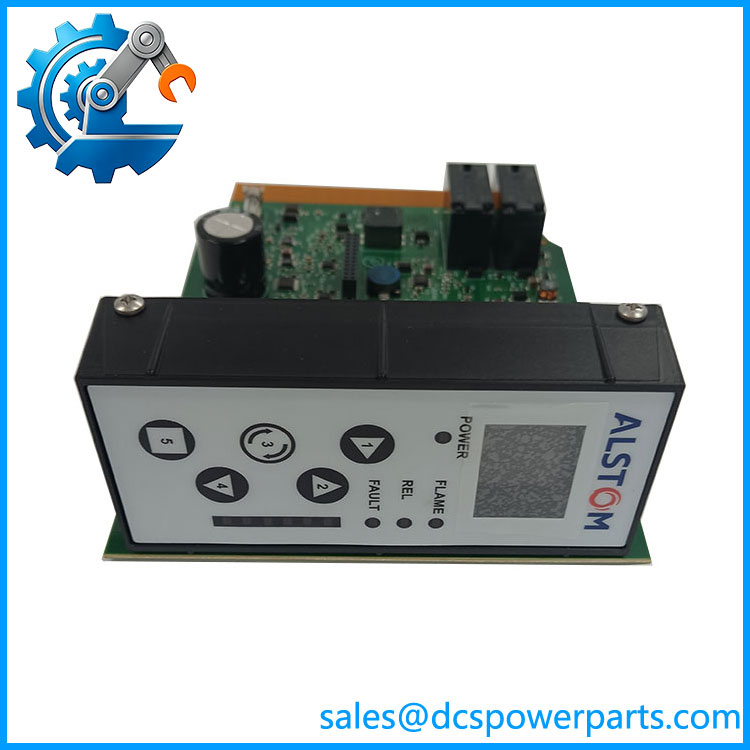
EPSD-0603
Key Features and Advantages
Two paths, deliberately not interchangeable: the flame-loss interlock is a relay contact, and the flame-intensity reading goes out on Modbus. That separation is what lets the module serve both the safety case and the maintenance case without either one weakening the other — the operator sees the trend, the fuel valve sees the contact, and a failed serial link changes nothing about the trip.
Flame-out delay as the parameter that decides boiler behaviour: the 0.1 to 10 second settable window exists because no single value suits every burner. A pulverized-coal unit needs enough delay to ride through the normal light/dark pulsation of a stable flame; a gas pilot needs almost none. Set too short, the plant trips on flame flicker and loses load. Set too long, unburned fuel accumulates in the furnace before the valve closes — the failure mode that furnace safety codes exist to prevent. The correct value comes from the burner OEM’s logic, not from adjusting until the trips stop.
Signal discrimination rather than raw threshold: a flame detector inside a boiler sees hot refractory, dust, and the neighbour burner’s flame through the same window. The module’s job is to judge presence from a signal that includes all of that, and the practical consequences are familiar to anyone who has maintained an FSSS: a dirty lens reads low, a mis-aimed detector reads the wrong burner, and both look like a threshold problem when they are really an optical one.
Local configuration without a laptop: the panel keys set flame threshold, delay and output logic at the cabinet, which matters on a plant where the engineering station is a shared resource and the boiler is waiting. The four LEDs — power, flame, relay, fault — let a shift technician tell an optical fault from a wiring fault from a module fault without opening anything.
Self-diagnostics that survive a shutdown: broken detector wiring, shorted signal leads, supply anomalies and internal faults are detected and stored as fault codes, so a trip that happened at 3 a.m. can be diagnosed at a civilised hour instead of being argued about from memory. Conformal coating on the board is the difference between a ten-year life and a five-year one in a boiler house.
Fast enough to be trusted: detection under 200 ms and relay action in the tens of milliseconds means the module is not the slow element in the trip path. On a gas-fired unit the flame-failure response is measured in fractions of a second, and a front end that needed a scan cycle to decide would be the wrong architecture.
Applications
Furnace safety systems on coal and gas-fired boilers in thermal power stations: burner flame supervision across the light-off sequence, where each burner’s flame must be proven before the next is admitted and a loss during operation closes the fuel valve and starts the purge.
Industrial and waste-heat boilers: smaller units where a DIN-rail front end with three relay outputs covers the burner train without a dedicated FSSS cabinet.
Petrochemical fired heaters and cracking furnaces: process heaters whose burner management is interlocks on fuel and air, and where a flame front end that publishes intensity to the plant DCS supports both the trip and the heater’s condition monitoring.
Gas turbine pre-combustion chambers and duct burners: ignition flame proving in packaged units, where the module’s analog channels double as burner-specific intensity signals.
Waste incineration and biomass boilers: fuels whose flame varies continuously with moisture and calorific value, which is exactly the case where a fixed, tight flame threshold produces nuisance trips and where the detector’s discrimination and the delay setting carry the reliability.
Retrofit of legacy Alstom boiler control: replacing a failed front end in an older FSSS without re-engineering the burner management logic, using the module’s own relay and analog interfaces to preserve the existing wiring scheme.
Related Products
DFI-150-0003 — flame-detector interface board documented as the companion of EPSD-0603; the detector-specific half of the same measuring chain. EPSD-0601 — compact variant of the same family, basic flame detection without analog output. EPSD-0605 — dual-channel variant for redundant flame input on large boiler installations. EPSD-0700 — later family member offered with Ethernet-based communication and fault recording. UV flame detector — one of the sensor types the module’s analog inputs are configured for; the sensing element upstream of the front end. IR flame detector — alternative sensing type, chosen for fuel and furnace characteristics rather than for the module. Ion-current flame probe — third sensing type, typically on smaller gas burners. Burner management controller (FSSS logic solver) — the device that consumes the module’s relay contacts and analog outputs and sequences light-off and purge. 35 mm DIN rail mounting kit — the carrier the module snaps onto inside the boiler-house cabinet.
Installation and Maintenance
Before installation: verify the detector type fitted to each channel before connecting anything, because a UV head and an ion probe present very different signals to the same input, and the channel configuration must match. Confirm the 24 VDC supply is within the 18 to 36 volt window under load and that it is not shared with contactor coils, keep the module at least 80 mm from contactors and drive power stages inside the cabinet, and land the detector cable as shielded twisted pair with the shield grounded at one point at the module terminal. Land the relay contacts into the fuel valve circuit as the interlock they are, and route the RS-485 pair separately from the detector cabling — a flame front end whose serial link picks up switching noise is a nuisance-alarm generator.
Maintenance practice: clean the detector lens and check the sighting tube and cooling/purge air at each boiler outage, because most “module faults” on EPSD-0603 installations turn out to be optical. Read the stored fault codes before resetting anything, inspect relay contact faces every twelve months on units that trip often, and confirm that the flame-out delay configured in the running module matches the burner OEM’s specified value — a delay quietly lengthened during a troubleshooting session is an interlock weakened without paperwork. Treat a persistent FAULT LED after field wiring has been cleared as a module fault and replace the unit rather than tuning around it.
Warranty and Quality
Every EPSD-0603 is supplied with the module identified as Alstom’s EPSD-series burner front end, and with the documented limitation stated up front: no OEM datasheet exists in the public record for this part number, so the specification above reflects its documented behaviour and installed role rather than a manufacturer’s sheet. Buyers are encouraged to send a photograph of the unit’s label and the cabinet drawing, and the match is confirmed against the detector type and the existing wiring before dispatch. Units are inspected for board condition, relay contact wear and evidence of field-side damage, and carry a 12-month repair, replacement or refund commitment. Support covers the practical questions this module raises in service: confirming it is the flame front end and not a power-distribution or rail module sharing the same code, identifying the detector family it must work with, and advising on trip-delay and threshold settings that belong to the burner OEM’s logic rather than to the supplier.