Description
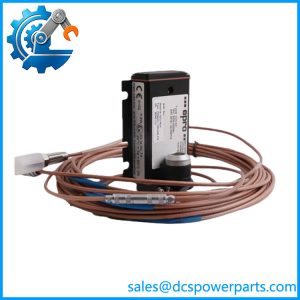
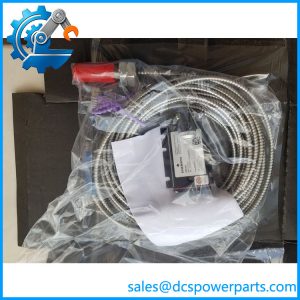
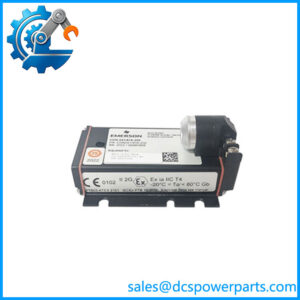
Emerson EPRO PR9268/200-000
Key Technical Specifications
| Parameter | Specification |
|---|---|
| Product Model | PR9268/200-000 |
| Manufacturer | Emerson EPRO |
| Product Type | Electrodynamic velocity sensor |
| Measurement | Absolute casing vibration velocity |
| Orientation | Vertical |
| Sensitivity | 28.5 mV/mm/s ±5% |
| Frequency Range | 4–1,000 Hz |
| Natural Frequency | 4.5 Hz ±0.75 Hz |
| Transverse Sensitivity | Approx. 0.13 at 110 Hz for PR9268/20x-x00 |
| Maximum Acceleration | 10 g continuous; 20 g intermittent |
| Maximum Transverse Acceleration | 2 g |
| Amplitude Linearity | <2% |
| Nominal Vibration Range | ±1,500 µm |
| Mechanical Amplitude Limit | 3,000 µm; 4,000 µm mechanical limit |
| Resistance | 1,875 Ω ±10% |
| Inductance | ≤90 mH |
| Damping Factor | Approx. 0.56 at 20 °C; 0.42 at 100 °C |
| Operating Temperature | -20 to +100 °C |
| Humidity | 0–100%, non-condensing |
| Protection | IP55 |
| Output | Self-generating dynamic voltage signal |
The 28.5 mV/mm/s sensitivity, 4–1,000 Hz frequency range, 4.5 Hz natural frequency, and 1,875 Ω nominal resistance are consistent with Emerson’s PR9268/20x-x00 technical documentation.
Product Introduction
The Emerson EPRO PR9268/200-000 is an electrodynamic velocity sensor designed for absolute casing-vibration measurement on critical rotating equipment. Its moving-coil/seismic-mass construction generates a voltage proportional to vibration velocity, allowing the sensor to feed machinery protection and condition-monitoring systems without the signal architecture associated with powered eddy-current proximity probes.
The 200-000 configuration belongs to the vertical PR9268 family, with a nominal sensitivity of 28.5 mV/mm/s and a useful frequency range of 4 to 1,000 Hz. That makes sensor orientation and mounting particularly important: this is not simply a generic vibration pickup that can be installed at any angle and expected to produce equivalent measurements.
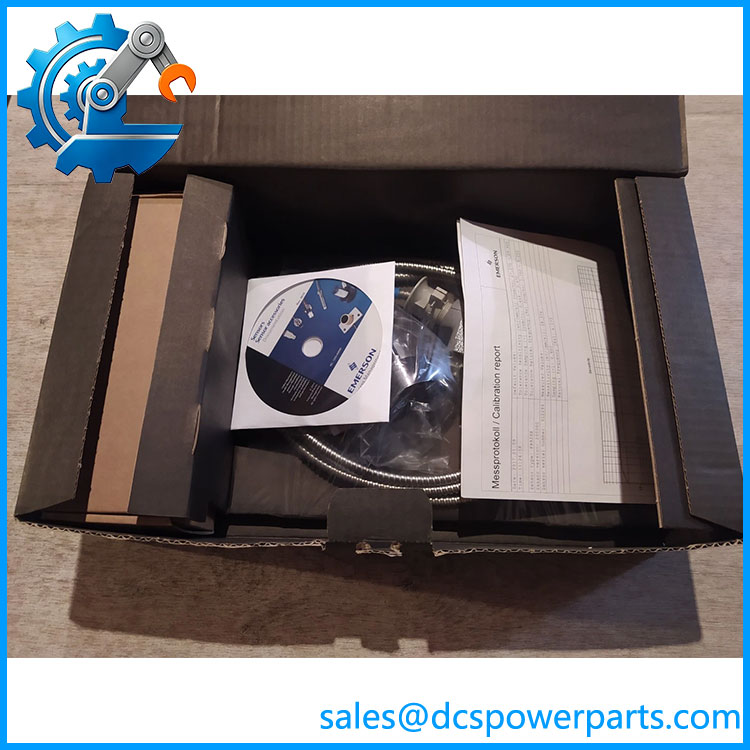
PR9268/200-000
Engineering Pain Point
The biggest replacement mistake is confusing casing velocity measurement with shaft displacement measurement. The measures absolute vibration of the machine casing or bearing housing; it is fundamentally different from an EPRO PR642x eddy-current probe system measuring shaft position or relative shaft vibration. The monitoring channel, sensor sensitivity, mounting orientation, and signal-conditioning hardware must all match the measurement method.
Typical Applications
- Steam turbine monitoring: Bearing-housing and casing vibration measurement for rotating equipment protection.
- Gas turbine systems: Absolute casing vibration monitoring on critical turbine machinery.
- Compressors and pumps: Monitoring vibration velocity at bearing housings or machine casings.
- Hydro turbines and auxiliary machinery: Low-frequency vibration monitoring where an electrodynamic velocity sensor is appropriate.
Emerson specifically identifies steam, gas, and hydro turbines, compressors, pumps, and fans as target applications for the family.
Technical Pitfalls to Avoid
- Do not substitute an eddy-current probe. is an absolute velocity sensor. A proximity probe measures a different physical quantity and normally requires a different signal-conditioning chain.
- Respect the mounting orientation. Emerson specifies the /20x-x00 configuration as vertical. Installing it outside its specified orientation can introduce measurement errors and change the sensor’s response to transverse vibration.
- Match the sensitivity in the monitoring channel. The nominal sensitivity is 28.5 mV/mm/s, so the receiving monitor must be configured for the actual sensor sensitivity. A channel configured for another family variant can produce incorrect engineering-unit scaling.
- Check the signal-conditioning system. The sensor generates a dynamic voltage signal. Verify the input impedance, cabling, connector arrangement, and monitor channel configuration rather than assuming every vibration monitor accepts the sensor directly.
- Check cable and mechanical installation details. The family is available with different cable and connector arrangements. Emerson documentation specifically notes different configurations and cable options, so the complete ordering code matters during replacement.
- Do not confuse the 20x and 01x specifications. Emerson publishes different performance data for the /01x-x00 and /20x-x00 families. For example, the 01x family has a 17.5 mV/mm/s sensitivity, while the 20x family uses 28.5 mV/mm/s.
Related Products
- EPRO /201-000 — Closely related vertical configuration; the complete suffix and mechanical/electrical configuration should be checked before substitution.
- EPRO /300-000 — Horizontal configuration; its mounting orientation and transverse response differ from the vertical 200-series.
- EPRO /301-000 — Related horizontal configuration within the same electrodynamic sensor family.
- EPRO /60x-000 — Another architecture using a different orientation and electrical configuration; not automatically interchangeable with the 200-000.
- EPRO /70x-000 — Horizontal counterpart within the 60/70 series.
- EPRO PR6423 series — Eddy-current proximity probes for relative shaft vibration/position measurements; fundamentally different measurement technology from .
Procurement check: For , verify the complete sensor code, mounting orientation, cable length/termination, monitoring-system input configuration, sensitivity setting, and physical mounting arrangement. Emerson’s current documentation confirms the family specification, but the exact installation should be checked against the machinery protection system drawings before treating another variant as a direct substitute.