Description
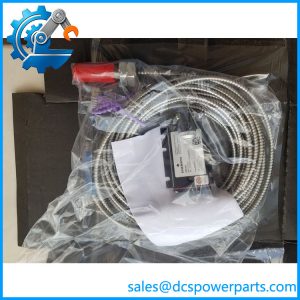
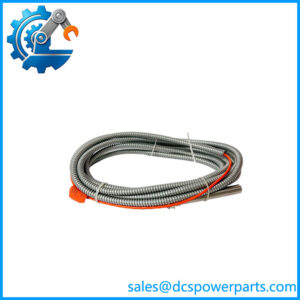
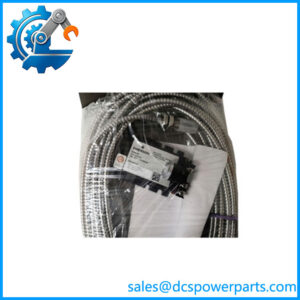
EPRO PR6423/003-030-CN | 8 mm Eddy Current Sensor
Product Introduction
In a turbine monitoring system, the probe itself is only one part of the measurement chain, but its mechanical installation has a direct effect on the quality of the vibration or displacement signal. The EPRO /003-030-CN is an 8 mm eddy-current sensor designed for non-contact measurement around rotating machinery. It is used to measure shaft displacement, position, eccentricity, and related dynamic mechanical conditions.
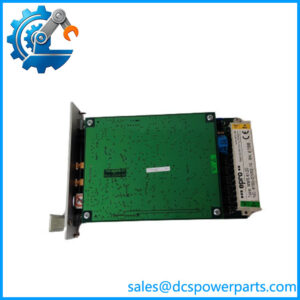
The EPRO /003-030-CN is normally paired with an appropriate EPRO signal converter such as CON021. The converter supplies the required sensor excitation and converts the probe signal into a usable measurement output for the monitoring system. For a replacement, the complete sensor chain matters: probe variant, cable length, connector, converter type, mounting thread, target material, and monitor input must all be checked rather than treating probes as interchangeable.
Key Technical Specifications
| Parameter | Specification |
|---|---|
| Product Model | /003-030-CN |
| Manufacturer | EPRO / Emerson |
| Product Type | Eddy-current proximity sensor |
| Sensor Diameter | 8 mm class |
| Measurement Principle | Eddy-current, non-contact |
| Initial Air Gap | 0.5 mm / 20 mils |
| Incremental Scale Factor | 8 V/mm / 203.2 mV/mil ±5% |
| ISF Reference Temperature | 0 to 45°C |
| Deviation from Best-Fit Straight Line | ±0.025 mm / ±1 mil at 0–45°C |
| Minimum Shaft Diameter | 25 mm |
| Protection Class | IP66 |
| Sensor + 1 m Cable Temperature | -35 to +200°C |
| Cable + Connector Temperature | -35 to +150°C |
| Typical Target | Ferromagnetic steel |
| Compatible Converter | CON021 for applicable configurations |
| Installation | Threaded probe mounting |
| Hazardous-Area Approvals | ATEX / IECEx / CSA reported for the applicable sensor configuration |
The technical records for this exact variant identify the 0.5 mm initial air gap, 8 V/mm scale factor, ±0.025 mm deviation from best-fit straight line, 25 mm minimum shaft diameter, and IP66 protection.
One important documentation issue should be noted: secondary listings disagree on the nominal linear measurement range, with values of 2 mm and 3 mm appearing for this exact number. I would therefore not use either value as a design-basis specification without checking the applicable EPRO datasheet for the exact probe/converter combination.
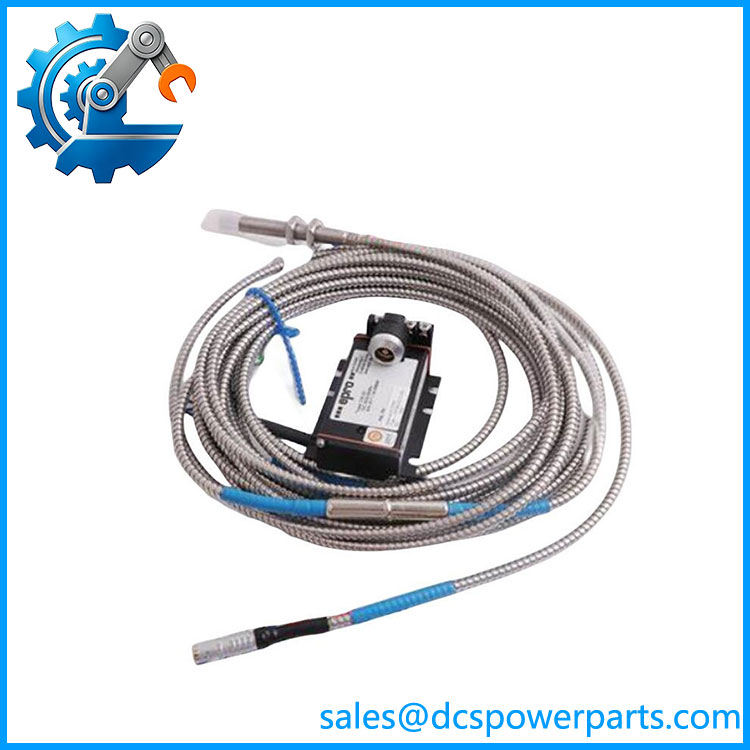
PR6423001-000
Major Features and Engineering Advantages
1. Non-contact shaft measurement
The uses eddy-current measurement, so the probe can monitor a conductive rotating target without physical contact. That is particularly useful for turbine and compressor shafts where a conventional contact sensor would introduce unacceptable mechanical wear.
The measurement chain is intended for radial or axial shaft displacement and related position measurements. EPRO records also associate the family with eccentricity and speed-related monitoring applications.
2. Suitable for rotating machinery monitoring
The family is used in critical rotating equipment including steam turbines, gas turbines, hydro turbines, compressors, pumps, fans, and gearboxes. These applications typically require continuous monitoring of shaft position or vibration-related mechanical behavior.
The probe should be viewed as part of the complete machinery protection chain rather than as an isolated sensor.
3. High-temperature probe construction
The documented temperature capability is significant for turbine applications. Records specify -35 to +200°C for the sensor including a 1 m cable, while the cable and connector are listed separately at -35 to +150°C.
This distinction matters during installation. The probe tip may tolerate a higher temperature than the cable routing and connector area.
4. Defined installation air gap
The specified initial air gap of 0.5 mm / 20 mils is a critical installation parameter. The probe must be positioned correctly relative to the shaft target to keep the operating point inside the intended measurement range.
For field replacement, measuring the existing probe gap before removal is good practice. Do not assume that screwing the replacement probe to the same apparent depth will reproduce the original electrical operating point.
5. Designed for use with an EPRO converter
The probe does not normally operate as a simple standalone 4–20 mA transmitter. The CON021 is one of the EPRO converters designed for -family sensors and provides the interface between the eddy-current probe and the monitoring electronics.
This is one of the most important procurement points: ordering the probe without confirming the installed converter can create an apparently correct mechanical replacement that produces the wrong electrical signal.
Application Scenarios & Pain Points
Steam and Gas Turbines
The probe can be used for shaft displacement and position measurements in turbine monitoring systems. In a turbine train, the physical mounting location and probe gap are just as important as the electronic specification.
Hydro Turbines
Hydro-generating equipment can use eddy-current probes for shaft movement and related rotating-equipment measurements. Environmental conditions may differ substantially from steam-turbine installations, so the actual installation temperature and cable routing should be reviewed.
Compressors and Gearboxes
The family is also associated with compressors and gearboxes where non-contact shaft measurements are required. Mechanical target geometry and shaft material should be confirmed before selecting a replacement.
Pumps and Fans
The sensor can be applied to rotating equipment where shaft position or dynamic displacement needs to be monitored continuously.
Field note: A vibration problem that appears after probe replacement is not automatically an electronic-monitor problem. Check probe gap, shaft runout, target material, cable shielding, connector condition, converter compatibility, and monitor scaling before replacing the monitor module.
Related Products
- CON021 — EPRO eddy-current signal converter used with applicable -family probes.
- /003-030-CN + CON021 — Complete probe/converter measurement chain frequently specified together.
- /003-010-CN — Related 8 mm probe variant with a different suffix configuration.
- /003-031-CN — Closely related variant; exact electrical/mechanical configuration must be verified.
- /002-030-CN — Related probe configuration with different ordering-code characteristics.
- — Another -series probe configuration.
- PR6424/014-040 — Larger/related EPRO eddy-current sensor family.
- MMS6312 — EPRO machine-monitoring equipment used in rotating-machinery measurement systems.
- MMS6823 — EPRO displacement-monitoring equipment for applicable machinery protection architectures.
These are related components, not automatic substitutes. In particular, different suffixes can represent different mechanical, electrical, or measurement configurations.
Engineer’s Guide — Field Pitfalls to Avoid
1. Do not confuse the probe with the converter.
/003-030-CN is the sensor. CON021 is the associated signal converter. They perform different jobs in the measurement chain.
2. Verify the complete suffix.
/003-030-CN, /003-031-CN, /003-010-CN, and other variants can look very similar in supplier listings. Do not substitute based on the prefix alone.
3. Set the probe gap correctly.
The documented initial air gap is 0.5 mm / 20 mils. Improper positioning can shift the electrical operating point and produce misleading shaft-displacement measurements.
4. Check the shaft material.
Eddy-current probes depend on the electrical properties of the target. The documented application data identifies ferromagnetic steel targets such as 42CrMo4 / AISI 4140. Do not assume the same calibration applies to every shaft material.
5. Check cable and connector temperature separately.
The sensor and its cable do not necessarily have the same temperature capability. The documented values distinguish the sensor/1 m cable assembly from the cable and connector temperature rating.
6. Do not use conflicting range specifications without verification.
Public secondary records give both 2 mm and 3 mm for the linear measurement range of this part. That discrepancy is enough reason to verify the exact EPRO documentation before using the value for engineering calculations.
7. Check the converter output and monitor scaling.
The is documented for PR6422//PR6424/PR6426 configurations with a supply range of approximately -23 to -32 V and an output range of -4 to -20 V. Verify the installed converter and monitor input before commissioning.
8. Verify actual inventory condition.
For a used or refurbished probe, inspect the probe tip, cable jacket, connector, thread, and part-number label. A physically damaged cable can introduce intermittent faults that are difficult to distinguish from converter or monitor problems.
FAQ
What is EPRO /003-030-CN?
It is an EPRO 8 mm eddy-current proximity sensor intended for non-contact measurement of rotating-machine shaft displacement and position. It is commonly used as part of an EPRO measurement chain with a signal converter such as .
What does /003-030-CN measure?
The probe is used for non-contact measurements associated with shaft displacement, position, eccentricity, and speed-related rotating-machine monitoring. Typical applications include turbines, compressors, gearboxes, pumps, and fans.
What is the initial air gap?
The documented initial air gap is 0.5 mm (20 mils). This should be treated as an installation-critical value rather than an approximate mounting dimension.
What converter is used with /003-030-CN?
is a compatible EPRO eddy-current signal converter for -family sensors. The exact converter should still be checked against the probe configuration and installed monitoring system.
What is the temperature rating?
Available technical records specify -35 to +200°C for the sensor including a 1 m cable, and -35 to +150°C for the cable and connector. Actual installation limits should be checked against the applicable configuration and installation conditions.
Is /003-030-CN a vibration sensor?
It is more precisely an eddy-current proximity/displacement sensor. It can form part of a shaft-vibration monitoring system, but the probe itself is not the complete vibration monitor. EPRO systems combine probes, converters, and monitoring modules to create the measurement chain.
What should be verified before purchasing a replacement?
Confirm the complete part number, probe diameter, cable length, connector, mounting thread, converter type, shaft/target material, required air gap, and monitor input configuration. For a critical turbine application, also compare the existing probe’s physical dimensions and cable routing before installation.