Description
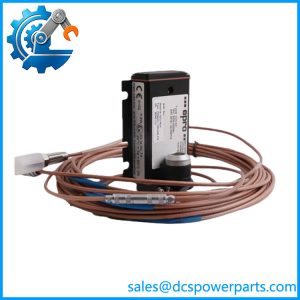
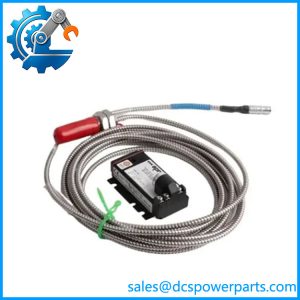
EPRO PR6423/002-030-CN + CON021 | Eddy Current Sensor System | Shaft Vibration & Displacement Monitoring
Key Technical Specifications
| Parameter | Specification |
|---|---|
| Manufacturer | EPRO / Emerson |
| Sensor Model | PR6423/002-030-CN + CON021 |
| Converter Model | PR6423/002-030-CN + CON021 |
| Complete Configuration | /002-030-CN + |
| Product Type | Eddy-current sensor and signal-converter system |
| Sensor Family | PR6423/002-030-CN + CON021 |
| Probe Diameter | 8 mm class |
| Measurement Principle | Non-contact eddy-current |
| Typical Measurements | Shaft displacement, position, eccentricity, speed |
| Typical Machinery | Steam/gas/hydro turbines, compressors, gearboxes, pumps, fans |
| Installation | Permanent rotating-equipment monitoring |
Product Introduction
The EPRO /002-030-CN + is a non-contact eddy-current measurement system intended for monitoring dynamic movement of rotating machinery shafts. The /002-030-CN is an 8 mm-class proximity sensor, while the serves as the associated signal-conversion stage. Together, they form a measurement channel for shaft displacement and related machinery-condition parameters. Public technical listings consistently associate this configuration with critical rotating equipment such as turbines, compressors, gearboxes, pumps, and fans.
The sensor operates without physical contact with the rotating target, which makes the technology suitable for applications where continuous shaft movement must be measured without introducing mechanical loading. Depending on the installed monitoring architecture, the measurement can be used for radial or axial shaft movement, shaft position, eccentricity, and speed-related monitoring. The is an important part of the configuration because the sensor should be matched to the appropriate signal-conversion electronics rather than treated as a standalone generic proximity switch.
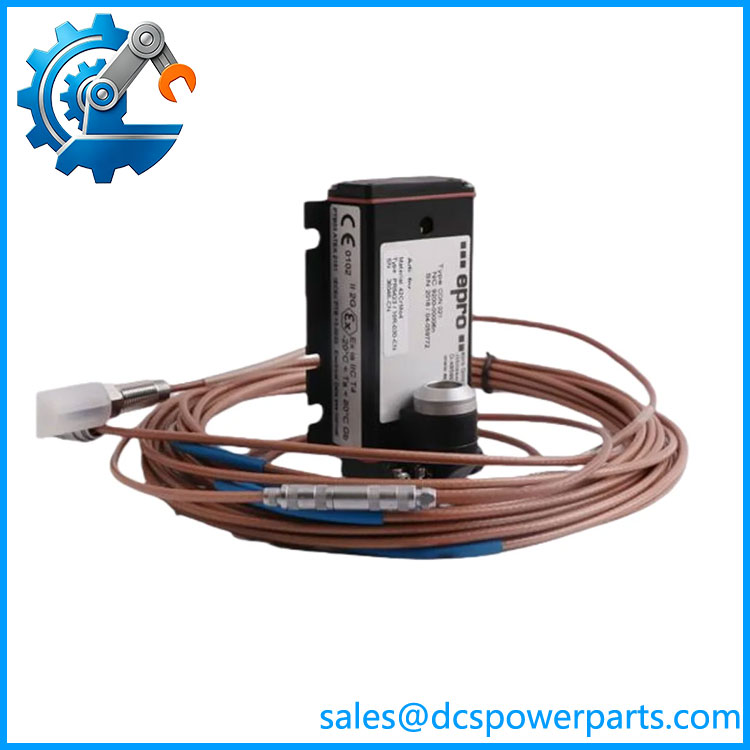
PR6423/10R-030-CN
Application Scenarios & Field Pitfalls — The Engineer’s Perspective
Engineering Pain Point
A failed or unstable proximity channel on a turbine or compressor can be difficult to diagnose because the sensor is only one part of the measurement chain. Probe installation, target condition, cable integrity, converter compatibility, mounting gap, and the receiving machinery-monitoring channel can all affect the final signal. Replacing the probe alone without checking the complete channel can result in repeated faults.
Typical Applications
1. Turbine Shaft Monitoring
The family is used for non-contact shaft measurements on steam, gas, and hydro turbines. It can support monitoring of shaft displacement, position, eccentricity, and speed-related conditions.
2. Compressor and Gearbox Monitoring
The compact 8 mm-class probe is suited to installations where the available mounting space around bearings or rotating shafts is limited.
3. Pump and Fan Condition Monitoring
The sensor/converter combination can be incorporated into machinery monitoring channels for rotating equipment where shaft movement is an important diagnostic parameter.
4. EPRO Machinery Monitoring Systems
The /002-030-CN + configuration is commonly associated with EPRO machinery-monitoring equipment and should be matched against the existing monitoring architecture before replacement.
Technical Pitfalls
1. The sensor and converter should be treated as a matched system.
Do not assume that any probe can be connected to any converter. Confirm the exact probe ordering code and the installed converter configuration before substitution.
2. The “-CN” suffix matters.
For procurement, retain the complete /002-030-CN ordering designation. Public listings sometimes shorten the model to /002-030, while others identify the CN configuration separately. When replacing a field-installed sensor, the complete nameplate information is preferable to a shortened series number.
3. Do not trust conflicting generic specifications.
Secondary sources publish different values for measurement range, cable length, operating temperature, output signal, and supply voltage. For example, one listing describes an 8 m non-armored cable and LEMO connection, while other sources publish different electrical and environmental values. These should be verified against the exact EPRO configuration before engineering approval.
4. Check the mechanical installation.
Probe gap, mounting stability, shaft surface condition, target material, and probe orientation directly affect measurement quality. A healthy converter cannot compensate for incorrect mechanical installation.
5. Investigate the whole signal chain.
When a channel shows excessive noise, drift, loss of signal, or an unexpected vibration value, inspect the probe, extension cable, connectors, converter, power supply, and monitoring input rather than immediately condemning the sensor.
6. Preserve the original measurement configuration.
Before replacement, record the existing probe location, channel assignment, converter arrangement, alarm settings, and baseline readings. This is particularly important on turbine protection and machinery-monitoring systems where a measurement channel may participate in shutdown logic.
Related Products
- EPROPR6423/002-030-CN + CON021 — Base 8 mm-class eddy-current sensor designation.
- EPRO PR6423/002-030-CN + CON021 — Related sensor configuration with different ordering characteristics.
- EPRO PR6423/002-030-CN + CON021 — Another -family probe configuration.
- EPRO PR6423/002-030-CN + CON021— Reverse-mount configuration; mounting arrangement differs from the /002 version.
- EPRO PR6424/003-030 — Larger EPRO proximity-sensor family; not automatically interchangeable with .
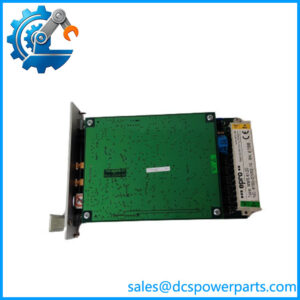
- PR6423/002-030-CN + CON021— Signal converter used with compatible EPRO eddy-current sensors.
- EPRO MMS 3000 — Earlier EPRO machinery-monitoring platform.
- EPRO MMS 6000 — Machinery-monitoring platform associated with EPRO sensor channels.
Procurement Note
For EPRO /002-030-CN + , specify the complete sensor code and converter code together when requesting a replacement. Ask for the sensor nameplate, cable/connector configuration, installed converter identification, and the existing measurement-channel documentation.
For critical machinery, do not approve a substitute simply because it is described as an “8 mm EPRO eddy-current probe.” The mechanical configuration, sensor/converter pairing, cable arrangement, and monitoring-system compatibility all need to match the existing installation.
Engineering classification: EPRO /002-030-CN + = 8 mm-class eddy-current shaft-displacement measurement system consisting of a proximity sensor and signal converter.