Description
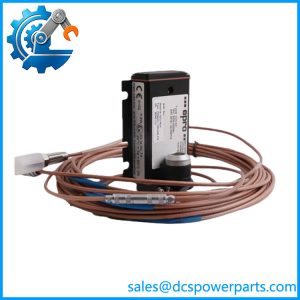
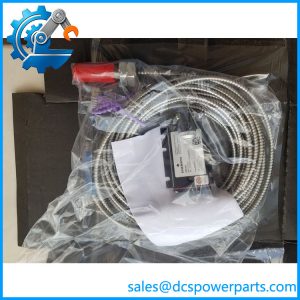
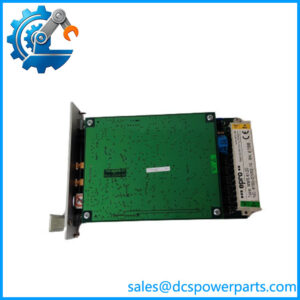
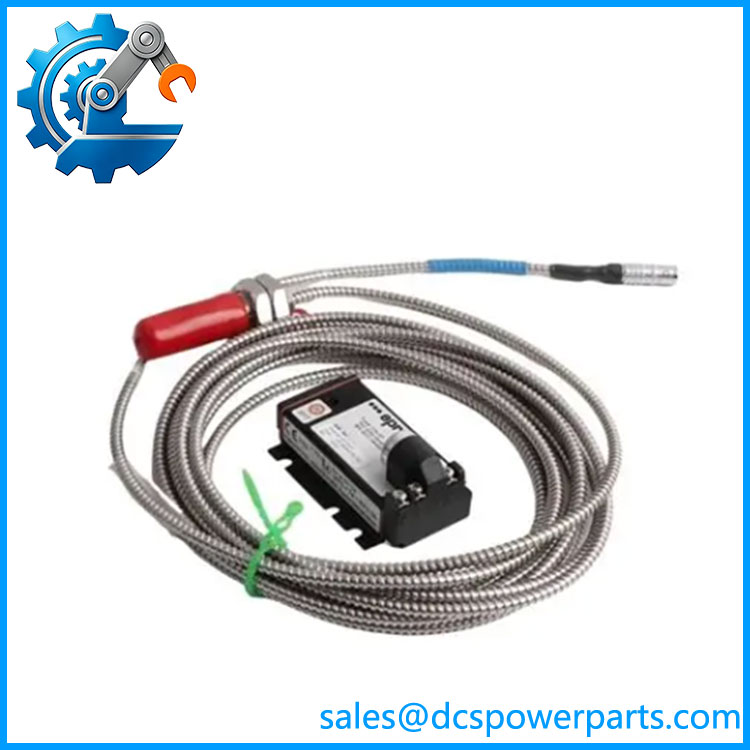
EPRO PR6424/003-030 | 16 mm Eddy Current Sensor | Turbomachinery Shaft Monitoring
Key Technical Specifications
| Parameter | Specification |
|---|---|
| Manufacturer | EPRO / Emerson |
| Model | PR6424/003-030 |
| Product Series | PR6424/003-030 |
| Sensor Type | Eddy-current proximity sensor |
| Sensor Diameter | 16 mm |
| Measurement | Non-contact shaft displacement / position |
| Sleeve Thread | M18 × 1.5 |
| Cable Length | 8 m |
| Armored Cable | No |
| Cable End | LEMO |
| Typical Application | Critical turbomachinery |
| Compatible Monitoring Family | EPRO MMS 3000 / MMS 6000 |
The 8 m cable, M18 × 1.5 sleeve thread, and LEMO termination are specifically associated with this ordering variant in available product references.
Product Introduction
The EPRO /003-030 is a 16 mm eddy-current proximity sensor designed for non-contact measurement on rotating machinery. It is used where direct mechanical contact with a shaft is undesirable, including measurement of radial and axial shaft displacement, shaft position, eccentricity, and speed/key-related measurements. The family is intended for critical turbomachinery applications such as steam, gas, and hydro turbines, compressors, pumps, and large fans.
The EPRO /003-030 forms part of a complete measurement chain rather than operating like a conventional PLC sensor. In applicable EPRO monitoring architectures, the probe works with a compatible signal converter and monitoring system, such as the MMS 3000 or MMS 6000 family. The probe variant therefore has to be matched not only by physical dimensions but also by the converter, extension-cable arrangement, mounting geometry, and required measurement range.
PR6424/003-030
Application Scenarios & Field Pitfalls — The Engineer’s Perspective
Engineering Pain Point
A proximity probe replacement can look straightforward until the machine is returned to service and the vibration or position channel reads incorrectly. With eddy-current systems, the probe, cable, converter, mounting geometry, and target material form one measurement chain. A physically similar 16 mm probe is not automatically an acceptable substitute.
Typical Applications
- Steam turbine monitoring — Radial shaft vibration and axial displacement measurement.
- Gas turbine monitoring — Shaft position, eccentricity, and rotational behavior.
- Hydro turbine applications — Non-contact displacement monitoring on rotating shafts.
- Compressors and pumps — Shaft movement and machinery condition monitoring.
- Protection systems — Input to compatible EPRO machinery monitoring and protection equipment.
Technical Pitfalls
1. Match the complete probe designation.
The suffix is significant. Do not substitute another variant simply because it has the same 16 mm sensor diameter. Cable configuration, mechanical mounting, and electrical characteristics can differ between variants.
2. Verify the cable arrangement.
This variant is documented with an 8 m cable and LEMO cable end, without armored cable. A field installation using a different extension arrangement should be checked against the original system documentation before ordering.
3. Check the signal converter.
The probe does not replace the complete monitoring channel. EPRO systems use a compatible signal-conditioning/converter stage between the probe and the monitoring electronics. The converter must be appropriate for the specific configuration.
4. Mechanical installation affects measurement quality.
Probe gap, target surface condition, shaft material, probe mounting, and cable routing all affect the measurement chain. Do not diagnose a questionable vibration channel by replacing the probe alone without checking the installation.
5. Avoid unverified generic specifications.
Some secondary listings publish different operating temperatures, IP ratings, frequency ranges, measurement ranges, and output descriptions for the /003-030. These should not be treated as universal specifications for this exact ordering code without the applicable EPRO datasheet.
6. Treat probe and cable condition as one diagnostic path.
Before condemning the sensor, inspect the probe tip, cable jacket, connector, cable routing near high-temperature areas, and converter input. Intermittent cable faults can produce symptoms that resemble a defective proximity probe.
Related Products
- EPRO /001-000 — Another 16 mm probe variant with a different cable/mechanical configuration.
- EPRO /000-030 — Related 16 mm proximity probe variant.
- EPRO /004-030 — Related probe variant requiring configuration verification before substitution.
- EPRO /006-030 — Another 16 mm variant used with compatible converter arrangements.
- EPRO CON021 — Eddy-current signal converter used with compatible EPRO proximity probes.
- EPRO MMS 6000 — Machinery monitoring platform commonly associated with EPRO proximity measurement systems.
- EPRO MMS 3000 — Earlier EPRO monitoring family supporting turbomachinery measurement applications.
- EPRO PR6423 Series — Smaller-diameter proximity probe family; not a direct mechanical replacement for the 16 mm .
Procurement Note
For EPRO /003-030, provide the complete part number rather than ordering only a “ 16 mm probe.” Confirm the installed converter, cable length, connector, sleeve thread, probe mounting arrangement, and original nameplate before approving a replacement. For critical turbine protection channels, probe-to-converter compatibility and correct installation gap are more important than simply matching the sensor diameter.